
All posts by Rochelle Baker

Rochelle Baker is a staff reporter with Canada’s National Observer, thanks thanks to a grant from the Local Journalism Initiative of the Government of Canada. She previously worked as a newspaper reporter and photographer in BC’s Lower Mainland for over 7 years.

Tradition meets modern: Restoring wild salmon habitat

Canada’s National Observer, Local Journalism Initiative Reporter

First Nations working to restore wild salmon and vital fish habitat on northeastern Vancouver Island will receive $3.4 million for a trio of stewardship projects in the Campbell River region. 

The restoration of salt marshes in the Campbell River estuary, a new fish trap based on traditional practices, and a hatchery are being jointly funded by the B.C. and federal governments

The estuary and fish trap projects, which also involve Greenways Land Trust and A-Tlegay Fisheries Society as partners, reflect the Wei Wai Kum Nation’s goal to revitalize salmon populations, said Chief Coun. Chris Roberts. 

Continue reading Tradition meets modern: Restoring wild salmon habitat
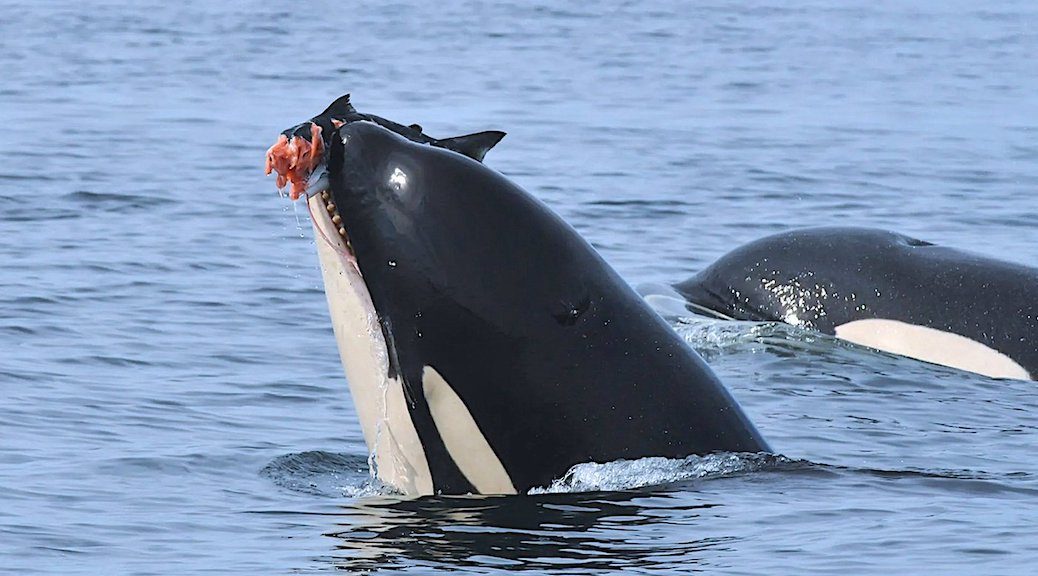
BBC’s Planet Earth does a deep dive on West Coast whale poo

Editor’s Note: Most of what follows is applicable to our waters, doubly so because MERS operates in our waters. Stay tuned to see if there are any scenes from Cortes or the surrounding islands in the BBC story.

Canada’s National Observer, Local Journalism Initiative Reporter

Whale researcher Jackie Hildering and her colleagues never imagined their work on humpbacks would capture the attention of the globe’s premier documentary series.  

Or that whale poo would be of such interest to Planet Earth — BBC’s famous nature show. 

Continue reading BBC’s Planet Earth does a deep dive on West Coast whale poo

West Coast toxic hot spots threaten endangered salmon and killer whales

Editor’s note: Though Cortes Island is not mentioned in the following report, it is on the embedded map of metal hotspots. We appear to be either bordering on, or close to, the areas for cadmium (Cd), nickel (Ni) copper (Cu) and lead (Pb).

Canada’s National Observer, Local Journalism Initiative Reporter

Newly identified toxic metal hot spots on the West Coast further threaten endangered killer whales and their key food source, a recent study shows.

Continue reading West Coast toxic hot spots threaten endangered salmon and killer whales

Canada takes steps to rectify land grab for Pacific Rim park with coastal First Nation

Editor’s note: Given the vast amount of land taken from First Nations without their consent and the amount of this that is now designated parkland, this article points to a trend we may see more of in the years going forward. There are three provincial parks (Mansons Landing, Smelt Bay and Von Donop) and a variety of Regional Parks (Blind Creek Boat Launch, Carrington Bay Park, Cortes Skate Park, Hank’s Beach Forest Conservation Park, Hayes Park, Gnat Park, Kw’as Park, Moon Park, Seascape Park, Siskin Forest Park, Siskin Forest Trails, Whaletown Commons) on Cortes Island.

Canada’s National Observer, Local Journalism Initiative Reporter

The federal government and the Pacheedaht First Nation celebrated an agreement Wednesday to return stewardship control over territory taken without permission to create B.C.’s world-renowned Pacific Rim National Park. 

Continue reading Canada takes steps to rectify land grab for Pacific Rim park with coastal First Nation

A coastal First Nation’s Guardians are ‘testing the water’ to prepare for climate change

Canada’s National Observer, Local Journalism Initiative Reporter

A coastal First Nation’s Guardian team is gearing up to test the waters to try to limit the impacts of drought in their traditional territories on northeast Vancouver Island.   

The We Wai Kai First Nation’s environmental stewards are partnering with other local groups to map and monitor wetlands, watersheds and streams on Quadra Island as summers get hotter and drier, said Guardian program manager Shane Pollard. 

Continue reading A coastal First Nation’s Guardians are ‘testing the water’ to prepare for climate change