All posts by Rochelle Baker

Rochelle Baker is a staff reporter with Canada’s National Observer, thanks thanks to a grant from the Local Journalism Initiative of the Government of Canada. She previously worked as a newspaper reporter and photographer in BC’s Lower Mainland for over 7 years.

Baby sockeye salmon are growing faster due to climate change. Is bigger better?

Editor’s note: Most of the salmon on Cortes Island are Chum, not Sockeye, but a DFO study of scale growth measurements from the Big Qualicum River suggests Chum are also being affected by climate change. Chum salmon appear to be growing smaller ‘due to increased ocean temperatures driven by climate changeand also the increased competition over a diminishing number of prey. There are also reports of them relocating to more northern locations. In October 2023, a University of Alaska study revealed that 100 Chum had been found in waters emptying into the Arctic Ocean. They were ‘either actively spawning or had finished spawning.’ Lead author Peter Wesley wrote, “Throughout most parts of the salmon’s range, things have gotten too warm and they’re starting to blink off. In the Arctic, the water is getting warm enough and they’re starting to blink on.”

Canada’s National Observer, Local Journalism Initiative Reporter

Climate change has tipped the scales, causing juvenile sockeye salmon in B.C. to grow bigger over the past century. 

The growth of salmon using lakes as nurseries during the first years of life in northern B.C. is about 35 per cent higher than 100 years ago, a new study from Simon Fraser University shows. 

Continue reading Baby sockeye salmon are growing faster due to climate change. Is bigger better?

BC Hydro must pay up for overcharging remote First Nations

Canada’s National Observer, Local Journalism Initiative Reporter

BC Hydro has been ordered to repay a small coastal First Nation more than $700,000 after unfairly charging them an extra annual fee for electricity for nearly a decade. 

The $85,000 yearly fee, embedded in a 2014 electricity service agreement between the utility company and the tiny Gitga’at First Nation of Hartley Bay, wasn’t approved and was ruled as “unjust, unreasonable and unduly discriminatory” by the province’s energy regulator this fall

Continue reading BC Hydro must pay up for overcharging remote First Nations

Salmon skyline takes wild coho conservation to new heights

Editor’s note: When the Chum runs were large enough, Cortes Island Streamkeepers harvested the eggs from Chum Salmon returning to Basil Creek and raised them in the Klahoose hatchery in 2020 and 2021. Very few salmon returned in 2022, so 50,000 Chum eggs were brought from the Tla’amin Fish Hatchery in Powell River. The following article illustrates the fact that DFO has been attempting to preserve salmon stocks in many areas.

Canada’s National Observer, Local Journalism Initiative Reporter

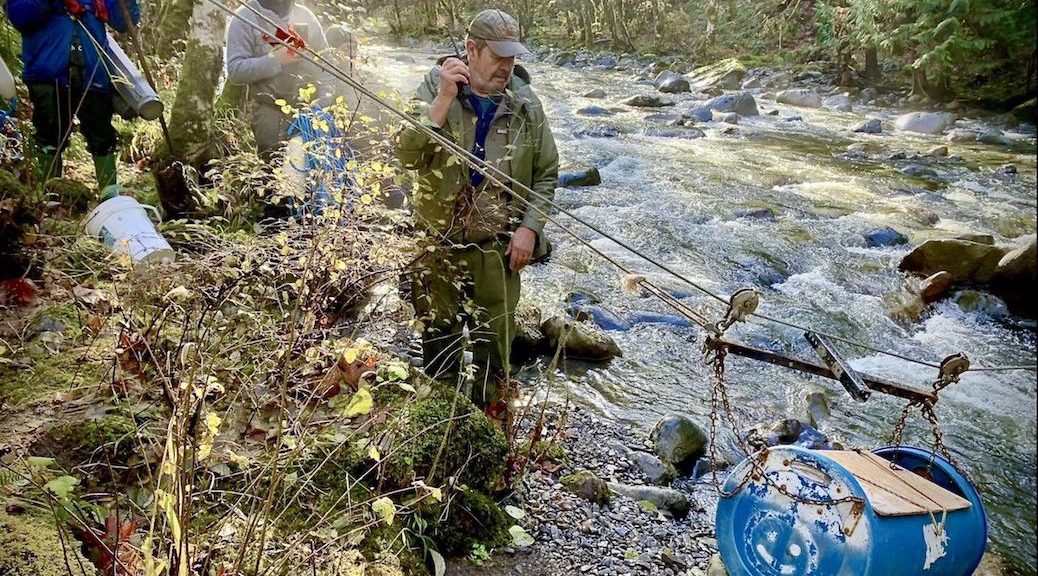
Winter sun backlighting their frosted breath, a dozen people trudge gingerly in the icy waters of the Trent River in search of salmon.   

Loaded with gear and armed with wooden poles, eyes down and intent, they test each step on slick rocks while navigating the currents swelled by November rains. 

Each fall, upwards of 25 volunteers join an expedition to a remote section of the Vancouver Island river to help the Courtenay Fish and Game Protective Association trap spawning coho to take back to its new hatchery at Comox Lake. 

Continue reading Salmon skyline takes wild coho conservation to new heights

Feds must fix unfair West Coast fishing rules: House committee (Cortes, Quadra, CR data added)

Editor’s Note: There was once a thriving fishing industry on Cortes Island. Chris Kendel is still based here, but catches his fish up north on the Taku River. Meanwhile Campbell River’s Highline Fish Company sells some of its catch at the Mansons Landing dock. There are still fishing boats in the Discovery Harbour Marina, owned by the Wei Wai Kum First Nation, and some Campbell River residents buy their fish at the dock.  Quadra Island Fisheries’ boats ‘fish the rugged coast of Northern Vancouver Island, West  Coast Vancouver Island, and the mainland inlets.The Tantrum 1, also based on Quadra Island, ‘trolls our coasts from Northern California all the way to the Alaskan border.

Canada’s National Observer, Local Journalism Initiative Reporter

Federal inaction means West Coast harvesters still flounder with unfair fishing regulations, says a parliamentary committee.

Fisheries and Oceans Canada faces a wave of criticism in a recent report by the Standing Committee on Fisheries and Oceans (FOPO), which reiterated a call to equalize fishing policy on the coasts.

For the second time in five years, the committee is pushing the fisheries department (DFO) to make changes so only Canadian fish harvesters with actual “boots on deck” of a boat can own fishing licences or quota on the West Coast.

Continue reading Feds must fix unfair West Coast fishing rules: House committee (Cortes, Quadra, CR data added)

Oysters: Unsung climate heroes for your holiday buffet

Editor’s note: Shellfish harvesting is one of Cortes Island’s largest employers. According to Paul Muskee, Klahoose Aquaculture probably employs ‘about 20 different people between Klahoose and Islanders.’ While Cortes Currents has not seen any recent numbers, Island Sea Farms employed 21 people when COVID broke out. Erik Lyon, President of the Bee Islets Growers Corporation, in Gorge Harbour, said there are about 10 lease holders in his organization. In previous articles, Rochelle has identified the Steve Pocock mentioned in the following article as both a Read Island grower and a Quadra Island grower. (These are not mutually exclusive statements.) Oysters are a significant local business on Quadra and Read Islands and there are numerous shore leases around all three Discovery Islands.

Canada’s National Observer, Local Journalism Initiative Reporter

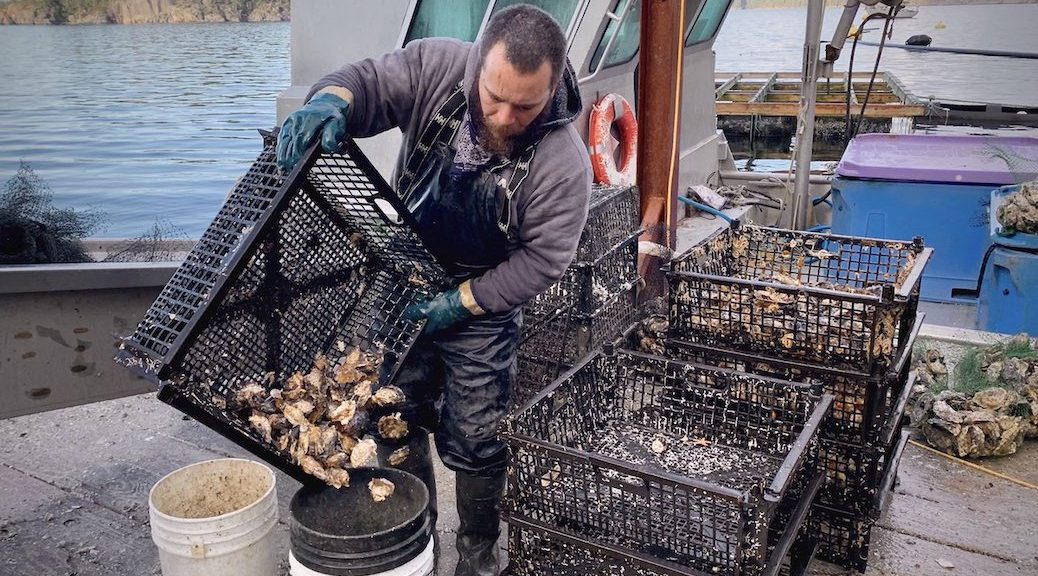
There are moments when Steve Pocock questions the wisdom of his chosen profession as a shellfish farmer.

Picking oysters off a beach in the dead of night during a low winter tide, then navigating whiteout conditions to get a loaded vessel home to port, while freezing and weary, is one of those times.

However, his disillusionment is short-lived when he hits mirrored waters at daybreak. Odds are he’ll also cross paths with orcas, bald eagles or sea lions during the morning commute.

Continue reading Oysters: Unsung climate heroes for your holiday buffet