

All posts by Rochelle Baker

Rochelle Baker is a staff reporter with Canada’s National Observer, thanks thanks to a grant from the Local Journalism Initiative of the Government of Canada. She previously worked as a newspaper reporter and photographer in BC’s Lower Mainland for over 7 years.

‘A public relations strategy’: Critics slam B.C’s recent effort to boost transparency on logging

Canada’s National Observer, Local Journalism Initiative Reporter

The B.C. government has announced changes to improve transparency around logging operations, but critics have more questions than answers. 

Due to recent changes to the Forest and Range Practices Act, forestry companies will be required to create a map of proposed logging operations available for public review as of April 1, 2024, according to B.C.’s Ministry of Forests. And the public will be able to offer input on what environmental values should be considered for future logging plans. 

In addition, the province is developing an online mapping system that companies can choose to use to display their map and get public feedback. The system will be fully launched sometime in 2024. 

Continue reading ‘A public relations strategy’: Critics slam B.C’s recent effort to boost transparency on logging
Canada’s new cruise ship rules don’t plug loopholes for major source of wastewater pollution

Canada’s National Observer, Local Journalism Initiative Reporter

The federal government says some new cruise ship pollution measures are now mandatory, but environmental groups say the move still doesn’t plug gaps that permit the ongoing contamination of some of Canada’s most sensitive coastlines.

Minister of Transport Omar Alghabra announced Friday that voluntary measures established last April on the discharge and treatment guidelines for sewage (black water) and grey water — which includes kitchen water, laundry detergent, cleaning products, food waste, cooking oils and grease as well as hazardous carcinogens and other pollutants — will be mandatory immediately under an interim order

But the largest source of acidic waste water from cruise ships and other vessels will continue to flow into the ocean unabated, said Anna Barford, shipping campaigner for Stand.earth Canada. 

Continue reading Canada’s new cruise ship rules don’t plug loopholes for major source of wastewater pollution

Highway wildfire closure drives home B.C.’s need to think big about climate measures

Canada’s National Observer, Local Journalism Initiative Reporter

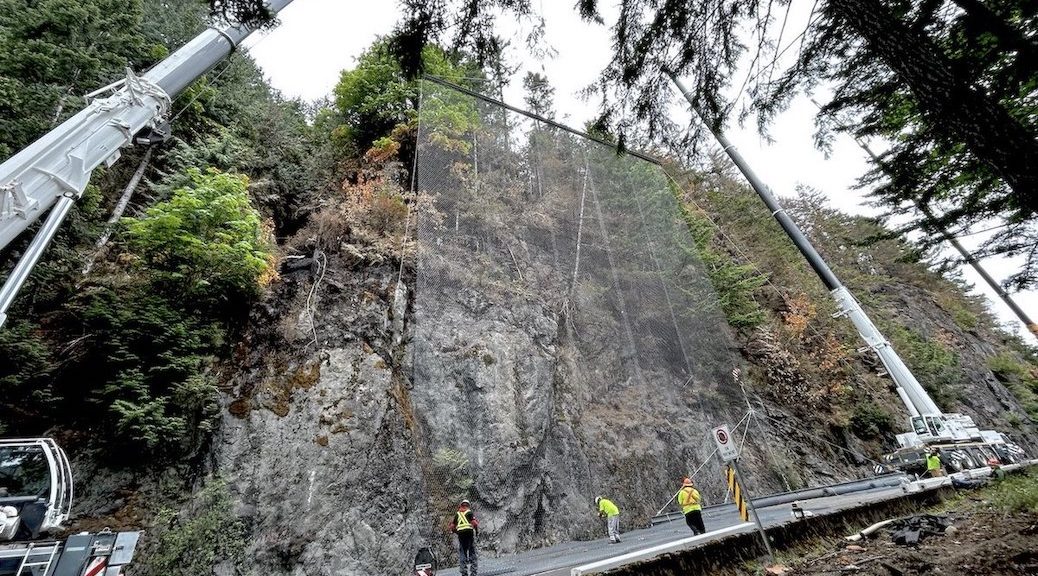
British Columbia’s enormous effort to speed the partial reopening of Highway 4 on Vancouver Island — closed for upwards of two weeks due to a wildfire — is another illustration of the dramatic costs tied to climate impacts, says an economist.

“It’s a huge hit to the restaurants, hotels, and all the services that would normally be making money at this time of year and potentially jeopardizes their whole summer,” said Marc Lee, senior economist with the Canadian Centre for Policy Alternatives (CCPA).

“The economic disruption and costs associated with already existing climate change is something that we don’t often think about enough.”

The province’s Transportation Ministry has been pulling out the stops to get the key transportation corridor — the only paved road serving Port Alberni, numerous First Nations and the West Coast tourist hot spots of Ucluelet and Tofino — open to single-lane alternating traffic by the weekend.

Continue reading Highway wildfire closure drives home B.C.’s need to think big about climate measures

Most Canadians on board with government cash for zero-emission shipping

Canada’s National Observer, Local Journalism Initiative Reporter

Canadians are generally pretty foggy about how much shipping emissions are fuelling the climate crisis. 

But as soon as they learn that the sector produces a billion tonnes of carbon dioxide each year, the majority are on board with government investment in zero-emission ports, an Abacus Data poll indicates. 

Continue reading Most Canadians on board with government cash for zero-emission shipping

Canada must speed up decarbonizing ports to slash rising shipping emissions

Canada’s National Observer, Local Journalism Initiative Reporter

Canada urgently needs to chart a course of action that will dramatically reduce the shipping sector’s surging greenhouse gas emissions, says an international coalition working to decarbonize the maritime sector. 

Each year, international shipping creates a billion tonnes of carbon dioxide. If the sector was a country, it would be the sixth largest emitter of CO2 emissions, roughly equivalent to Japan

Continue reading Canada must speed up decarbonizing ports to slash rising shipping emissions