

A recent study suggests that incorrect reporting may be responsible for Southern Quadra Island, Tahsis, Gold River and Sayward not qualifying for funding under the Connected Coast High Speed internet program. Their service provider reported their internet speed already met the national standard. Consequently, the Strathcona Regional District (SRD) had to arrange for loans of up to $12.5 million.
BC’s Ministry of Citizens’ Services, the Union of BC Municipalities and the Northern Development Initiative Trust hired TANEx Engineering to study reports that the amount of broad service available in rural communities is less than what servers like TELUS, Mascon Cable Services (a TELUS company) and Bell are reporting on the National Broadband Internet Service Availability Map. According to the ‘Summary of Findings,’ released by the Ministry, ‘there was medium to high evidence of possible discrepancies in 106’ of the 940 localities studied.
The SRD Board appears to have discussed this matter in the closed session of their Feb 23 Board meeting. A link to the summary of findings was in the minutes of that meeting. The SRD declined Cortes Currents subsequent request for an interview.
However some of the Directors have discussed the reporting problem at previous Board meetings.
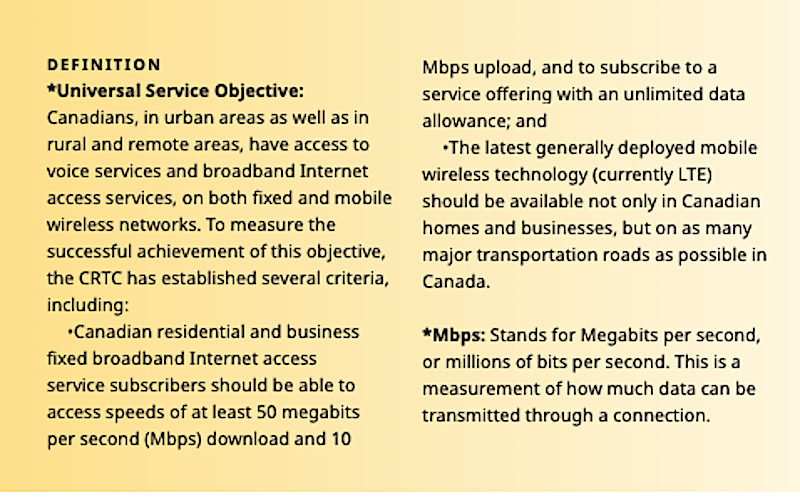
According to the Canadian Radio-television and Telecommunications Commission (CRTC), “Canadian residential and business fixed broadband Internet access service subscribers should be able to access speeds of at least 50 megabits per second (Mbps) download and 10 Mbps upload.”
The services in Southern Quadra Island, Tahsis, Gold River and Sayward were all reported to have met that standard.
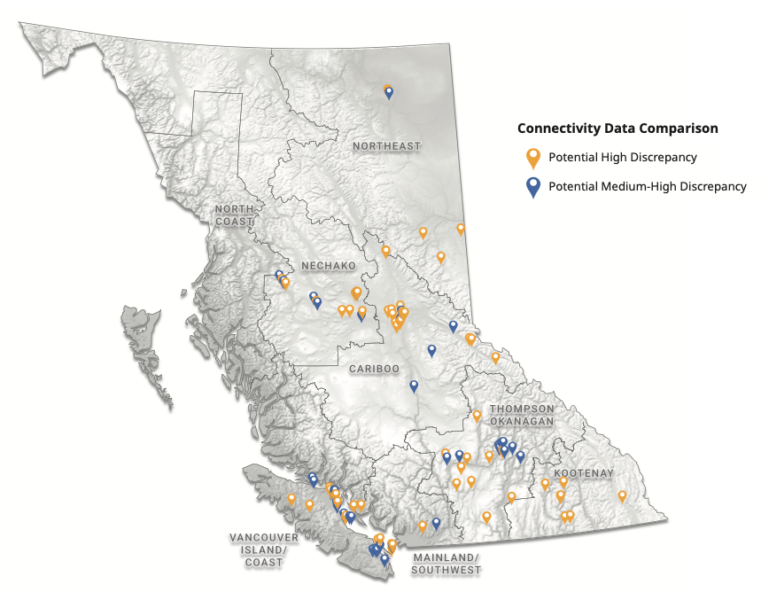
However Tahsis is also one of the six communities that TANEx chose for case studies:
“Tahsis reports poor internet, does not appear to have 50/10 service available for purchase, and there are no CIRA tests within the municipality that reflect service at 50/10. This provides further evidence of a difference in what the Map shows and what the community is experiencing.“
At the March 24, 2021, Board meeting, Mayor Martin Davis of Tahsis remarked, “I find it really disingenuous that they’re throwing these numbers around about 50 down and 10 up for Tahsis because, well, I just did a test on mine and it’s 6 down and 3 up. I’ve talked to many people in the community around these tests and that’s typical. So I really don’t know where the data’s coming from and I believe it’s incorrect. So I’m glad to see that they’re looking into it.”
Mayor Brad Unger of Gold River agreed, “Same thing happening in Gold River.”
Regional Director Jim Abram reported the results of Quadra Island’s speed tests at the April 28th Board meeting, “200 or some odd people had to do speed tests and screenshots of what kind of service they were getting from TELUS, because TELUS had given the government information that was not quite correct, that we were covered to a degree of 50 megabits down, 10 megabits up on our internet speeds that is untrue and we proved it with our screenshots. The highest one we had was 38! Most of them were down in the 10s. So that in itself cut out a huge amount of our funding for the Connected Coast, which we’re all involved and we just passed a huge motion to borrow a bunch of money!”
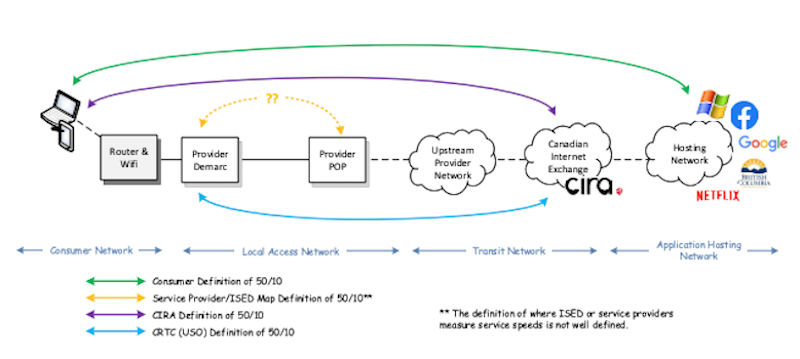
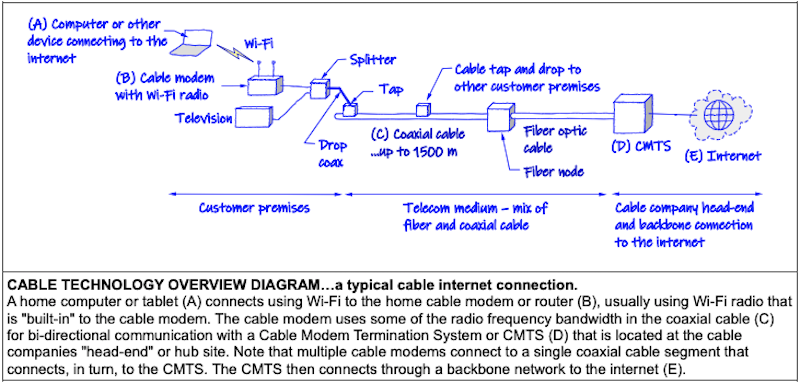
TANEx found that 50/10 can mean very different things for customers logging on to their hosting network and a service provider who is only accessing the Canadian Internet Exchange. Connection speeds can degrade as information passes through more parties. So what the provider experiences as 50/10, can be much slower for customers.
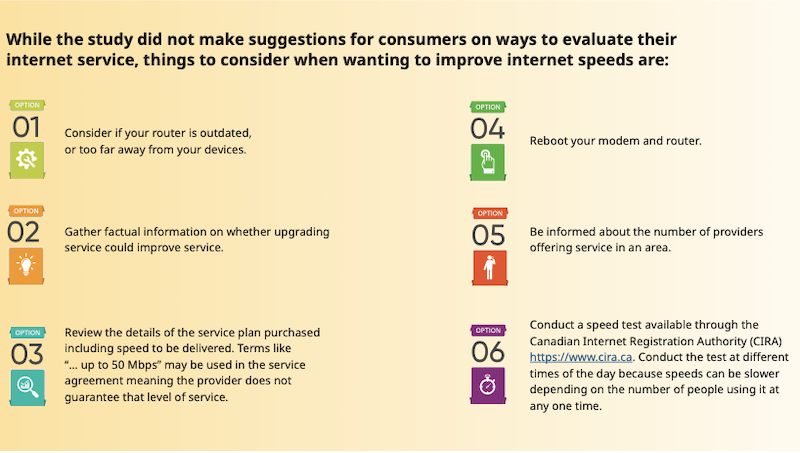
In theory, providers should deliver the connection speeds they advertise, but there is also a wide range of factors that are regarded as outside the control of the network provider.
- Number of users accessing the internet at the same time on a consumer’s network;
- Consumer purchasing choices such as the internet plan purchased and service provider;
- Compatibility with network and the number and age of devices such as computers, laptops, TVs, telephones, personal tablets and mobile devices, gaming systems, security monitory systems and others; and
- Issues related to the wireless technology of WiFi such as quality, distances signals need to span, and construction materials used in buildings where it is being used.
In addition, there appear to also be problems with the mapping system.
To maintain customer confidentiality, the information displayed in the Map is aggregated into 25 sq km hexagons.
TANEx stated, “Some service providers indicate that they report to the CRTC based on address points served in a particular location and ISED then converts that reporting into the Map to show service along road segments (not at particular addresses). This can result in some locales being shown on the Map as having coverage at 50/10 more broadly than what is actually available.”
Map updates can sometimes include services coming to an area, rather than what is available to the customer.
TANEx added, “There is no third party validation of the data reported by providers. The accuracy of the information provided is taken as fact. The onus of challenging the accuracy of the map lies with the party disputing it.”
The summary concludes, “A plan to ensure that all communities are connected with the minimum standard speed of 50/10 will be more complex than ever, and have to address all the factors affecting speed raised in the study, and ultimately require a collective approach spanning all levels government, service providers and, in some instances, the consumer”.
This post was originally published on February 28 and republished for the Saturday Round-up on March 5, 2020.
Top image credits: The computer Gremlin by Larry Wentzel via Flickr (CC BY SA, 2.0 License)
Sign-up for Cortes Currents email-out:
To receive an emailed catalogue of articles on Cortes Currents, send a (blank) email to subscribe to your desired frequency:
- Daily, (articles posted during the last 24 hours) – [email protected]
- Weekly Digest cortescurrents – [email protected]