
By Rachelle Stein-Wotten, Gabriola Sounder, Local Journalism Initiative Reporter
The Regional District of Nanaimo intends to install a second pond leveller at Coats Marsh Regional Park sometime this fall, but some Gabriolans feel there’s a lack of information that demonstrates the need for it.

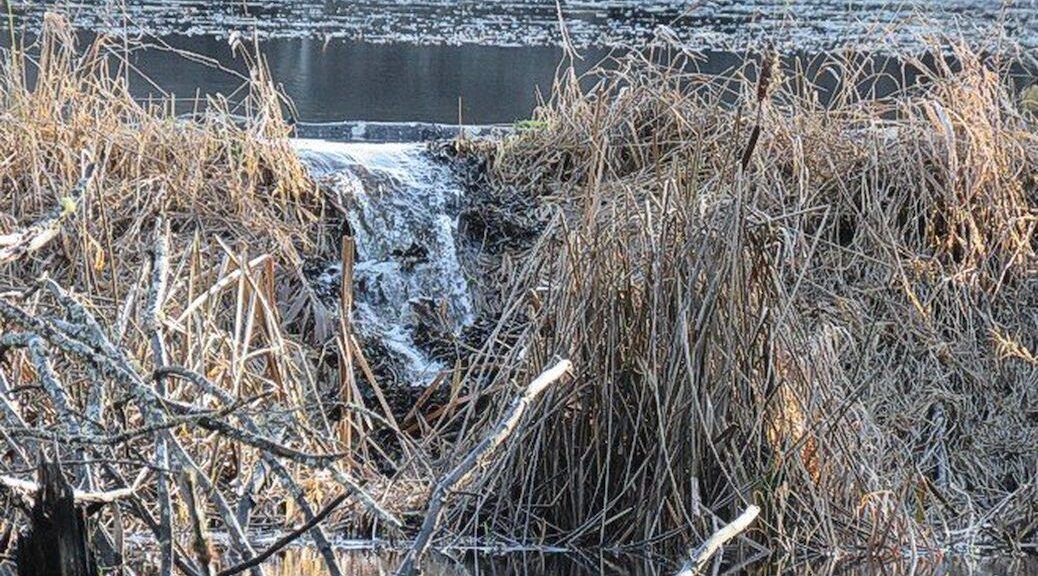
Nick Doe has been visiting the shallow-water wetland of Coats Marsh and surrounding forest for 10 years and has been making field observations and taking measurements, including water flow through to Coats Creek, for Gabriola Streamkeepers since 2015. Doe, an electronics engineer by trade, likes the solitude in the sensitive ecosystem, home to frogs, bats and waterfowl, and has witnessed the work of beavers as they have built two dams in the roughly metre-deep wetland and the way the overall ecology has adjusted to their homebuilding efforts.
The beaver(s) – Doe has only ever seen one at a time – constructed the second, smaller dam close to the decades-old concrete weir in the last couple years, Doe said.
Years ago the beavers’ labour raised the level of the marsh and increased the overall surface area, expanding the habitat for ducks and insects including multiple species of dragonflies.
The RDN plans to install the second pond leveller at Coats Marsh “following recommendations” from a weir assessment report completed in May 2020 by mechanical engineering firm SRM Projects. Since last summer parks quarterly reports have mentioned the intention to do so.
Doe has been “anxiously awaiting” to read the report of the consultant, with whom Doe and others shared observations and historical information about the weir and marsh.
“I’m not sure what problem it’s solving,” Doe said of a second leveller, adding he wants to know what consideration has been given to how it might affect the overall ecology of the wetland.
“Since 2015 the beavers have been increasing the height of the dam,” Doe said. “That stabilized a couple of years ago. In the last three years there has been no increase in the height of the dam – the beavers are quite satisfied with the level they have.”
Upon requesting a copy of the report, an RDN spokesperson told the Sounder that it contains “sensitive information” and could not be shared unless redacted. The Sounder was later told the report had to be shared with the board of directors first. Yann Gagnon, RDN manager of parks, later clarified that consultant reports “can contain private personal information as well as information from third parties” and are not shared with the general public.
Gagnon provided the Sounder with a short list of “priority actions” noted in the 2020 weir assessment report, which include “lowering the greater Coats Marsh pond level to the ‘design’ weir spill level” by installing a Clemson pond leveller through the beaver dam as well as removing the beaver debris and vegetation buildup in front of the weir and footbridge. RDN staff did not respond as of press time about what impact, if any, that work would have on the beavers and overall conditions of the wetland.
The director for Electoral Area B (Gabriola, Mudge, DeCourcy), Vanessa Craig, has also not seen the report but was aware for some time that a second pond leveller was to be installed, Craig said, who is also chair of the regional parks and trails select committee.
A registered professional biologist specializing in small mammal ecology, Craig said pond levellers are often used to control water buildup behind a beaver dam.
“Pond levellers are often successful because the slow movement of water is not detectable by the beaver – otherwise they’d block it up,” Craig said, adding that they do not drain waterbodies.
Craig noted the Coats Marsh Regional Park management plan, written in 2011, indicates that the area has an “inadequate pond levelling device,” which the plan says is needed to prevent seasonal flooding of neighbouring properties. Staff did not indicate if flooding has been an issue recently.
Water buildup behind a beaver dam “could lead to the sudden release of a substantial volume of water upstream of the Coats Marsh weir,” Gagnon said. “This surge of water could lead to the possible failure of the weir and the corresponding release of water down the spillway channel, which would very likely result in damage to the downstream infrastructure.”
Gagnon confirmed there have been no issues as a result of water buildup behind the dam since the RDN acquired the land in 2008.
Doe believes the beaver dam is stable and has observed two spillways through it that prevent the water level from cresting over it.
“Since the beavers have built the dam with their own spillways there has been no flooding there in the last two or three winters,” Doe said.
Madrone Environmental Services Ltd. has been contracted to install the second pond leveller. The parks report from July 2020 notes that an environmental management plan will be prepared to support the installation of a second pond leveller; however, staff did not say if that plan has been developed yet. An RDN spokesperson said the timeline of installation or total cost will not be known until mid-August “as they are currently working on the best solution for the environment.”
Doe, who humbly acknowledges he’s “not an expert,” just wants to see the report and is frustrated to not have results shared given the amount of background information and data he and other volunteers provide the RDN that is then used to develop plans.
“I think we deserve some feedback.”
