
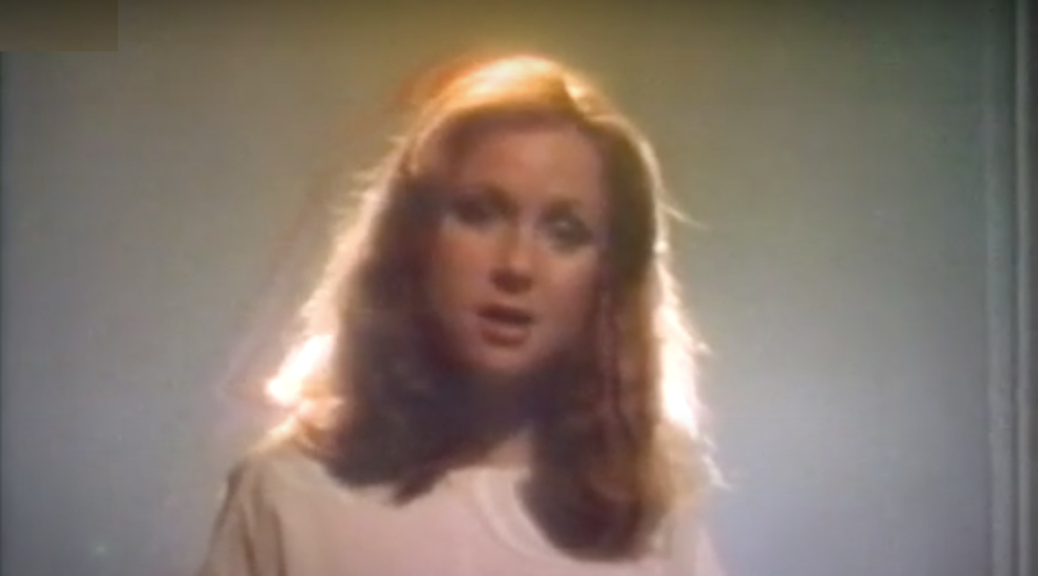

The audio version of this story opens with a clip of Cortes Island’s own Kim Paulley singing in what may be the first music video release of Bryan Adams’ ‘Straight from the Heart.’ That was in 1980. Adams originally thought it should be sung by a woman and did not make the song famous for another 3 years.
Paulley has been entertaining Cortes Islanders for the past three decades and in 1994 gave a special unscheduled performance for Queen Elizabeth on Twin Islands. In the first broadcast of a two part series, she talks about the beginnings of her career.
“My mom wanted to be a singer so you could say I was fulfilling her dream, but it did become my dream. She sang the show tunes and she danced for my sister Cheryl and I in the kitchen. I think it was when she was happiest too. We were also happiest because she was so happy doing that for us. My mom was a closet singer. She grew up wanting to be a singer, but never had the nerves for it. She would sing for her family, but she would go into another room and sing.”
“We listened to a lot of music. My dad had a great jazz collection and was a virtuoso whistler. I can’t whistle to save my life, so I always wondered, ‘why can’t I do that?’ I sang instead.”
“Those seeds were planted early on with me. By about age four, I was plunking little melodies out on the piano, wherever I could find a piano. We didn’t have a piano in our house. I was more interested in what my voice could do. I would make up little exercises with my voice. The kind we called ‘vocalises’ when I was at music school.”
“I would challenge myself when I was in mid-elementary years with the song ‘Somewhere Over the Rainbow.’”
“The neighbors would say, ‘We know when Kimmy Paulley’s coming home, because we hear her singing.'”
“I was surrounded by singing at school, too, the school choir. Every year, I auditioned – yes, in elementary school. Imagine making kids audition. Winnipeg has a great musical scene, maybe that’s where it comes from: all those great music programs in schools.”

“The Mikado, role:Yum Yum, Victoria Gilbert & Sullivan, 2008 – me & my mom at performance” – courtesy Kim Paulley
“One year I didn’t get in. My mum gave the school an earful. She told them I had a cold, which I don’t think I did, and she got me into the choir.”
“When I got into my late elementary school years, we were in Vancouver. I was in grade six and that’s the first time I did a public performance. We were in Lynn Valley. Because we watched the Glen Campbell show at home, I sang ‘By the Time I Get to Phoenix.’ Imagine, grade six, singing about all that love talk – but it had a beautiful melody. I’ve always been a sucker for a good melody.”
“Graduation was grade 6 in those days. I sang that in the graduation concert and the music teacher said, ‘you could be a professional singer when you grow up.’ As we grow up, we put away these little nuggets, things that people say, the way that we’re encouraged, or not encouraged. So I held that close, but after that I took a real hiatus from singing, all through my teen years.”
“I kept asking for singing lessons and, no pun intended, it fell on deaf ears. Even though this was a household of singing, it wasn’t a household that encouraged taking singing lessons.”
“At about age 19, I got married. I was going to work, but I needed that passion that singing represented for me, to keep running through my life.”

“So I looked up singing teachers in the Yellow Pages and found Doreen Shorey in Richmond. She said, ‘yeah, come, it’s X amount of dollars.’ I was working, so I went once a week.”
“She taught in her basement, and used to sing in operas. I think she was more Gilbert and Sullivan. And as soon as we got going, she said, Well, I can’t decide if you’re a mezzo-soprano or a soprano. (Soprano being the highest voice.) But you can definitely think of yourself as having an opera career.”
“And I went, ‘what? I had never even heard an opera in my life. No, no, no, you’ve got it wrong here. I want to sing Olivia Newton John, Barbara Streisand, and Diana Ross. That’s what I want to sing.’ I would bring her songs, not sheet music, because I didn’t do sheet music, and didn’t know my way around it.”
“I would just sing bits for her, and she’d go, ‘oh, no, no, no, you can’t do that.’ It was both encouraging and discouraging in equal parts. I eventually stopped lessons with her because I really wanted to pursue pop singing. That’s where I felt at home.”
“It’s hard to explain how lucky I felt at a certain point here when I ended up with Bryan Adams as my next door neighbor in Kitsilano. He was still getting his career going in Vancouver, playing the local scene.”

“A friend of mine, Ron Vermeulen, had become a recording engineer at Little Mountain Sound in Vancouver. He and I worked together in the record department at Zeller’s when I was going to high school, but Ron and I had stayed in touch.”
“I was 22 and I got married too young. So I got myself unmarried, and I was working at that point at CKVU television as a receptionist and Ron was working at Little Mountain Sound, just a couple blocks away from CKVU. He was a beginning recording engineer, mostly sweeping the floor I think. He knew I was trying to work up a demo of pop songs, so he said, ‘Come on into the studio. We’ll just record a few things in the evening hours, when nobody’s using the studio.'”
“Ron was just a beginner, but he was already great. He ultimately became studio engineer of the new studio that Bryan Adams created in Vancouver some 20 years later, the Wharehouse.”
“Anyway we worked up this demo. It was Barbara Streisand’s ‘Superman,’ one of Olivia Newton John’s songs, and a couple of other covers, all covers.”
“He said, ‘you need something original. I’ve got some tracks here. Bryan Adams laid it down for a song called ‘Straight from the Heart.’ He doesn’t want to use the tracks, he feels it’s more of a woman’s song.'”
“I said, ‘wow, Bryan Adams is my neighbor in Kitsilano.’”
“He said, ‘good because you have to ask him if you can use it. Just go next door and knock on his door.’”

“That’s what I did. I worked the nerve up and said, ‘I’m not here to borrow half a cup of sugar. I am here to ask if I can use your song, ‘Straight from the Heart.’ I told him about Ron introducing me to it, and said, ‘it’s just for a demo.’ He said, ‘sure, yeah, absolutely,’ and I went, ‘okay, wow, thank you.’ So we recorded it.
“This is where the pieces all start to fit together. There was Ron from Zeller’s days. I had Little Mountain Sound usage. Bryan Adams was my neighbour. I was working at CKVU and there were guys in the three quarter inch editing department who have their own music video company. One of them had a crush on me. (He’d do anything for me!) He said, Let’s make a music video of it’ and it ended up airing on the Vancouver Show.”
The night the video Premiered, Bryan Adams came down to CKVU. He watched it s in the booth and came down to talk to me afterwards. I was working in reception that night and the first thing he said to me when he came down was, ‘very sexy.’ And with a smile, ‘but, you changed my song!’
“You mean, where I took the chorus up the octave? Not really a change, same notes.”
“You know I’ll never go; As long as I know; It’s coming straight from the heart.”
“And he said something like ‘ya and it worked.'”
“This was in 1980.”

“This was 1980. I thought well this is my ticket, I’m going to make it in this business with this as my business card, essentially. I sent it out to a lot of record companies. And I even went a fair distance in Toronto with one record company, but they wanted music that I’d written as well.”
“Songwriting: I wasn’t sure if that was me or not. That was going to be a whole new thing that I would be jumping into.”
“And as it turned out, much as that was such a wonderful experience, I made an exit stage left and moved towards classical.”
“Partly that was my partner at the time. He was eleven years older than me. A great writer himself, Sean Rossiter. We were together for about three or four years. He really encouraged me to go to UBC and get a Bachelor of Music degree. I didn’t believe in myself on that, but he really did.”
“So, I went to my second voice teacher: Beth Watson in the music department at UBC.”
“Sean went to the Vancouver Symphony concerts. We went to one performance and it was a classical singer with an orchestra. I can’t remember her name, but she was fantastic. She didn’t have a microphone and I was utterly amazed that she could sing over this whole orchestra. So I thought, ‘okay, that’s how far you can go with singing.’ It was one of those little epiphanies, big epiphany for me. I went to my voice teacher that week and told her I want to try singing classical.'”

“Eugene Onegin, chorus, Pacific Opera Victoria, 2005” – submitted photo
“She was just flabbergasted, ‘What? you’re doing pop?’”
“I said, ‘Yes and I want to audition for the Classical program next year.’”
“She replied, ‘Well, The auditions are in June. That’s a lot to bite off. You’ll have to do a music theory entrance exam. You’ll have to t be able to play piano at I think it was grade 2, or grade 3 level. Or at least have the beginnings of that. It’s one of the requirements, you have to have another instrument.”

“Daphne, Mermaid (role) Pacific Opera Victoria, 2007″ – submitted photo
“So, I started taking piano lessons. The piano teacher was someone who worked with Beth in her studio, as an accompanist. She taught me music theory as well. I got the Barbara Wharram ‘Elementary Rudiments of Music’ book. I learned my music theory, it’s basically rote memorization: the key signatures, scales the names of the notes on the staff and lots of other musical terminology. The piano part, that was a little trickier, but I worked like a dog.”
“Meanwhile, I was also working on having my audition pieces. It had to include an opera aria and a couple of art songs. So we picked things that were short, ‘O mio babbino caro,’ Puccini, nice short aria, but it did go up to a high A flat, and I had to nail that, a little French folk and there was, I think, one other song in English, Handel.”
“We worked and worked and worked. I did the audition, I did the theory exam, I did the piano test, and got the letter in the mail that I had been accepted. I don’t know quite how because I think I just scraped through on the piano and the theory. My audition was okay, apparently, but the main thing is I got into the program.”

‘ Orfeo, Role: Hope, Denman Island Baroque Opera Festival 2018’ – submitted photo
“Somehow, I made it through that first year. It was really hard because I had to jump in with both feet into music theory classes. I was just scraping by. Later one of the history professors, who had become a chum, said, ‘there were bets in the department about whether you would make it to Christmas your first year.’ And I thought, ‘Oh, God, it was that bad was it?’ But it did get easier, year after year.”
“In my second year, there were two streams for voice. You could be just doing a general Bachelor of Music with voice as your instrument, or you could be doing voice performance (or piano performance, or trumpet performance or whatever your instrument was).”
“I had a lot of nerve really and auditioned for the voice performance stream. It just meant there were a lot more demands, more performances. I had to do more lunch hour recitals, more whole recitals of my own. Recital is just a fancy name for a concert.”
“I got through those years with my Bachelor of Music.”
“I didn’t find myself the ultimate voice teacher at UBC. I tried every voice teacher in the music department, I was well known on that point, and I felt none of them really helped me find my voice.”
“In my last year, I found a book in the library. It was one of those little bits of serendipity, and almost fell to the floor at my feet because there’s so many books in that music library. It was called ‘The Free Voice’ by Cornelius Reid. I read this book from cover to cover and thought, ‘Oh my gosh, is this what singing is about!’ He pulled it apart in a whole new way based on the way voice instruction was done in what they call the Bel Canto period (‘Beautiful singing’) going back to Manuel Garcia (1775-1832). The way that people were taught to sing in the opera at that time, meant years and years and years of just singing.”

“It was very purist. You might start to sing ‘Caro Mio Ben,’ one of the old Italian songs, and sing that for a long time before you could feel that you got it and you didn’t perform for many more years. It was an extremely rigorous approach to singing.”
“The thing that was interesting to me was, it was about teaching based on voice function. That was pinned to ‘you’ve got a chest voice’ and ‘you’ve got a falsetto.’ The voice in the middle brings the two together into a beautiful little marriage and that’s how you build a voice.”
“I thought, ‘wow, I haven’t heard any of this here in my four years at UBC. I’ve heard a lot about trying to sing out of the top of my head, and that there’s a pear in my throat, and all these metaphors. But if you didn’t get the metaphor in that moment, you didn’t get the note.”
“I was doing okay because I had generally good quality and I had a pretty good range, but I was having trouble with the high notes and I was having trouble with the very bottom notes. This book really resonated with me. I wanted a stronger chest voice, I wanted a stronger Falsetto, ultimately, because that’s what really drives these, but you still have to have the chest voice under it. That’s what really drives those high notes.”
“So I was telling David, my boyfriend at the time, about this book and he said, ‘I know somebody that teaches that approach. They’re in Calgary,’ which is where David was from. He’d gone to University of Calgary for his undergrad.”
“And I said, ‘You do?’”

“And he said, ‘Yes, Ken Nielsen. My parents live there. Let’s go out for the summer when we graduate, and try out some lessons with him. I bet he’s still got his studio running.’ He was also a voice teacher in the at University of Calgary.’”
“I said, ‘okay’ and I just took the bull by the horns. I wrote Ken Nielsen a letter which apparently he saved for all these years because I asked the very question that he loves jumping on. I said, ‘I’ve done my Bachelor of Music, but I really haven’t learned voice vocal technique.’ He came right back at me, ‘that’s because it’s not a technique, it’s about getting a free voice and registration, chest register, head register, falsetto, all that.’”
“I wrote, ‘well, could we come out, David and I.’”
“He replied, ‘oh, I know David.’”
“This is all done by snail mail, because we’re talking about the 1980s. He wrote back ‘yes, and I recommend two lessons a week, half hour each to start with. Let’s give it a whirl.’ He was very easygoing about it.”

‘Orfeo, role: Messenger, Denman Island Baroque Opera Festival, 2018’ – submitted Photo
“Off we went on our pilgrimage to find that ultimate free voice. It ended up being just a fantastic chapter from 1985 to 1990. We were there. We started an opera company so that we could have a debut, which was very selfish, and Ken Nielsen was into it. He was our musical director because he was an extraordinary pianist and musician. He taught conducting at the University of Calgary as well as voice.”
“He was the bad boy of the voice department because he didn’t teach the way all the other instructors taught. So he was definitely a maverick, and we loved him for it.”
“We put on some operas. We put on a lot of fundraising concerts.
“Meanwhile I was singing with Calgary Opera as well. I got into their chorus. I ended up singing a little role in the Magic Flute with them. I got to play one of the boy sopranos, or sometimes called First Spirit, so I had the high part. That was a lot of fun – This is on a professional stage, and I’ve got a solo.”
“From there, I taught a bit of singing. I did a lot of auditions. We both were doing the auditions out there. It’s a lot of rejections, not getting the gig and I wasn’t good at auditions, my nerves would get to me.”
“Renee Fleming, the great soprano, said, ‘just at the point when you get good at auditions, you don’t need to do them anymore.’ I didn’t ever get to that point, I lost my spirit on it, and I decided to quit singing. So the second time I quit singing was in 1990.”

“The Fairy Queen, Denman Island Baroque Opera Festival, role, big aria The Plaint, 2019” – submitted photo
“We had moved to Seattle. I had thought of doing a Master’s in Psychology. All kinds of things. I worked with children there in a Head Start preschool program and then that chapter was done. I returned to Vancouver on my own, actually.”
“David went on to be a production manager with Arizona Opera.”
“I continued working with kids. I was program coordinator for a children’s preschool program for kids with special needs in Surrey.”
“Then I met George Sirk on Cortes at Hollyhock.”
That’s a part of another story, in which Kim Pauley returned to singing, and the conclusion of this series.
Changes subsequent to publication:
- the date for release of “Straight From the Heart” was changed from 1979 to 1980
- anecdote about Bryan Adams at the 1980 release party was added
- photo of Ken Nielsen added
Music Credits:
- Kim Paulley singing ‘Straight from the Heart,’ music video (1980)
- Kim Paulley &Kosta Ruslanov, Lute ‘Lascia chio Pianga’ – Denman Island Baroque Music Festival, 2018
- Kim Paulley & Marcus Vitale, Harpsichord ‘Pur di cesti O bocca bella’ Denman Island Baroque Music Festival 2018
Sign-up for Cortes Currents email-out:
To receive an emailed catalogue of articles on Cortes Currents, send a (blank) email to subscribe to your desired frequency:
- Daily, (articles posted during the last 24 hours) – cortescurrents-daily+subscribe@cortes.groups.io
- Weekly Digest cortescurrents – cortescurrents-weekly+subscribe@cortes.groups.io