

The City of Campbell River is considering taking control of the Strathcona Regional District’s (SRD) Electoral Areas Planning Service away from rural directors.
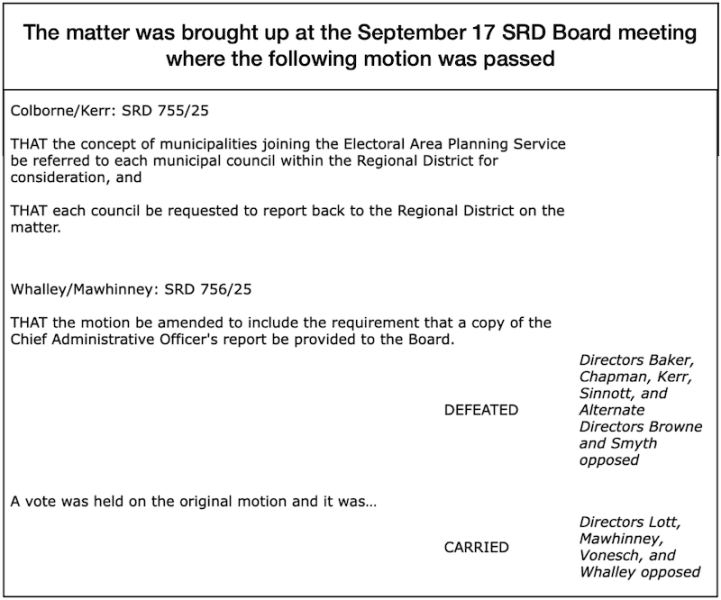
Currently, the members of that planning service are the four Regional Directors of : Area A (Kyuquot/Nootka-Sayward), Area B (Cortes Island), and Area C (Discovery Islands and Mainland Inlets) and Area D (Oyster Bay – Buttle Lake ).
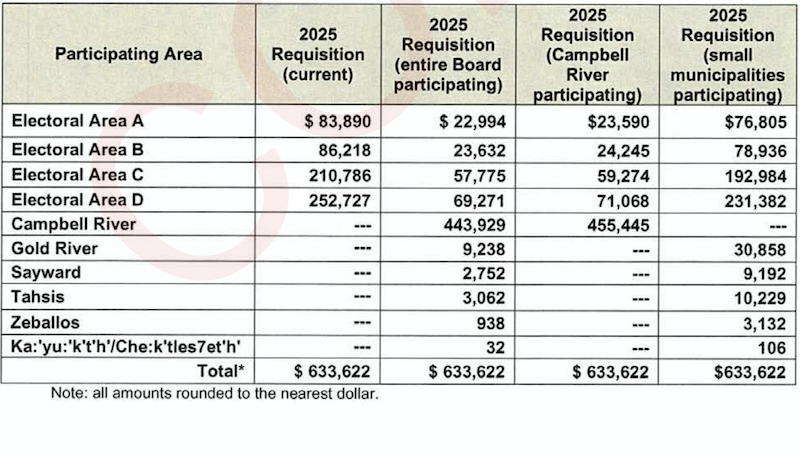
Campbell River’s five Directors are looking at joining the service, though it would cost the city’s taxpayers close to $500,000 per year for its share of the service’s assessments. They asked the other incorporated municipalities in the SRD—Tahsis, Zeballos, Gold River, and Sayward—to consider joining as well.
On Wednesday, October 1, 2025, the Regional Directors of Areas A, B and C issued a joint press release rejecting the idea. In today’s story they outline why they believe the planning service must remain in the hands of the rural areas.
Mark Vonesch, Regional Director of Cortes Island, explained, “We currently have a planning service that we all pay into. That’s where all our land use decisions happen and currently the four of us are the votes on those decisions. Campbell River has the right to be able to join this planning service, but it means they have to pay for it.”
“So right now, Campbell River is considering joining the electoral area planning service that would cost them $500,000 a year. That’s $5 million over the next 10 years to be able to control land use planning decisions in the rural areas of the Strathcona Regional District.”
Last month Cortes Currents reported an abridged account of the Municipal Committee meeting where this idea was discussed. Here are a few gleanings from that broadcast:
Campbell River Director Doug Chapman: “Growth is going to happen at the north end of the island, whether we like it or not. I would like to control how that happens, where it happens and when it happens. This is us getting ahead of the train instead of being dragged behind it.”
Campbell River Director Ben Lanyon: “I’m looking at it from Campbell River City Council perspective. It needs to have a reasonable payback period and what would that come in the form of is – more workforce housing, the ability for people to live on Quadra and work in Campbell River more easily. Right now, there’s just a shortage of everything at every price point. We need to have a more unified reputation as a region for development.”
Director Chapman: “We have some electoral area directors that, I think, are still trying to stifle development.”
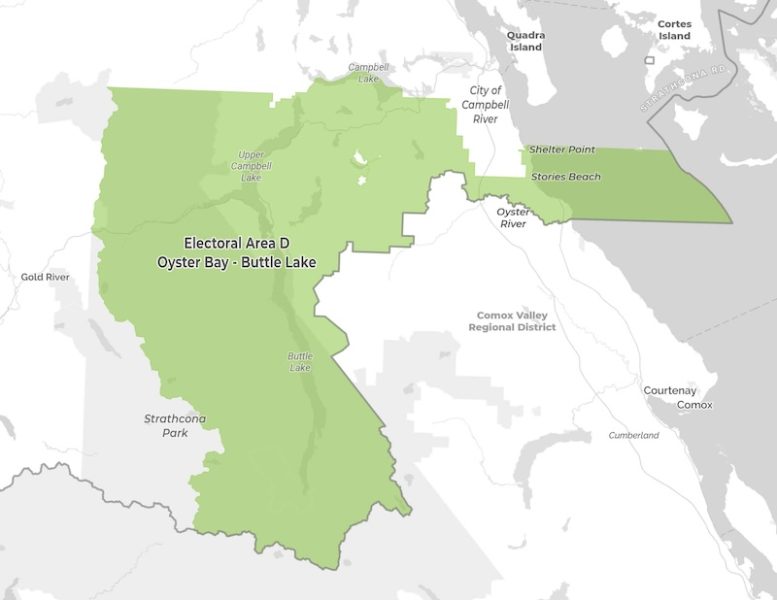
Campbell River Director Ron Kerr: “I just want to point out that really Quadra, Area D to a certain degree, Sayward and the same with Area A – they’re all really bedroom communities of Campbell River right now. They all receive the benefit of the facilities, so the services, and yet they don’t have to carry that burden going ahead.”
Campbell River Director Susan Sinnott: “The region is important to Campbell River, and we are an unfortunate region where we are so dominant that what happens in the region does impact us because we’re paying a good amount of money for it. “
Director Lanyon: “I want to see all of the municipalities join because I don’t think this should be a Campbell River dominated situation. If it’s just Campbell River that joins, that’s five votes (vs) four votes for Electoral Areas. Campbell River makes every land use decision. I don’t want that scenario. I think we need to talk as a group of municipalities about how we want to approach this.”
Gerald Whalley, Regional Director for Area A explained, “My concern is based on the fact that if Campbell River joined the electoral area planning service, they would have total control over all land use issues within the rural areas, within the electoral areas. That is because Campbell River has five votes, the other electoral areas only have four votes, so they could potentially outvote us on every issue.”
Robyn Mawhinney, Regional Director for Area C added, “This could mean that an application which has not received community support could be pushed through despite community feedback. It could potentially mean a building service could be implemented, costing residents not only increased tax dollars annually, but more and more fees for every stage of construction. It could really mean that the wishes of rural residents are not considered in land use planning decisions. To me, that’s unacceptable and why I am really so concerned with this proposal.”
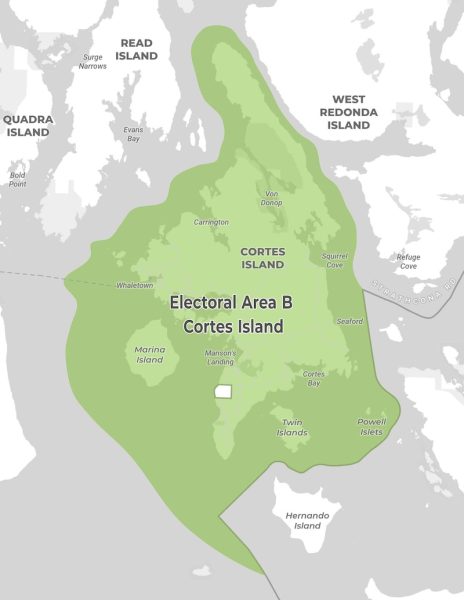
Director Vonesch: “Why would rural communities want their land-use decisions made by municipalities outside of where they live? Land-use decisions should be controlled by the local people who live here. We have a vested interest on Cortes, and we’re the ones who should be deciding what happens here.”
“If you live on Cortes Island or in one of the rural areas in the Strathcona Regional District, you’re concerned about bullying — about Campbell River being able to control our land-use decisions. That’s a huge issue for people living in the rural areas.”
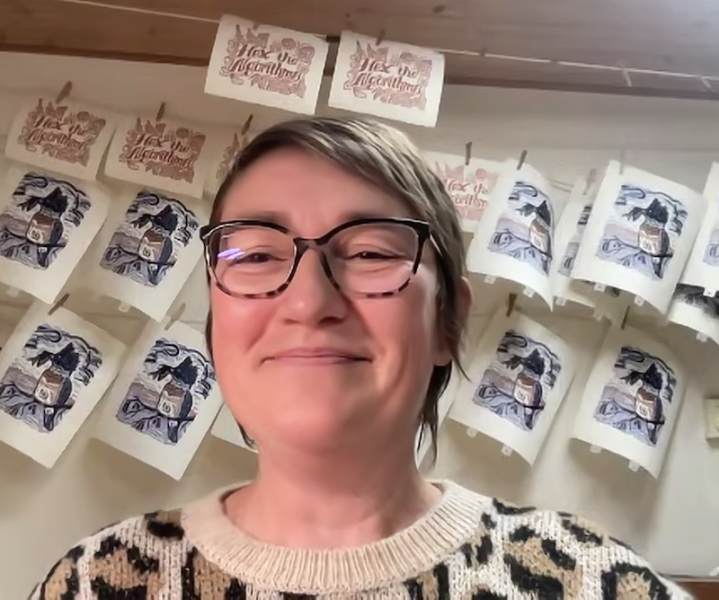
Director Mawhinney: “I truly respect my municipal colleagues and the incredible work they do in their communities. It takes a lot of focus to be an effective municipal leader. Electoral area directors bring the same focus to the rural areas, which face very different issues and concerns — issues that rural area directors look at and advocate for.”
“With our rural lens, my apprehension about municipalities joining the electoral area planning service is that they don’t share that same perspective. They don’t live or work in the rural areas. Expecting them to have an intimate understanding of the local temperature and land-use bylaws for four electoral areas seems almost insurmountable, especially when added to their municipal workload.”
“I have heard and seen comments from Campbell River councillors that are strongly in favour of development, where any other consideration is dismissed as ‘ideological.’ I’ve even heard developers referred to as their ‘clients,’ with the idea that ‘making our clients happy is going to be good for the community.’”
“The lens I bring to applications for rezoning or Official Community Plan amendments is more holistic. I weigh resident feedback and the bylaws already in place alongside the benefits of an application. That is what my community expects from me, and what voters in the electoral areas expect from rural directors.”
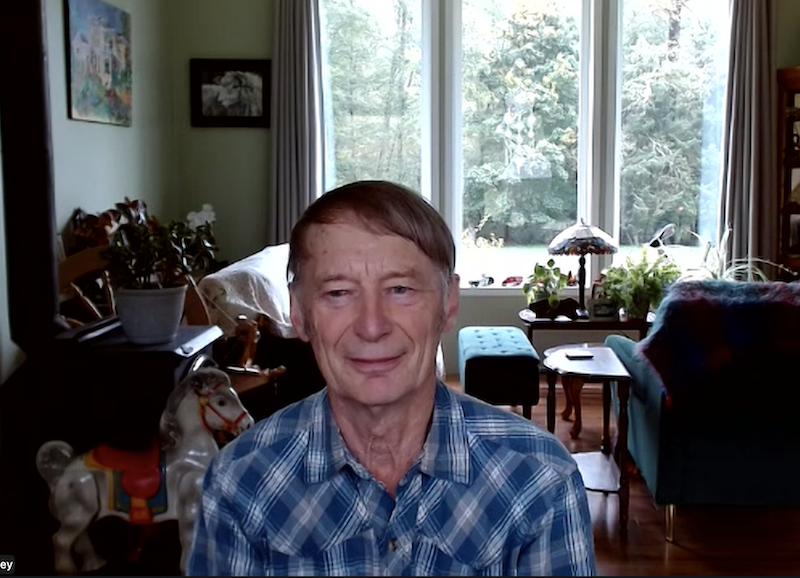
Director Whalley: “This is a legal move and that is the way the provincial government set up regional districts, that municipalities could join the planning service and pay their share if they wished. However, I’m not so sure that the province foresaw that in the Strathcona Regional District, which was split off from the Comox Valley Regional District (on February 15, 2008), is that they were giving total control to one municipality.”
Cortes Currents: What kind of an impact can you foresee on your area if the municipalities, especially Campbell River, were to take control?
Director Whalley: “They could enact any type of control they wanted. They could perhaps force us to have zoning that we don’t want. Whatever their whim happened to be, they could create. If you look at the way cities are operated, if that was the model they were pursuing. That would be totally contrary to what rural residents are accustomed to and what they want.”
As Cortes Currents considered possible implications of Campbell River and other municipalities taking control of the Electoral Areas Planning Service, the proposed transit service from Campbell River to the West Coast of Vancouver Island came to mind. It was to reach …”
Director Whalley: “ … Zeballos, Tahsis, Gold River, Sayward, and as far as Fair Harbor, actually. That hasn’t come to fruition yet, the board is still working on that concept.”
Cortes Currents: I remember you didn’t think it would benefit Area A.
Director Whalley: “That’s correct. I feel that people who move into isolated areas shouldn’t then turn around and say, ‘okay, now we’re in an isolated area we want all the services that we would find in a regular community.’ When you move into an isolated area, you know there’s no public transportation. To expect other taxpayers to compensate you for your choice, I think is incorrect. That shouldn’t be the case.”
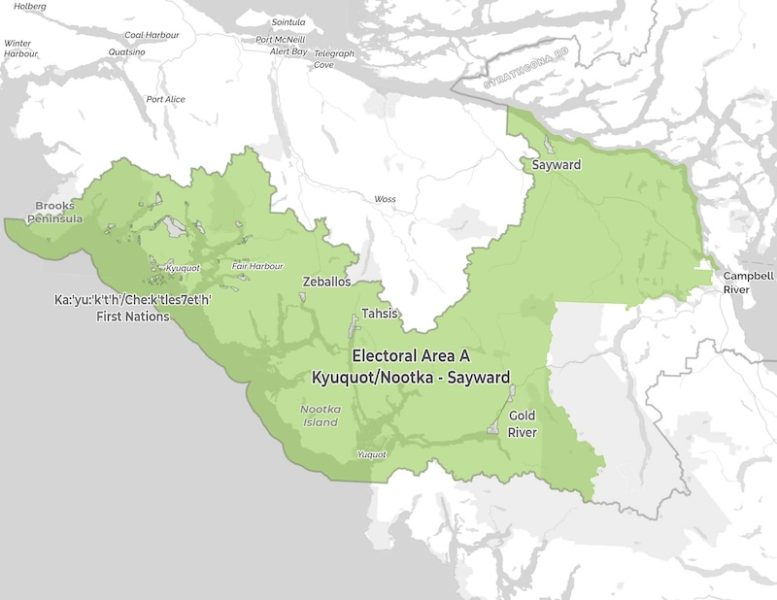
Cortes Currents: Are there other areas where this could potentially affect your area or any of our areas?
Director Whalley: “Yes, my residents want to keep their area rural. It’s a small farming community where lots of people have little farm enterprises and they don’t want that destroyed. When subdivisions come close to farming areas frequently, there are conflicts afterwards. The large subdivisions don’t like the odour of farm waste. They don’t like this and that – it just causes strife.”
“One further comment I might make is that Electoral Area A, which is Nootka, Kyuqot and Sayward is mainly in the residential portions of that area, TFL (Tree Farm License), or else it is Agricultural Land Reserve. There’s very little land available for development. The land that is potentially possible is on the sides of the mountain slopes where there’s virtually no water. So, it is very difficult to do any subdivision development in the main population areas of Sayward and Area A.”
“Many of my constituents have moved out of big cities because they want a rural lifestyle. If they wanted to be a municipality, that’s where they would live. They absolutely don’t want to increase development and turn themselves into a mini-municipality.”
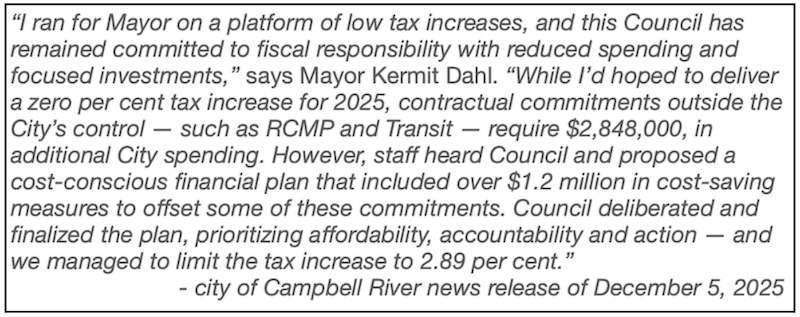
Cortes Currents: Is this a wise use of Campbell River tax dollars?
Director Whalley: “No, I don’t believe it’s a wise use of Campbell River tax dollars. By joining the planning service, it doesn’t make Campbell River eligible for any planning function within their own municipality. All they gain is a vote on electoral area planning issues.”
Director Vonesch: “It doesn’t give them any other services that are of benefit to their constituents.”
“I know that Campbell River, like many other communities across BC, has big issues to face. They’re dealing with downtown safety; they have housing issues; they have drug and mental health challenges; they have recreation and transit issues.”
“There are so many other things they could be spending this $500,000 a year on, rather than trying to control land-use decisions in rural areas.”
“This is something most people aren’t even aware of yet — and certainly Campbell River constituents aren’t aware of it.”
“I’m hoping that by releasing this press release and getting some news coverage, it brings some awareness. And as Campbell River considers joining this service, they can ask themselves whether this is really the best use of their taxpayers’ money.”
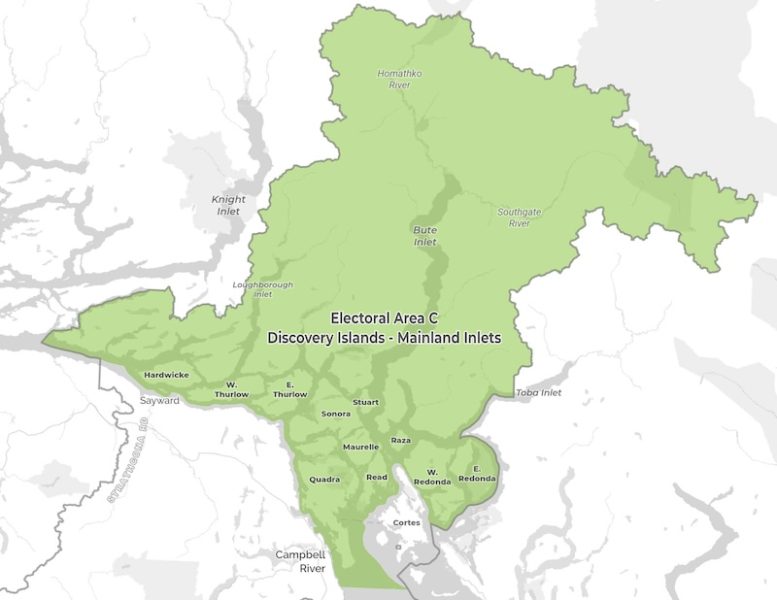
Director Mawhinney: “There’s a term I’ve been hearing a lot lately: fiscal constraint. The province is experiencing fiscal constraint, as is the federal government. Tariffs are changing the markets and the costs of doing business. Money is tight for many residents in the Strathcona Regional District, in both municipalities and electoral areas.”
“If a municipality is considering additional taxes for its residents — whether it’s the Village of Sayward or the City of Campbell River — I think residents rightly expect that their hard-earned tax dollars will benefit their own community directly, not simply provide their councillors with a vote on land-use planning decisions an island or two away.”
“The Regional District is a federation, and I really hope we can get back to the issues that matter most to both the areas and the municipalities within the Strathcona Regional District. I feel this is not one of them.”
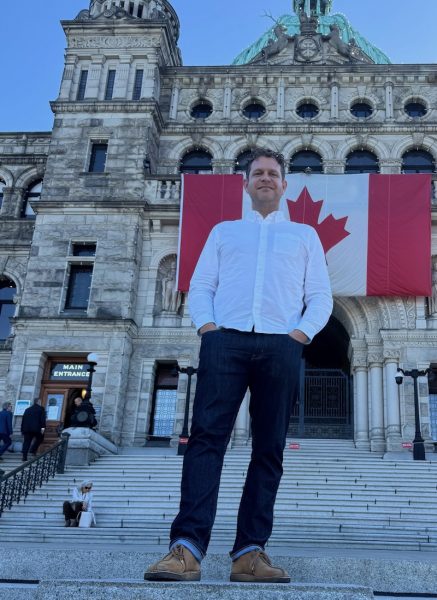
Director Vonesch: “There are two ways we can address this:”
“One is through media — reaching out to Campbell River voters and taxpayers and saying, ‘Did you know this is being considered right now? Is there a better way to spend $5 million in Campbell River over the next 10 years? Or is this really the best use of taxpayer money?'”
“Secondly, I’ve approached the provincial government and asked them to get involved. I’ve contacted the Ministry of Municipal Affairs and the Ministry of State for Local Government and Rural Communities“
“I’m asking them to reconsider the Local Government Act in this regard and to make amendments. I don’t think the Act was set up for one municipality in a regional district to be able to control everything in that area. I believe it goes against the spirit of the Act — and it certainly goes against rural sovereignty and rural autonomy.”
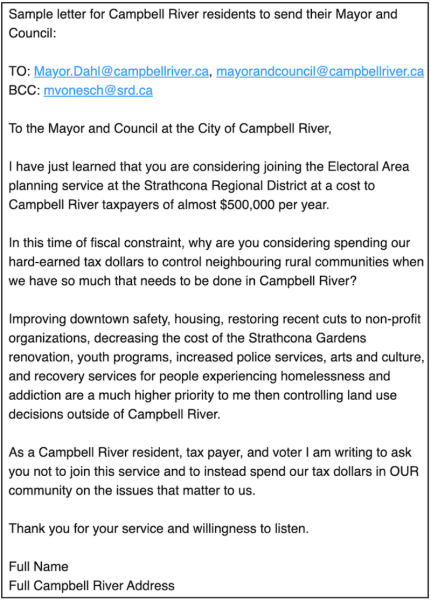
“If this reaches people who are concerned, and you live in one of the rural areas, the biggest way you can help is by reaching out to your Campbell River friends who own businesses, homes, or live there. Let them know what’s happening. Ask them to write their mayor and council to oppose spending $500,000 a year on this — and to urge council to spend that money instead on the priorities Campbell River residents care about.”
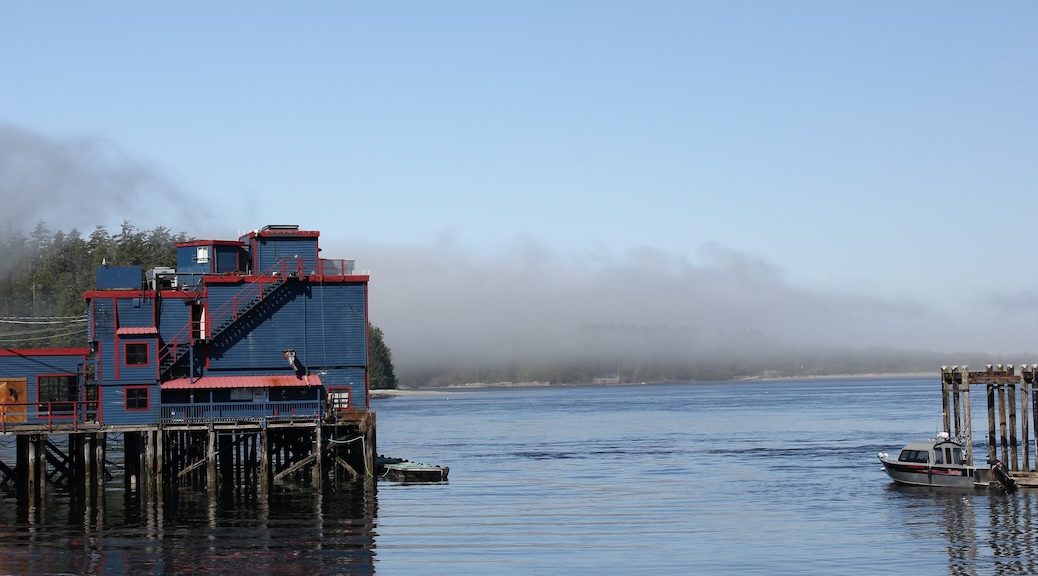
Top image credit: Sayward – Photo by Terri Bateman via Flickr (CC BY 2.0)
Links of Interest:
- SRD Municipalities wanting control of the Electoral Areas Planning Service – Cortes Currents
- Recording of Sept 3, 2025, Municipal Services Committee meeting in which the Campbell River Directors and Mayor Martin Davis of Tahsis disclose their wishes/intentions
- Recording of Apr 9, 2025, the inaugural meeting of the Municipal Services Committee, in which this proposal was mentioned.
- Post from Mark Vonesch on the Tideline, which includes a sample letter Campbell River residents could send their mayor and city councillors
To receive an emailed catalogue of articles on Cortes Currents, send a (blank) email to subscribe to your desired frequency:
Weekly Digest cortescurrents – [email protected]
Daily, (articles posted during the last 24 hours) – [email protected]
Hi
If this were to be implemented when would it take affect.
I’m speaking on behalf of at least 20 long term residents of Quadra and we’re all against it 100%