Tag Archives: Gitxaala Nation

Great Bear Sea waters move closer to federal protection

By Sonal Gupta, Canada’s National Observer, Local Journalism Initiative Reporter

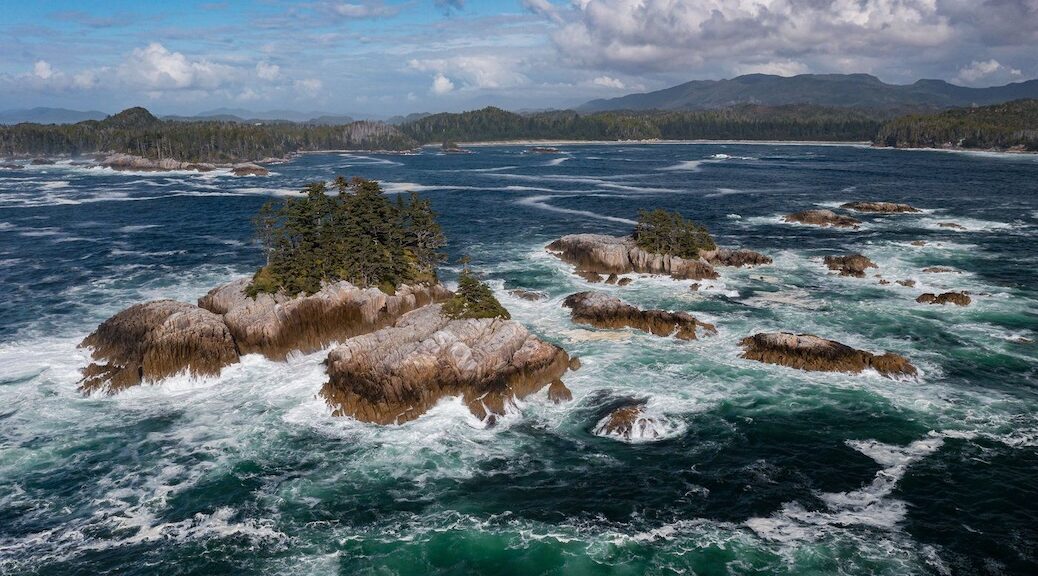
A stretch of ocean off BC’s central coast, where salmon, herring, whales, sea otters and some of the province’s largest kelp beds share waters with fishing boats and coastal communities, is moving toward federal protection.

Six First Nations, Ottawa and the province signed an agreement Friday to establish a new National Marine Conservation Area Reserve in the Great Bear Sea, beside the globally known Great Bear Rainforest.

Continue reading Great Bear Sea waters move closer to federal protection

‘Extremely offensive’: B.C. premier’s plans to change Indigenous Rights law met with frustration

By Shannon Waters & Matt Simmons, The Narwhal, Local Journalism Initiative reporters

In 2019, B.C. unanimously passed the Declaration on the Rights of Indigenous Peoples Act. It was celebrated as a major step toward working with First Nations in a better, more equal way.

But a court ruling earlier this month seems to be contributing to a change of heart for Premier David Eby. On Dec. 5, the British Columbia Court of Appeal ruled the government’s obligations under the Declaration Act are legally enforceable. Eby is now arguing judges shouldn’t be setting the province’s reconciliation agenda. And he says he is willing to change the law to make sure they can’t.

Continue reading ‘Extremely offensive’: B.C. premier’s plans to change Indigenous Rights law met with frustration

Trump tariff threat a Trojan horse for B.C.’s fossil fuels

Canada’s National Observer, Local Journalism Initiative Reporter

Trump’s tariff threat provides convenient cover to accelerate the expansion of fossil fuels and raises alarm bells about First Nations rights tied to mining, say critics.

The B.C. government announced it is fast-tracking an “initial” mix of 18 energy, mining and fossil fuel projects, valued at $20 billion, that have business cases still needing government permits or approval.

It’s a bid to diversify trade markets so B.C. is never again exposed “to the whims of one person in the White House,” Premier David Eby said this week.

Continue reading Trump tariff threat a Trojan horse for B.C.’s fossil fuels

Frustrated with government, Gitxsan Hereditary Chiefs wavering on support for B.C. pipeline

Editor’s note: The Wet’suwet’en Nation is about 300 miles due north of Campbell. While there is no statistical data to show how widespread this sentiment is, a number of local residents have expressed sympathy for their struggle against the Coastal Gaslink Pipeline. Max Thaysen, the current Alternate Director for Cortes Island, was a legal observer when the RCMP ‘invaded’ Wet’suwet’en Territory on February 7, 2020. There were protests in support of the Wet’suwet’sen on Cortes Island and in Campbell River. Many Quadra Island residents participated in the latter. When former MLA Claire Travena held a BC Ferries meeting on February 28th, 2020, she was forced to devote the first 20 minutes to a discussion of the Wet’suweten crisis.

By Matt Simmons, The Narwhal, Local Journalism Initiative reporter

On a bitterly cold morning in early March, Gitxsan Simgiigyat (Hereditary Chiefs) stood outside the provincial  Supreme Court building in Smithers, B.C., their regalia fending off the  icy air.

“Our way of life has been subverted by the  Canadian government,” Simogyat (Chief) Molaxan Norman Moore told a  gathering of supporters and observers, his voice reverberating off the  drab concrete building.

Inside, proceedings continued for a Hereditary Chief of the neighbouring Wet’suwet’en Nation, who was found guilty of criminal contempt  in February. The Simgiigyat organized the demonstration to show their  support for Dinï ze’ (Hereditary Chief) Dsta’hyl, who was arrested in  October 2021 after decommissioning Coastal GasLink machinery at pipeline construction sites on his Likhts’amisyu Clan territory. 

Continue reading Frustrated with government, Gitxsan Hereditary Chiefs wavering on support for B.C. pipeline

Mining companies are snapping up claims to develop Indigenous land. But what happens when a nation doesn’t consent?

By Matteo Cimellaro, Canada’s National Observer, Local Journalism Initiative Reporter

Reconciliation isn’t the only thing threatened when mining exploration companies fail to get consent from Indigenous nations, says one ethical investor.

Provinces — and the junior mining companies that obtain exploration permits connected to a nation’s ancestral territories — ignore consultation with Indigenous Peoples at their own peril, as the oversight can set the stage for future conflict, court challenges and delays, hampering any future economic development before it begins.

Continue reading Mining companies are snapping up claims to develop Indigenous land. But what happens when a nation doesn’t consent?