

A new word, “polycrisis”, has entered the vocabulary of ecologists, particularly those scientists who are monitoring the health of the entire planet. Some of these scientists are uncomfortable with the word, arguing that it is an alarmist term. They believe that we have various crises, in the plural, but they are not indicative of the widespread description that is implicit in such a cataclysmic term as polycrisis. Some historians say that what we are experiencing “is just history happening.”
Thomas Homer-Dixon, one of the world’s foremost authorities on the relationship between ecology and human behaviour, argues that such a term as polycrisis is an apt description of what is actually happening on our planet, and it is the result of multiple factors. The word, he says, was first coined in the 1990s at the World Economic Forum to describe the “tangled mess of problems” that seemed to be occurring—“pandemic, war, climate extremes, energy shortages, inflation, rising authoritarianism, and the like.” The term, however, proved useful.
One of the reasons polycrisis bothers conservative thinkers is that the term suggests a new collection of problems that can’t be solved with traditional economic and social strategies. Homer-Dixon, however, takes the larger view, arguing that we have entered a new era, and that the multiple problems threatening our future are the consequence of massive change occurring at a global scale, with accelerating speed—change which is so “outside our species’ previous experience that many elites don’t have the cognitive frame to grasp our situation, even were they inclined to do so.” But we can get a sense of the scope and speed of this change by comparing our present to four aspects of our past.
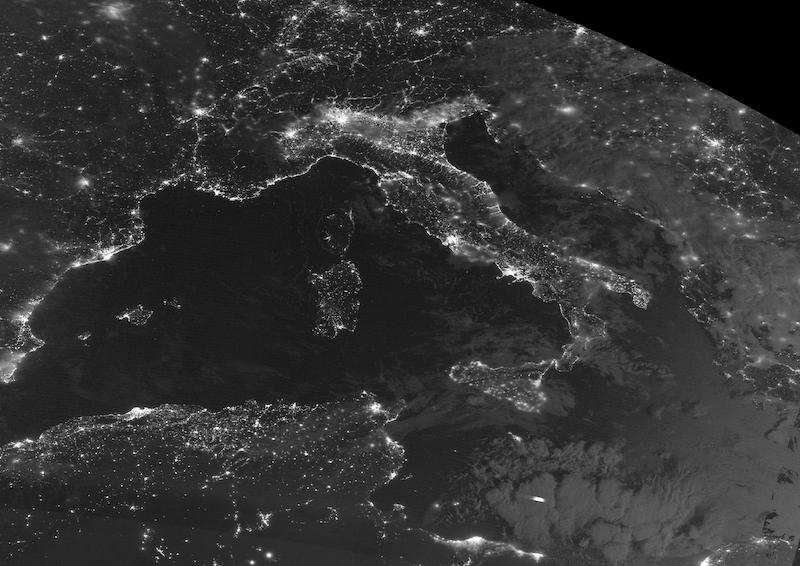
1. Total Human Energy Consumption: Since 1950, our energy consumption, sourced primarily from fossil fuels, has increased sixfold, with 60% of all the energy ever used by humanity occurring since that date. Prior to the Industrial Revolution, at the end of the 18th century, we used about 50% to 75% of our human energy just to sustain the economic activity we needed; we now get the energy we need for a far larger economy with less than 10% of our human effort.
2. Earth’s Energy Balance: Throughout the history of humanity, the amount of energy being added to Earth was roughly equal to the amount leaving it. This dynamic was fairly stable because the amount of atmospheric carbon dioxide usually remained fairly constant. Because of CO2 emissions from burning fossil fuels, we now have additional warming in the amount of 0.9 watts per square metre of our planet’s surface. As Homer-Dixon points out, it doesn’t seem like much, but it’s “equivalent to placing a standard 1,200-watt hotplate turned to its maximum setting—enough to boil a quart of water in five minutes—in the middle of each patch of Earth’s surface the size of an average American lot. Aggregated across Earth’s entire surface, it’s the amount of energy that would be released by detonating 600,000 Hiroshima-size atomic bombs every day.” The result is a destabilized hydrologic system, with increasingly intense storms, floods and droughts. This, in turn, causes food insecurity, civil disorder, human migration, and the expenditure of massive amounts of money to repair what is damaged—in effect, returning us to where we were, rather than advancing our condition.


3. The Human Population’s Total Biomass: “In the 125 years between 1800 and 1925, the world’s population approximately doubled, from 1 billion to 2 billion. In the near-100 years since, it has quadrupled again, to 8 billion,” writes Homer-Dixon. In the process, we have displaced other animals—a 69% average global decline in the populations of mammals, birds, amphibians, reptiles and fish since 1970. Our domestic animals have increased with our human numbers, such that 62% of the weight of all mammals on our planet are now our livestock, humans constitute 34%, and the remaining 4% are wild. Notably, “about a third of the carbon in our bodies, totalling about 3 kilograms on average, originated in the coal, oil, or natural gas we’ve collectively burned.”

4. Connectivity of the Human Population: Flows of matter, energy, disease and information have increased dramatically because of airplanes, pipelines, satellites, oil tankers, container ships and fibre-optic cables. From 1980 to 2020 air passengers have tripled to 1.8 billion annually, and air freight has increased six-fold. In that same time, the value of world trade increased 12-fold, and internet usage rose from zero to 60% of our human population. The cost of moving and storing information has declined to nearly zero.
Some of these changes have been beneficial, but not all of them. Our population rise has displaced other species, spread diseases, polluted, and consumed essential resources at an unsustainable rate—renewable ones are being used faster than they can be replaced. Our CO2 emissions are heating the planet to unprecedented levels: June, July, August, September, October and November of 2023 were the hottest known months in 125,000 years—this year is expected to reach the same record. The oceans are acidifying and sea levels are on an unstoppable rise, threatening hundreds of coastal cities and hundreds of millions of people.
The speed of change and its ubiquitousness is unprecedented in human history, and in Earth’s history, too, except for the asteroid strike of 66 million years ago that had a similarly dramatic effect—of Earth’s five mass extinction events, it was the only one not caused by excessive amounts of atmospheric carbon dioxide.
So, yes, it’s a polycrisis. And, yes, it’s diverse, serious and complex enough to warrant a new word. Whether or not we will be able to manage the situation sufficiently to survive it as an intact civilization remains to be seen.
Ray Grigg for Sierra Quadra
Top image: Night lights across the Puget Sound and Southwestern British Columbia on a cloudy night. The islands of light above and to the right of Courtenay are Campbell River and Powell River. Quadra and Cortes Islands are in the dark. – Courtesy NASA Worldview