

History defines the present with a clarity that is unavailable by any other measure. This became particularly obvious in “The Economics of Superintelligence” and “Eureka All Day Long”, two articles in the July 26th edition of The Economist, in which the digital pundits of Silicon Valley are trying to prepare us for the possible economic impact of artificial intelligence on our modern world. But, to do this, the author or authors of the articles (unidentified) have provided us with some pertinent economic history of the West to provide an illuminating context.
Continue reading Economic History – The Quadra ProjectTag Archives: Industrial Revolution

The Quadra Project: Polycrisis
A new word, “polycrisis”, has entered the vocabulary of ecologists, particularly those scientists who are monitoring the health of the entire planet. Some of these scientists are uncomfortable with the word, arguing that it is an alarmist term. They believe that we have various crises, in the plural, but they are not indicative of the widespread description that is implicit in such a cataclysmic term as polycrisis. Some historians say that what we are experiencing “is just history happening.”
Thomas Homer-Dixon, one of the world’s foremost authorities on the relationship between ecology and human behaviour, argues that such a term as polycrisis is an apt description of what is actually happening on our planet, and it is the result of multiple factors. The word, he says, was first coined in the 1990s at the World Economic Forum to describe the “tangled mess of problems” that seemed to be occurring—“pandemic, war, climate extremes, energy shortages, inflation, rising authoritarianism, and the like.” The term, however, proved useful.
Continue reading The Quadra Project: Polycrisis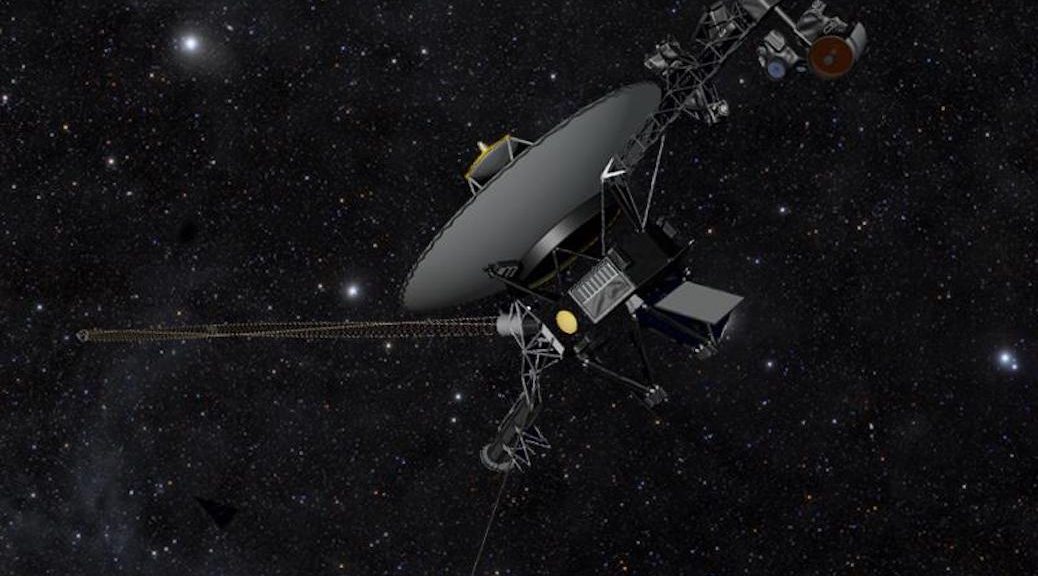
The Quadra Project: Sounds of the Earth
On August 20, 1977, Voyager 2 was launched from NASA’s facility in Cape Canaveral, Florida. And exactly 15 days later, on September 5, 1977, Voyager 1 was launched from the same facility. The timing was crucial because astronomical calculations had placed Jupiter, Saturn, Uranus and Neptune in a lineal alignment that would only occur once every 176 years. With this alignment, each planet could accelerate the two spacecrafts to their next destination, reducing the travel time from 30 years to 12 years.
Continue reading The Quadra Project: Sounds of the Earth
The Quadra Project: Climate Karma
Karma, from the Sanskrit word “karman” is an amalgamation of “action, effect, and fate”. In the popular sense of the word, it has come to mean that actions have consequences, and that our individual human behaviour exists in a cause-effect relationship with a vague sense of a moral cosmos. Often described as the Principle of Karma, it means that personal acts motivated by “good” intentions are eventually rewarded in kind, and that “bad” acts are also rewarded in kind.
Although karma usually applies to the cause-effect relationship of our individual actions, it might also apply to our collective actions, a more expansive understanding that is worth considering, given the consequence of the unfolding havoc we are causing on our planet.
Continue reading The Quadra Project: Climate Karma
The Quadra Project: The Descent of Man
The 1973 television series, The Ascent of Man, by the British mathematician and science historian, Jacob Bronowski, is approaching its 50th anniversary. Its intelligent commentary on the evolution of science in human civilization is still relevant today. However, events in the last few years have imbued Bronowski’s erudite praise of our scientific accomplishments with an unsettling irony.
Continue reading The Quadra Project: The Descent of Man