All posts by Guest Post

Sew Much More: Sewing room opens for Cortes community

By Kim Paulley, CKTZ News, through an LJI grant from Canada-info.ca

This fall, Mansons Hall opened its doors to Sew Much More, a place to sew and learn, according to organizers.

The idea for Sew Much More had its beginnings at the Cortes Island Free Store, where Marnie Andrews offered up her sewing skills this past summer. The fair weather allowed her to set up in the area just outside the front doors. It was there that she repaired items for the store that were just too good to throw away. She also taught interested patrons DIY sewing skills.

Continue reading Sew Much More: Sewing room opens for Cortes community

Manipulating the message: Public relations consultants outnumber journalists 14 – 1 in Canada

Editor’s note: This story is of interest because of the light it shines on the modern media.

Emmanuel Nwaneri,  New Canadian Media, Local Journalism Initiative Reporter

If you’ve noticed a shift in the news over the last two decades, it’s likely caused by two things: A massive drop in the number of Canadian reporters and a correspondingly huge surge in the number of spin doctors.

According to journalist-author Cecil Rosner, the number of active reporters in Canada by 2021 has shrunk to about 11,000 from about 13,000 in 1991. In this 20-year period, the number of public relations consultants has increased from about 24,000, to about 160,000 – a ratio of 14 – 1 vis-à-vis publicists and reporters, Rosner says.

Continue reading Manipulating the message: Public relations consultants outnumber journalists 14 – 1 in Canada

SFU researcher explores Haida Gwaii’s unique archeological history

Editor’s note: This research could throw some light on how the First Nations reached the Discovery Islands, where the earliest archaeological finds are currently from about 11,000 years ago at Yeatman Bay on Quadra Island. In an interview with Cortes Currents, an archaeologist from the Hakai Institute said he did not have any early dates for Cortes but “It really comes down to where people have done the research.”

By Seth Forward, Prince Rupert Northern View, Local Journalism Initiative Reporter

Groundbreaking research on Haida Gwaii could lend more clarity to unanswered questions about how the First Peoples of the Americas arrived after the last ice age . 

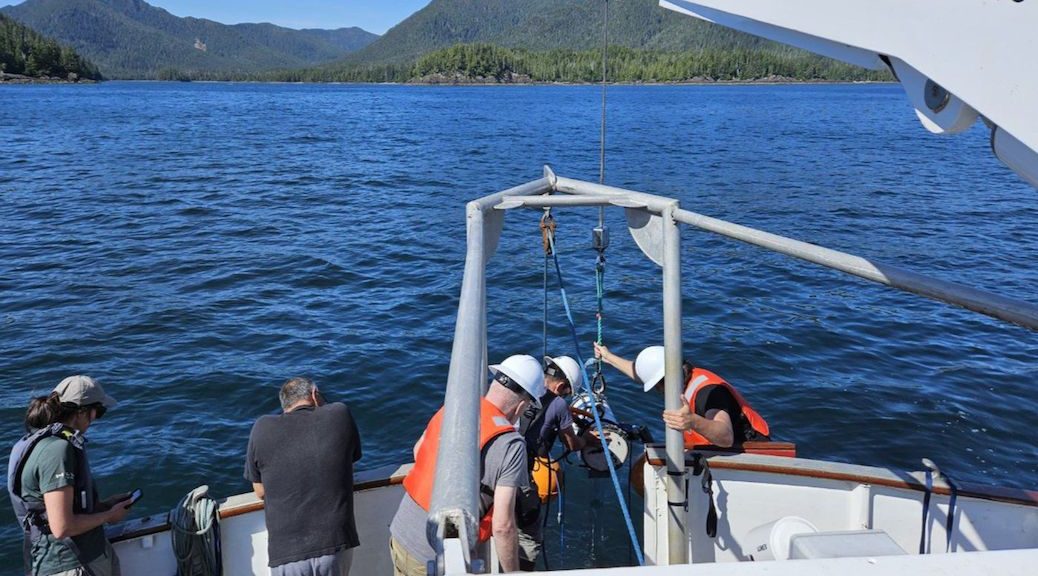
By testing marine core samples off the coast of Moresby Island, researchers from Simon Fraser University (SFU) and the University of Victoria (UVic) are attempting to understand the ancient paleo-landscape of the archipelago. 

Continue reading SFU researcher explores Haida Gwaii’s unique archeological history

Inside Vancouver’s Decision to Scrap Its Living Wage Commitment

Editor’s note: in a memo to the city council one year after the Living Wage program was introduced, City Manager (now Cortes Island resident) Sadhu Johnston reported, “During 2017, the City of Vancouver and Vancouver Park Board signed or renegotiated 17 contracts that meet the Living Wage program criteria with vendors to ensure their staff and subcontractors are paid the living wage. Since the introduction of the policy, eight contracted service employees received a living wage who would not otherwise have been paid one. These employees are part of the contracted graffiti removal team and the contractor has reported reductions in absenteeism, turnover and recruitment costs as well as increased morale and productivity.”

By  Zak Vescera, The Tyee, Local Journalism Initiative Reporter

Internal emails suggest City of Vancouver staff felt “significant anger and disillusionment” after city council voted to scrap the municipality’s living wage policy this year.

That’s how former chief equity officer Aftab Erfan described the reaction from staff after the city announced in March it would no longer guarantee a living wage, effectively cutting the guaranteed minimum pay for security guards, food vendors, janitors and other low-wage workers. Erfan left the job four months later.

Continue reading Inside Vancouver’s Decision to Scrap Its Living Wage Commitment

After years of exploitation, the iconic Cowichan sweater is being protected with a new fair-trade program

Editor’s note: Prior to the colonial era, Coast Salish Peoples used mountain goat wool, dog hair and plant fibres in their woven textiles. Cowichan sweaters were produced after the arrival of sheep and European two-needle and multiple-needle knitting techniques. According to Marianne P. Stopp, The first documented instance of Coast Salish knitting took place at the Sisters of St. Anne Roman Catholic mission in Duncan, in the Tzouhalem district, which opened in 1864.

By Mike Graeme, Indiginews, Local Journalism Initiative Reporter

The art of knitting Cowichan sweaters has been in Zena Roland’s family for generations.

Her grandmother knit sweaters for the likes of Bing Crosby — and Roland herself has been practicing the craft almost her entire life, for more than 50 years.

But although the Cowichan sweater has become an iconic symbol of the West Coast, cultural appropriation and the exploitation of artisans has made the craft unsustainable for many knitters who need to make a living.

“We weren’t getting a good price for a while and it wasn’t worth doing,” Roland said.

Now, Roland is part of a group of Coast Salish knitters who are reclaiming their work crafting Cowichan sweaters, with a new initiative that pushes back against the unfair wages and design theft that has stifled their practice for decades.

Continue reading After years of exploitation, the iconic Cowichan sweater is being protected with a new fair-trade program