

Efforts to highlight the significant dangers of global warming do not
seem to be successful. Levels of atmospheric carbon dioxide (CO2), the principal cause, have combined with methane (CH4) and nitrous oxide (N2O) to speed the increase, despite decades of warnings. Global
temperatures are rising, scientists are desperately trying to focus
our attention on the seriousness of the problem, and despite
international pledges, national targets, corporate promises and
individual efforts, little of significance has been accomplished.
Significant strides in renewable energy sources have been made,
however much of this added power is not replacing fossil fuels but
supplementing them. The International Energy Agency has predicted that oil consumption could peak about 2030. We have made some progress by averting the worst of the worst future climate possibilities. But humanity has now surpassed the 1.5°C first target of temperature rise proposed in the Paris Agreement of 2015, and the pre-eminent American climate scientist, James Hansen, was prescient enough even a year ago to declare the 2.0°C target “dead”. (The Guardian Weekly, February 4. 2025).
All posts by Ray Grigg

Reality Through the Rear-View Mirror
We can make some sense of the extent and pervasiveness of our present environmental problems by considering the ideas of Marshall McLuhan, the Canadian philosopher and media theorist who died in 1980. In describing the effects on ourselves of the things that we invent, he coined the expression “the medium is the message”, which was playfully modified to “the medium is the massage”. He summarized the process by saying, “We invent things, thereafter they invent us.” He also aptly described the effect of instantaneous electronic communication as having created the “global village”.
Continue reading Reality Through the Rear-View Mirror
The Suicidal Ordinary – The Quadra Project
The ordinary is not ordinary. We become accustomed to it because it is what we experience and do everyday, so it usually evades careful examination and evaluation. The normal is supposed to be normal. And yet, from the perspective of our human history and our planet’s biophysical history, what is happening now is unprecedented in almost every regard. Our knowledge is rising at a rate unparalleled in our past, while our influence on the ecosystems that have kept our planet stable and reliable for our purposes is being transformed by our activity.
Continue reading The Suicidal Ordinary – The Quadra Project
Happy New Year Humanity – The Quadra Project
When the outside world is too disturbing to confront, people seek
relief through the vicarious safety of fantasy. This explains why 2025
was a banner year for horror movies. J.G. Ballard, an English novelist
and essayist, noted that, “The ultimate dystopia is the inside of
one’s own head.” Dr. Coltan Scrivner, a behavioural scientist agrees.
“You walk around with your mask of tranquillity, but inside your mind
is a maze of worries. Horror allows you to take off your mask.” (The
Guardian Weekly, Editorial, Oct. 24, 2025.) So with this genre of
movie you get to experience horror, but not the real kind that you
might be reluctant to confront.
As we mark the beginning of 2026, we are one quarter of our way
through the 21st century and are coming closer to the haunting
forecasts of climate catastrophe by the end of the century, if we do
not reduce our greenhouse gas emissions. So a review of 2025 seems
appropriate.
An Inherent Morality – The Quadra Project
What is the source of morality? This is a question that has bothered philosophers, theologians and others for centuries. Science, however, is now providing us with some significant insights. A few examples are cited in 7 Principles of Nature: How We Strayed & How We Return (see pp. 101-104) by Aldrich Chan, a neuropsychologist teaching and practicing in Florida.
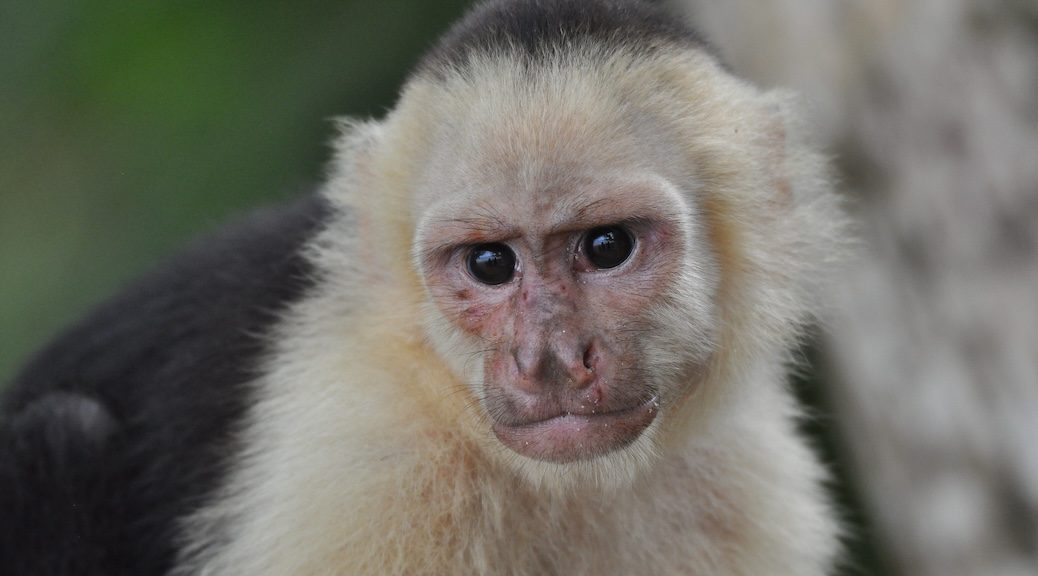
We already know about capuchin monkeys and their sense of fairness. If two monkeys in adjoining cages are both conditioned to perform the same specific task with the reward of a peanut, they will happily comply. But if one of the monkeys receives a grape, which is a more valuable reward than a peanut, the other will rattle its cage in objection, throw a temper tantrum, and refuse to do its task. And in other experiments with capuchin monkeys, they prefer to share their reward with others rather than just keep it for themselves.
Continue reading An Inherent Morality – The Quadra Project