
The following piece is potentially triggering, and contains references to racism, racial slurs, and violence.This opinion piece is based on my personal experience and exploration within my lifetime, of the continuing cycle of systemic racism and colonial violence.
Associate professor Rajnish Dhawan, from the University of the Fraser Valley, makes a distinction between hate-based and ignorance-based racism.
He is quoted in a series of programs that Fraser Valley Community Radio recently broadcast about Abbotsford’s hushed racist history.
That prompted me to think about the community I was raised in, across the river in Maple Ridge.
Growing up in Maple Ridge
For the most part, the racial prejudices where I grew up in the 1950s and 60s were almost invisible. While I knew that First Nations people had once occupied our land, there were probably less than half a dozen at my school. I think I was in my teens when I first heard of the Katzie Nation. Decades would pass before I learned they still claim title to the land.
The more immediate problem was what happened to the Japanese. There were so many Japanese immigrants prior to World War II that Maple Ridge acquired the nickname ‘Japtown’ and one of the principal streets along the road to my home was ‘Jap Alley.’ Their lands were confiscated.
As I remember it, Ray and Colleen Nagai eventually bought back about 17 of the 120 acres the Nagai family owned prior to the war.
I learned this because they were friends of my family.

On the other side of the ledger, if you are keeping a ledger, is the fact that the commissioners who took away the lands of Maple Ridge’s Japanese immigrants stayed in my maternal grandparent’s summer home.
Were my maternal grandparents ‘racists’?
Racism
To a certain extent, I believe we have all (regardless of our ethnic origins) been exposed to ‘racist’ ideologies. In my case, it came through movies that seemed to always depict people with a European background as the hero. I shed that idea at some point during my teenage years, became enamoured with Chinese history, and was staying at an Ashrama when I turned 21. I eventually became a Christian.
That is my story.
Becoming more respectable
Turning to that of my family, all but one of my grandparents and four of my great grandparents took the railway to Vancouver prior to World War one. Most of us came from England.
One of my great grandfathers was actually born in Ireland but allegedly changed his surname from ‘Garretty’ to ‘Cross’ to become more respectable. A family tradition asserts this was his wife’s idea, and before he capitulated Robert Garretty used to provoke his ‘English” wife by turning Queen VIctoria’s portrait around so that it faced the wall. My maternal family’s name was spelled ‘Garretty’ in English records, but became ‘Cross’ in Canada.
Back to New Brunswick
The only overtly racist statement I remember is that one of my families had ‘a nigger in the woodpile’. He was an elusive figure known as ‘Williams’ who I have tentatively traced to a plantation in Jamaica. The first solid proof of his existence comes from the record of his daughter Elizabeth Williams marrying my Highland ancestor Duncan Robertson at Miramichi, New Brunswick, in 1792.
The New Brunswick branch of my family were settlers in every meaning of the word. Most of the first generation received grants to the parcels of forest which they transformed into farms. Some passed down stories of their interactions with First Nations neighbours.

Coming West to Vancouver by Rail
While it is currently popular to call the Europeans who came to British Columbia ‘settlers,’ I prefer the term immigrants.
All of my families came west to the city of Vancouver between 1898 and 1919. (One of my grandfathers returned from World War I with an English wife, who had been his nurse.) They purchased their homes from the Europeans that preceded them and I have not heard stories of any interactions with Indigenous people.
Moving to the suburbs
The next generation of my family moved out to the suburb of Maple Ridge between 1937 and 49.
It is really hard to know what my immediate predecessors might have thought, but my memories suggest that, like me, they were at worst ignorant racists.
This probably applies to a great many British Columbian families.
My experience
I have had some experiences of racism: segregated lunches at places I worked during the 1970s and 80s; venomous comments heard even recently.
My own racism exists as periodic rumblings in my thoughts.
I do not think it is a bad thing to recognize when you are repeatedly going through similar experiences with a group of people, whether that group is racial or social. That said, there are invariably occasions when this kind of judgement leads to false accusations. (Even unspoken ones.)
It is always better to see people as individuals.
Ignorance is the breeding ground for racism and all other manner of discrimination. The less we know about an individual, or group of people, the easier it is to negate them.
I believe that, in varying degrees, most of us are ignorant racists.
Links of Interest:
- (Cortes Currents)a series of articles about Abbotsford’s Racist History
- (Cortes Currents) articles about Vancouver’s History
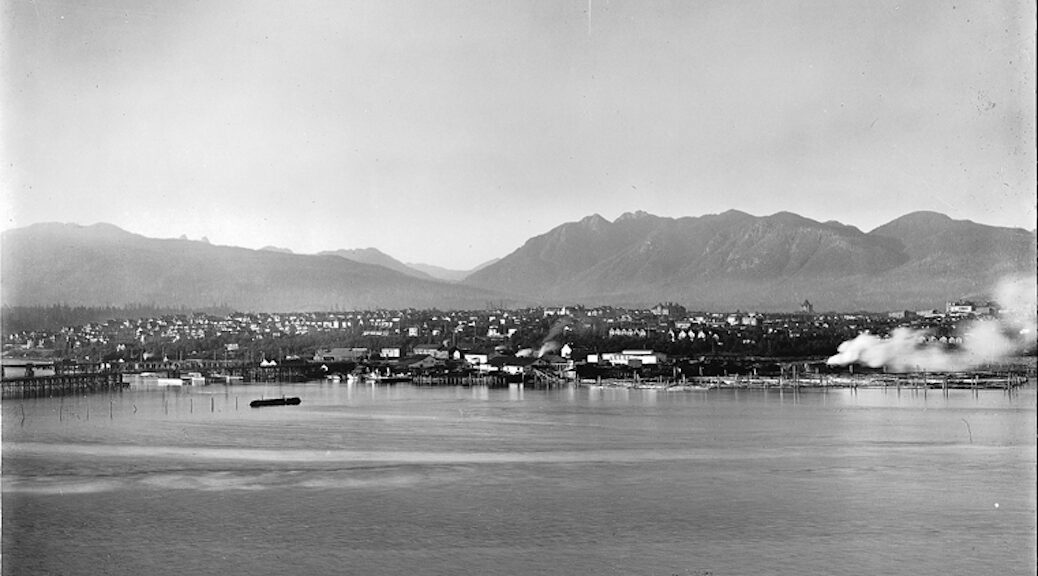
Top photo credit: Vancouver in 1904, at which point several of my families were well established in the city – Image by William McFarlane Notman via Wikipedia (Public Domain)