


On January 24th the BC Court of Appeal made known its decision in docket CA47620, the case of Anderson vs SRD. The three-judge panel found unanimously against SRD and in favour of Anderson. They found that SRD was wrong in refusing to indemnify Anderson’s defence costs during a litigation against her in 2019, and wrong also in voting to censure her in that same year.
In this four-part special radio feature we’ll be revisiting the five-year history of this legal decision, and interviewing Noba Anderson about its significance — not just for Cortes island, but for all of BC.
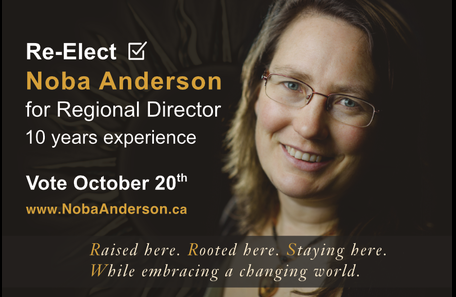
2018: Anderson re-elected as Regional Director
In 2018, Regional Director Noba Anderson was re-elected by the voters of Area B (Cortes Island) for her fourth term. She won a hotly contested election, by a narrow margin. One of the reasons the election was hotly contested, was that there was a significant division of opinion on the island at the time.
A vocal minority of residents were staunchly opposed to one or both of two property tax services which Anderson thought merited a referendum: funding for the Cortes volunteer fire department, and baseline operational funding for the two community halls. [Referenda were held a year later, in the Fall of 2019; the fire services funding bylaw passed with about 85 percent approval, and the more controversial community hall support funding passed with about 75 percent approval.]
Within a few days of Anderson’s being returned as RD in 2018, SRD received letters (which have never been released to the public) attacking her integrity and legitimacy. SRD took these allegations seriously enough to hire a private detective to spend a week on the island investigating. A couple of months later, in January 2019, a formal petition was filed in the BC legal system demanding Anderson’s removal from office.
Attempts by a disgruntled minority to undo the disappointing result of a close election are unhappily familiar in 2024; but this kind of “American-style politics” was new to Cortes at the time, and many were shocked and dismayed by it. Another novel, unusual aspect was SRD’s response.
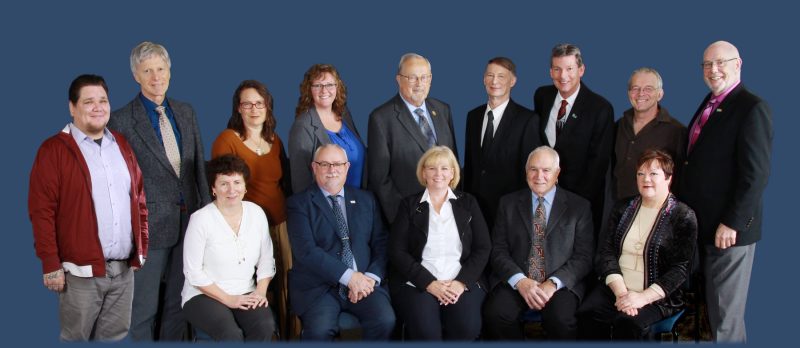
2019: SRD’s response to litigation against one of its board members
Normally, every Board (be it corporate, non profit, or governmental) has a mechanism in place to provide for the legal expenses of Directors for their defence against litigation related to their directorial responsibilities. Most boards carry Directors’ Insurance, and most governmental agencies have indemnification policies that provide for the legal defence of Directors. But when Anderson was named in litigation to remove her from office, SRD declined to honour their own indemnification bylaw — offering no assistance with her defence, nor any explanation of their refusal.
Moreover, when Anderson found her own legal counsel and briefed him on the details of her situation, the SRD board then passed a motion of censure against her for sharing confidential in camera information outside the confines of the Board… even though the only person she had shared this information with was her lawyer. These startlingly unconventional responses to litigation against a sitting Board member created an unsettling impression in the minds of many Cortes Islanders: that the disgruntled minority attempting to remove Anderson from office had in some way found enablers or allies within SRD.
This impression was strengthened when SRD froze all Cortes business pending their “investigation” of Anderson — including the process for holding referenda on the tax service bylaws. [As noted above, when SRD once again moved Cortes business forward and permitted a popular vote in late 2019, both bylaws were solidly approved.]

2019-20: Cortes Islanders Frustrated with SRD
The censure vote against Anderson meant that she was removed from committees and generally limited in her ability to fulfil her duties and serve her constituency, for the remainder of her term. Many Cortes Islanders, including some who did not vote for Anderson in 2018, were angry with what they perceived as SRD’s interference in Cortes affairs, as well as what looked to some like favouritism at SRD towards a minority opinion bloc within the constituency. Over 300 signatures were on a petition presented to SRD in 2019 by Cortes Islanders in support of their Regional Director, asking the Board to honour its indemnification bylaw, but to no avail.
Islanders soon discovered that when they were unhappy with SRD’s process or decisions, there was “no upstairs” to go to for redress or arbitration. Regional Districts have a remarkable amount of autonomy, and there is no Ombuds-office to resolve issues between Districts and their member Areas or constituents.
Area B residents discovered that the only avenue for correcting a perceived injustice or failure of policy at the District level was the court system. Frustration and disillusionment with the regional district structure inspired a brief wave of interest in alternative governance structures and a series of meetings… which were brought to a sudden end by the Covid pandemic.
Meanwhile, the petition to remove Anderson from office was abandoned by the plaintiffs appearing before Judge Ronald Skolrood in June 2019, in Campbell River Supreme Court. The petitioners admitted there was no conflict of interest, and withdrew their allegations.

2020: Anderson sues SRD
Anderson and her counsel then brought suit against SRD in an attempt to make the Board honour its indemnification bylaw and withdraw the vote of censure. This case was resolved on June 24 2021, in a phone-in session, by Judge Geoffrey Gaul — who ruled in favour of SRD and against Anderson. This decision was not only disappointing but surprising to many people, including Anderson’s counsel; they felt that the judge’s finding contravened some fundamental legal principles and was vulnerable to challenge. With Anderson’s consent they proceeded to appeal.
2024: Court of Appeal finds in favour of Anderson
The appeal process was long and slow, but ended on January 24th, 2024 with a resounding vindication: three empanelled judges found, unanimously and clearly, that SRD was wrong when it refused to indemnify a Board member’s expenses for her defence in litigation related to her duties as Director. More significantly, they found also that SRD was wrong to have censured a Board member for sharing confidential information with her legal counsel.
On January 25th, the day after this decision was handed down, I interviewed Noba Anderson, the person at the centre of all this legal drama. We talked about the significance of this latest court decision — to herself, to Cortes Island, and to the Province. The interview was extensive, and is presented in four parts for airplay (part 1 starts with the historical overview printed above). We present below some excerpts (edited) from that conversation — which we hope will inspire our readers to listen to the entire programme via the podcasts (above), or read the complete PDF transcript (which does not include the historical overview, just the interview itself).
What was your reaction when you got the phone call, or the email, and realised that you had finally won in this long, long legal dispute with SRD?
Well, I knew the decision was coming in two days. I didn’t know what the decision was going to be, but we got a heads-up that it was forthcoming. And I erroneously thought that I wouldn’t have much reaction, because it doesn’t materially affect me a whole lot any more — given that I’m not in office.
Of course, it still matters — at a provincial level and the regional district level and for the community. But when I spoke with my lawyer as he was giving me the news. I had a pretty significant full body reaction… and realized that I had been carrying more around than I thought I had been carrying.
And in some ways we all have been in this community…it’s been over five years. It’s been a long, long process since the original petition to remove me from office. So it has been through three layers of court.
I am profoundly grateful to live in a society with a relatively fair and intact judicial system that, in essence, I still have a lot of faith in.
Presumably you will get paid for your original legal costs from 2019, but will there be any other acknowledgement from SRD, like an apology or withdrawing the censure vote?
One only ever gets reimbursed a fraction of the actual costs, I think it’s less than half or so. So the original petition legal costs, they will need to pay — and it is my expectation and understanding that they will also need to pay ,for all of my legal costs since then, going to the Supreme Court and the Court of Appeal.
But beyond that, no, I don’t believe that they need to issue an apology. There’s certainly no external review body that I’m aware of. The Board could choose to take a good hard look at its policy, to make its practices different. They could choose to issue an apology; but no, they don’t need to do anything different… other than In the future, now, follow the clarity of law [because] we have added to the case law here.
So what is the significance of “adding to the case law”?
I didn’t think that sharing information with my lawyer was a breach of confidence. And in fact, I thought that it was absolutely foundational to the whole legal system.
If this [SRD] practice was to stand, it would undermine the lawyer’s ability to do their job. Fundamentally in essence, what was being suggested by the Regional District is: I could call up my lawyer and say, “I’m having an issue, but I can’t even tell you what the issue is, let alone the substance of it” — and how can one possibly get [legal] advice in that environment?
It’s quasi-constitutional. One needs to be able to share everything with one’s lawyer. The client/solicitor privilege, that an individual has with their lawyer, is far stronger than any in camera confidence that the board has.
So really the reason that I pursued this, wasn’t for personal reasons — because as you said, I was no longer seeking office. It materially makes relatively little difference to me; but […] the intention was to create an environment here on Cortes, and throughout the regional district, and ultimately the province, where people would still be willing to stand for public office… And ultimately even more importantly than that, is to enshrine the fact that all citizens, including elected officials, have the right to independent and informed legal counsel.
That’s really the crux of this. And so what the Regional District Board was submitting was that in the provincial legislation, it went so far as to say that local government elected officials do not have the right to independent, informed legal counsel. And I submit that the provincial legislature did not intend to go so far as to strip the fundamental quasi-constitutional right of elected officials to independent, informed legal counsel.
And that was what was ultimately upheld in the Court of Appeal.
You said SRD would probably have to pay your legal costs for this whole process, as well as their own. Well, we say “SRD” — but in the end it’s the taxpayer who will cover it. Do you have any idea how much that might be?
I don’t know how much the Regional District has spent on this; that probably will never be known. But it’s a lot of money. Because they’re now going to need — I understand and expect — to pay my legal bills, as well as their own legal bills. And this has been five years, and lawyers are not cheap.
You know, if the board had taken a different approach from the very, very beginning… If the board had decided to get involved with the petition to remove me from office, and pay those bills, or appoint legal counsel to me, which they had the right to do….
Then this would have been done in a few months, with very little cost. But instead it took five years, and I can only imagine, hundreds of thousands of dollars, but I don’t know. And we never needed to go here.
Is this the end of this story? Are we done now?
It is my understanding that the Regional District could technically appeal this decision now. They could take it to the federal court of appeal.
They have 60 days in which to make that decision. Now if they request to take it to the federal court of appeal, the court does not necessarily have to accept that request. They have to make a determination that it is federally relevant. I would just really, really hope that, at this point, the regional district doesn’t take that position — because I submit that it’s against their own best interest to do so.
And this is partly what I found really gobsmacking throughout this whole process — I did not understand why my elected colleagues would be pursuing this, because in fact it undermined their own protection. I’ll bite my tongue there… but I truly hope that we can now let this rest. And with enough new Board members now since the last election a year ago, perhaps, that can really be.
It’s been a long and difficult process. What conclusions do you draw from it?
I suppose really the highest, the biggest lesson for me in all of this — is that kindness won here; and that the attempts to undermine, and undo, out of some kind of fear-based malice, didn’t ultimately win in this community, that’s not what we’re made of.
And the number of people that rallied behind — not me, but this matter of honesty and truth and integrity — was phenomenal. And yes, I was a lightning rod that was able to, sort of, coalesce that level of support; but that’s this community, right? The number of people that stepped up and came to the Board, and wrote letters, and were interested in — ultimately — in the truth, and justice, and what was right. And that won here.
We have something really precious in democracy — however foibled, and however precarious, and however imperfect. It’s worth treating each other kindly; and as the world continues to come unhinged, we have something really beautiful in this tiny little community.
So regardless of any of the details of the machinations of what happened in the Regional District, or in the court, that is at essence what is at play here — is that honesty and good intention and kindness won. And that is worth celebrating. And that is worth remembering and honouring and carrying forward into all that we do here.
[All uncredited images including feature image are by Midjourney, prompts by author.]
[Errata: in the radio version of this article it is incorrectly stated that the fire hall funding bylaw passed its referendum by “about 90 percent”. The correct figure per SRD records is 83 percent or “about 85 percent” as printed here.]