


Dr Simon Donner is an interdisciplinary climate scientist at the University of British Columbia. He studies some of the areas where the rise in global temperatures is most evident: ocean warming, sea-level rise; climate change adaptation in the developing world and coral reefs. Given that work, Donner admits he is “probably a weird person to sound optimistic,” but he is encouraged about the good news from COP 26.
“I actually think there was a lot of good news, not so much the actual text of the Glasgow climate pact, but all the other things that happen outside of COP,” he said.
He was referring to agreements to shift away from coal, trying to reduce methane, dealing with deforestation and banks around the world shifting their investments towards net zero technologies.
Donner added, “It’s stuff that happens because the conference is happening, but not inside the conference.”
The bad news is that some of the tough decisions, like setting more stringent emissions targets and increasing funding for the developing world, was deferred to until COP 27 in Sharm El-Sheikh, Egypt, next year.
He pointed out that the UN framework convention on climate change is not a global government. ‘Nobody wants that.’ Nations have been negotiating, encouraging and shaming each other towards action since the first COP met in Berlin, during 1995.
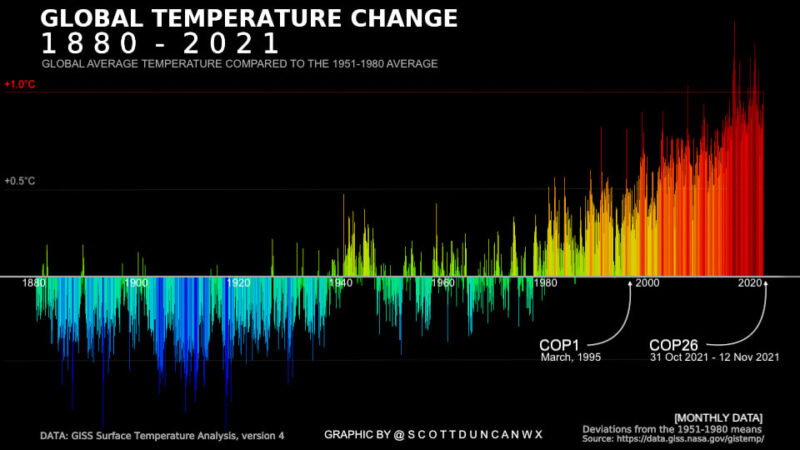
“The problem with climate change is that it’s happening faster than we make decisions and that the decisions we make in the next two decades will determine what the climate of the planet is going to be for hundreds of hundreds, potentially to thousands of years,” he added.
Donner does not think the idea of limiting the rise of global temperatures to 1.5 °C above pre-industrial levels is realistic, “but I am optimistic that we have solutions to a lot of the problem. We can avoid a lot of warming and reduce some of the suffering that I see is projected in our models.”
One of the things he finds encouraging about COP 26, is “the text of the agreement actually mentioned fossil fuels.”
This has never happened before.
“And the fact that all of these countries have long-term targets of getting to net zero, meaning we’re going to stop adding greenhouse gas emissions to the atmosphere. Yes, those targets are far off in the future. And yes, there’s nothing binding that forces them to do it. But the fact is we have the targets now,” he said.
The hard work starts when countries begin implementing the projects necessary to reach their targets.
Donner praised Canada’s climate plan as the most comprehensive it has ever possessed, adding “it’s not enough to reach the target, but it’s certainly a step above where we were 10 years ago.”
As regards to reaching net zero emissions by 2050: “The basics of all that technology exists, the real challenge is in scaling all of that.”
Do we have enough battery power to power all the world’s electric vehicles?
Are we going to have enough minerals for that?
Some greenhouse gas emissions are going to be really hard to reduce.
“That includes things like trying to reduce methane emissions from agriculture. There’s not that much we can do technologically it’s more about shifting diets. And reducing greenhouse gas emissions from generating concrete is really hard because it literally comes from the chemistry of how concrete is created.”
He said there is already plant in Squamish, BC, that pulls CO2 out of the air.
“The challenge with that, of course, is that you have to bury the CO2 somewhere in the ground, so it doesn’t return to the atmosphere, or bury it in the ocean.”
Then, of course, there is the cost.

When nations and scientists make climate projections, “they often include the assumption that we’re going to have some of these technologies working.”
“That can look fanciful from the outside, it is hard to know whether we’re going to get there with all of these proposed technologies,” admitted Donner.
He added that even if we get to net zero, there’ll be some oil and coal products that will still be needed. For example, “metallurgical coal is used to make steel” and we do not have anything that can take its place.
However the switch from gas powered to electric cars is coming.
Every technology, even renewables, consumes resources and will leave an environmental footprint.
“The big goal is to be as efficient as possible in the consumption of those resources, which means recycling the products,” said Donner.
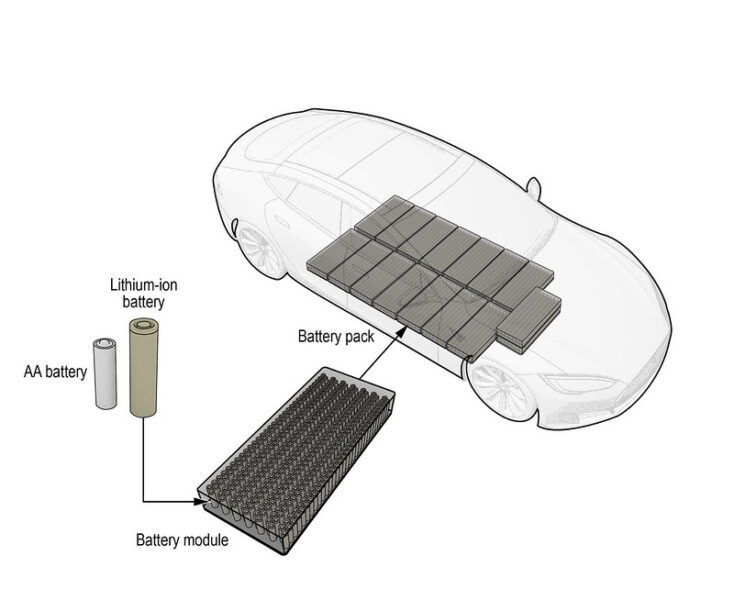
“To build solar cells we need to mine silicon. There’s all sorts of different minerals that are needed. Lithium is a really important mineral for making batteries the way we make them right now for vehicles and everything. There’s going to be a footprint on the planet, so you think about it as which has the worst trade-off. Clearly it’s the impact of greenhouse gas emissions from fossil fuels. Those are the ones we’re most concerned about at this point, but still renewables will have a footprint.”
While scientists see the big picture for a low carbon economy, a lot of details have to be worked out.
“It’s going to take some figuring out. How do we build better batteries. How do we recycle batteries, materials, and even the things we use in our charging stations? Should we have vehicles drive up to the charging station, and wait 45 minutes while your car charges. Or should you drive up and swap your battery with batteries that the station has already charged for you.”
Donner suggests that concerned citizens keep talking to each other, and communicate with the politicians.
“There are all sorts of different climate solutions and policies that could be ready to go, if the folks in power know that the support is out there,” he said.
This may be even more import than reducing our personal emissions, because tackling climate change “is a collective action problem.”

“None of us can solve it alone. We’re going to need policy to help encourage everybody down the road. So I’m always saying, ‘talk about it, make sure you’re talking about it.’
Top photo credit: Delegates huddle on the final day of negotiations – Photo courtesy UNclimatechange via Flickr (CC BY SA, 2.0 License)
Sign-up for Cortes Currents email-out:
To receive an emailed catalogue of articles on Cortes Currents, send a (blank) email to subscribe to your desired frequency:
- Daily, (articles posted during the last 24 hours) – [email protected]
- Weekly Digest cortescurrents – [email protected]