

Editor’s note: Some of the SENĆOŦEN words do not appear in the following text, but can be inserted when the correct spelling is known.

One of the most popular presentations at RIEP’s 2025 Virtual forum was Former Green Party MLA Adam Olsen’s identification of ways to further support the success of BC’s Indigenous economy.
Francine Carlin, Chair of the Rural Island Economic Partnership (RIEP) introduced Olsen, “ Adam is a proud member of the Tsartlip Nation. He currently serves as the lead negotiator for the Tsartlip, representing the nation’s interests on land and resource management, governance and the treaty land entitlement process. His leadership and negotiation plays a crucial role and advancing the nation’s rights and self determination, Adam’s expertise of bridging gaps between environmental concerns, indigenous rights and sustainable development makes him a true champion of the greater good.”

Adam Olsen: “ÍY ȻEĆIL. SȾHENEP TŦE NE SNÁ. ĆSE LÁ,E SEN ET W̱SÁNEC LÁ,E ET W̱JOȽEȽP ÁLEṈ. ZȺWIZUT TŦE NE MÁN. ZIȻOT E TELX̱ILEM TŦE NE SILE.”
“My name is SȾHENEP (Adam Olsen) I am W̱SÁNEĆ from the Tsartlip village. My father is ZȺWIZUT (Carl Olsen) and my late grandparents are ZIȻOT (Laura Olsen) and TELX̱ILEM (Ernie Olsen).”
“It’s an honour to be here working from my home. I want to acknowledge the territories of my relatives throughout the straights from south of the San Juan islands through Southern Gulf islands, through to the islands in the Northern straights. These spaces have been stewarded by my relatives and our ancestors since time immemorial.”
“I raise my hands to the organizers, the brains and muscles of the Rural Islands Economic Partnership (RIEP). I’ve always appreciated how you’ve kept the economic well being of the rural islands centred in your work.”
“At this moment, we’re all facing extraordinary economic times. We’re confused by the actions of our neighbour, concerned about the future of this territory, and because it is unprecedented, it’s difficult to visualize and plan for what may be next.”
Reconciliation Cannot Be Selective
“Whatever may unfold in the next few weeks and months, I believe our short, medium, and long term success is contingent on the resilience of our relationships with each other. While some celebrate this term ‘economic reconciliation,’ I argue that this catchy little phrase remains incomplete to our collective responsibility to First Nations and to our own Canadian identity.”
“Reconciliation cannot be selective. It must be comprehensive addressing land governance and economic sovereignty together. It is important to ground our discussion today in the fact that for the state niche, the rural islands that we know as the Gulf islands today. The San Juan Islands are our relatives.”

Saanich inlet in traditional WSÁNEĆ territory- Photo by Greg Hewgill via Flickr (CC by 2.0)
“Our transformation stories show how the creator XÁLS transformed our relatives into ṮEṮÁĆES, the SENĆOŦEN word for islands, meaning relatives of the deep. These are the words of my relative PENÁĆ, David Elliot, as some of you may know him, describing an image he’d created for the ṮEṮÁĆES Revitalization Project.”
“It helps with understanding the familial relationship the W̱SÁNEĆ people have with these spaces and the responsibility we have to look after each other. David says, or PENÁĆ says, This ÁLEṈENEȻ homeland image refers to a story of the creation of our homelands here in Saanich. In the story, we say that the Creator made our homelands, the islands ṮEṮÁĆES and the high mountains from stones he cast. The stones, however, were actually people who emanated good qualities that the Creator believed we should all have. The Creator told the islands as he cast them outward, Take care of your relatives. In the image, the creator speaks to one of the islands before he casts them out, while the human form appears in the stone that is suspended in midair and an island emerges from the water opposite the creator.”
Colonization
“In February 1852, our WSÁNEĆ ancestors were beginning to feel the effects of increasing settlement and the threat of colonization. The forests were being cut, the slash was burned against our traditional way. Additionally, a messenger was shot and killed crossing a newly fenced field blocked in an ancient path between villages.”
“W̱SÁNEĆ family heads met with the Crown’s representative and Hudson’s bay man, James Douglas. Together, they made a peace treaty. The words later written in the document protect the rights of W̱SÁNEĆ to continue hunting on unoccupied territory and to carry on our fishery as formerly.”
“These rights have been successfully tested in court: Bartleman, Ellsworth, Claxton versus Saanichton Marina, Morris and Olson. Had our treaty been honourably implemented, it would have protected the WSÁNEĆ right to economic sovereignty. Our fisheries were the backbone of our economy, but the WSÁNEĆ were excluded from the fisheries, and now due to government mismanagement and industrial greed, the salmon, herring and shell fisheries have been devastated on our coast and in our territory.”
via Wikimedia (CC BY 3.0)
“The Colonial project here, in Canada, systematically excluded First Nations people from the economy and tethered us to government programs and services. The results are dramatic. First Nations communities face the widest socioeconomic gap and the deepest infrastructure deficits of any community in our country.”
“Here’s a key point from my comments today. Because of this history, I challenge the rhetoric of ‘economic reconciliation’ used by some politicians in gaining in social popularity. It suggests some type of progress while ignoring the deeper structural issues that exist. First Nations of these rural islands that we’re talking about deserve to have both a meaningful economy and a governance system that reflects their values.”
True Reconciliation Requires Action
“True reconciliation requires action in all areas, not just where it’s comfortable or convenient, but also let’s be honest, It’s not like the economic reconciliation that we’re talking about is generating any noticeable wealth for First Nations in this region. Understanding this story is crucial to discussing what true economic inclusion should look like.”
“Reconciliation requires recognizing rights and implementing them through First Nations self determination. Self determination requires self reliance. That First Nations must achieve through economic sovereignty. We will meet those needs through a variety of means: Land back for community needs and economic developments, business development and co governance models with other government and non government organizations.”
“Collectively, we must change how we see and relate with First Nations. I’m not talking about a gift that the rest of society or the governments that represent us give First Nations. I’m talking about a basic expectation of respectful, interpersonal and inter community relationships. We need to move beyond the idea of simply engaging or consulting.”
“While formal contact may be necessary, the real goal should be building genuine relationships. We need to stop thinking about it as generosity because it’s about what is right. From an ethical perspective, it is immoral for our governments to keep First Nations communities tethered to systems we know create desperation and toxicity.”
“From a legal perspective, it’s what is fair and just based on Western law. From an economic perspective, it makes absolutely no sense to exclude First Nations people and impoverish their communities. Governments know what the problem is. Negotiators like me, my new role, politicians, our chiefs and councils, and our band administrators raise the issues in every meeting. We tell them that we lack the resources to deliver social services and build and maintain the physical infrastructure First Nations communities need. We lack the land, financial capital, liquidity, and regulatory framework.”
Broken By Colonial Era Policies
“In addition, we are smothered by generations of dysfunction that is the result of the Indian Act governance and land management structure. My First Nations relatives from the southern to the northern rural islands have deep relationships with the lands and waters surrounding them. The coastal people are marine people. In the 20th century, those relationships have been intentionally broken by colonial era policies, and they have been maintained until today.”
“Increasingly, my relatives are reconnecting in the relationship with the islands and the amazing people who live there. There’s a new receptivity and desire from islanders to learn about the history of those spaces, but it needs to be more than sparse economic tokenism. Your community island economies will be much more resilient when First Nations people are invested back in the islands, participating in the economy of the islands, stewarding the terrestrial and marine environment, improving the commons.”
“But acknowledgement alone is not enough. If we stop there, we are merely performing reconciliation, not living it. I’ve often spoken about land acknowledgements. In these coastal communities, it is important to see the ancient evidence of First Nations societies and cultures.”
“There are hundreds of village sites across the islands and the straits. Many of them have been disturbed, covered by pavement, concrete, and glass. Acknowledging the land and its relationship with Indigenous people is not just symbolic, it recognizes rights and title. Rights that colonization, the Indian Act, and ongoing policies continue to disrupt must align our words with action by changing our relationships with the land and water and the indigenous peoples connected to it. It’s not far enough to do a land acknowledgement without action towards some form of restitution.”
Creating Meaningful Relationships
“Otherwise it just becomes performance art. There are many ways that we can co-create meaningful relationships through revenue sharing, land trusts such as the W̱SÁNEĆ Lands Trust Society and co management agreements in parks and other spaces. From an economic perspective, rural island economies should be linking up in joint ventures and other business arrangements with First Nations Enterprise, making charitable contributions and developing collaborative agreements to manage and steward the terrestrial and marine environments together.”
“Relationships are the foundation of strong communities, strong economies, and strong governance. They’re not built through transactional meetings or legal checklists. They’re built through trust, reciprocity, and respect. Yet, for generations, our governments have applied a different standard to Indigenous rights.”
“Instead of recognizing First Nations as partners, they’ve treated us as obstacles, something to be consulted rather than engaged with as decision makers. This mindset has led to generations of exclusion, instability, and broken trust. Legally, the duty to consult comes from Haida in 2004. It requires the Crown to consult Indigenous peoples when their rights may be affected.”
“Consultation is not consent. Consultation is not partnership. It is a legal minimum, not a meaningful relationship. Free, prior, and informed consent, recognized by British Columbia’s Declaration Act, and the United Nations Declaration on the Rights of Indigenous Peoples, set a higher standard, one that acknowledges Indigenous peoples as right holders, not just stakeholders.”
“So I ask, Why do we accept consultation and accommodation when we expect consent and mutual agreement in every other aspect of society? Why should First Nations be the only people in Canada who are expected to accept decisions being made about their lands, waters, and future without their full and informed agreement?”
“This is why we must shift our thinking from obligation to true partnership. Instead of asking, Have we fulfilled our duty to consult? We should be asking, have we built a relationship based on trust and mutual respect? Instead of checking a box, we should be forging partnerships. Because true reconciliation is not about fulfilling obligations, it’s about doing what’s right.”
“So let’s move beyond consultation and move toward relationship. This presentation is shared ideas that can help your business and community become more resilient in these turbulent economic times. This is the moment for Canada to move past the restrictions of the Indian Act through truth. recognition and a reconciliation of the history and land resource exploitation that has happened on British Columbia’s coast since the mid 1800s.”
“I challenge this notion of ‘economic reconciliation’ because it does not recognize the structural and systemic dysfunction created and maintained by crown government.”

Gulf islands – Photo by Thomas Quine via Flickr (CC BY 2.0)
First Nations Self Determination
“To repeat what I said earlier, reconciliation requires recognizing rights and implementing them through First Nations self determination.”
“Self determination requires self reliance that First Nations must achieve through economic sovereignty. Economic integration is essential and the reconciliation cannot be selective. Recognizing the land and acknowledging First Nations presence is a step toward restoring the original order, but economic inclusion is a step, not the destination. We must go beyond land acknowledgments, beyond consultation, beyond what is comfortable. True reconciliation means returning land, restoring governance, and forging relationships built on mutual respect.”
“My challenge to you is this, start today. Build real relationships with First Nations people not as a duty, but as an obligation to justice. First Nations are not asking for gifts. We’re seeking what is right, and I’m inviting you to stand with us.”

The next segment of this session was questions.
What Local Governments Can Do
Mark Vonesch, Regional Director for Cortes Island, asked, “As a local government representative, one of the challenges I see is how to bring First Nations who have not signed treaties into the decision making process in the boardroom. There has been conversation around the government allowing First Nations to have decision making power at the boardroom before they’ve signed the treaty, but that hasn’t happened yet. I just wanted to be your comments on that.”
Adam Olsen: “I have long complained about the fact that the Local Government Act, the Islands Trust Act, Provincial Act failed to acknowledge the Declaration Act and that’s part of the work of implementing the Declaration Act is going to be continued to ensure that all of those other acts are in alignment. However, I think that we can do two things at once and I encourage local governments to open their minds up to this. I know the lawyers of local governments will tell you that there is no responsibility that local governments have, that’s a crown responsibility.”
“I would say that the Local Government Act or the Islands Trust Act isn’t the only act that guides your actions as a director, as a locally elected politician. In fact, every act that’s passed in British Columbia is applicable, or could be applicable to what you’re doing, and that includes the Declaration Act. It’s going to take local governments to move out of a mindset that they’re doing something extraordinary by engaging with First Nations people in relationship, but the only way that you’re going to be successful. I would say that local governments that figure this out are the ones that are able to self actualize.”
“The ones that aren’t are going to be limited. Their neighbors are going to be limited and only able to deliver a fraction of what’s possible once a true partnership happens. True relationships happen.”
Shifting the Primary Relationship
Tim was next, “My question is, following similar lines, Islands Trust Council has made a request to the province to review the Act and the governance structure and specifically, a question around aligning the Act with DRIPA. Currently, what we hear lots is there’s a desire for First Nations to be at the table in a meaningful way. How do you think that local governments should be approaching the province with that kind of work so that we not only have the aspirational, but the jurisdictional reality, to have those voices as an integral part of our local governments.”
Adam Olsen: “I’m going to shift the primary relationship because the relationship between the Island’s Trust and First Nations people is the key one. I think that your success with the province will come once the Island’s Trust is truly able to stand with the First Nations alongside each other as partners in this project to the provincial government. I think that the provincial government is likely to be able to continue to push back on the islands trust until that local work is done.”
“What I found actually in my retirement is a lot of organizations want me to come in and do First Nations engagement for them. I am actually pushing back on that and I’m offering instead to hopefully have useful conversations with those organizations about how they can build relationships with First Nations people. I can be a safe place to bounce ideas off of and they can take those ideas or not.”
“Every municipal government, every government, other government agency can always look to the Crowns to dispense the duty to consult. But the duty to have a relationship is on each and every one of us.”
A Challenge For Everyone
Emily said, “I also, as an Indigenous woman, get asked these same questions, and I just love how clearly that you laid it out there. It is on each individual. As an indigenous woman, who has sat through quite a few land acknowledgments, I want to put a challenge out there to the rest of the people in this room that I work with. That’s a really great basic first step, but I believe that we’re past that now and what I would really love to hear is what you are doing as a human being and what your organization is doing to further reconciliation. What positive steps are happening beyond the land acknowledgment? That’s what I would really love to hear.”
Dwayne added, “I think there really needs to be a formal conciliation instead of reconciliation. I’m thinking in terms of to be able to look from an indigenous perspective of in terms of self family, community, nation. I think that’s a creative philosophy of looking at the possibility of developing a meaningful path towards having the cultural competence to be able to envision what we all want to see out on the land in terms of management, in terms of protection.”
Adam Olsen: “What I hope to be able to leave with everybody is that action plans are great in terms of being able to achieve some stated objectives, but they are not relationship building documents. They are the individual actions that you can account for.”
“We often look to governments to implement their action plans. I’ve been calling on the government to implement the action plan for performing the police act for the last three years. What I’m inviting everybody individually here to participate in is relationship building. Actually going and building genuine relationships, transforming from transactional relationships to these transformative relationships of people getting to know each other and being able to operate in spaces with each other. I think that it’s also important to acknowledge that we each have a responsibility in this as well.”

Links of Interest:
- Adam Olsen’s website
- A Wake-Up Call for BC: Securing our Food Supply – Adam Olsen
- Restoring Brentwood Bay: A Collaborative Vision for Environmental and Governance Renewal – Adam Olsen
- Public Safety at a Crossroads: Time for Transformational Reform – Adam Olsen
- Uniting Canada and Reconciling our Past – Adam Olsen
- RIEP Presentation: US Tariffs & How Island Economies Can Respond – Cortes Currents
- The Rural Islands Economic Partnership website
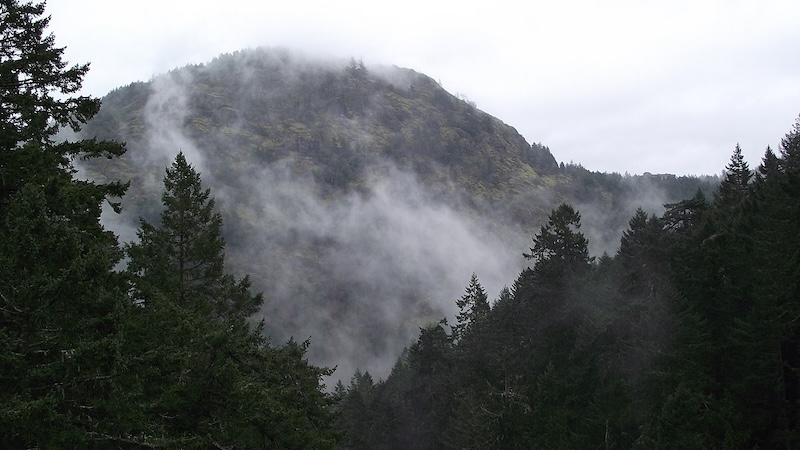
Top image credit: Gulf Islands – Photo by Gerry via Flickr (CC BY-SA 2.0)
Sign-up for Cortes Currents email-out:
To receive an emailed catalogue of articles on Cortes Currents, send a (blank) email to subscribe to your desired frequency:
- Daily, (articles posted during the last 24 hours) – [email protected]
- Weekly Digest cortescurrents – [email protected]