


With the rise of global temperatures already at 1.4°C, we are currently on track to reach 2.8°C by the end of this century. The Intergovernmental Panel on Climate Change (IPCC) claims, “every additional 0.1°C of global warming causes clearly discernible increases in the intensity and frequency of temperature and precipitation extremes, as well as agricultural and ecological droughts in some regions.”
Denise Mullen, from the Business Council of BC, recently informed the SRD’s Natural Resources Committee that the province faces a more urgent problem. British Columbia is in the midst of a productivity emergency.
Canadian pennies – photo by Page DeWolfe via Flickr (CC BY 2.0)


“BC is unique among the provinces in registering effectively no private sector growth in the last five years,” she said.

“Almost all of the job growth in British Columbia has been in the public sector. Mainly in education, health, and public administration and even more so in general government administration.”
85% of the job growth on Vancouver Island has been in this sector.
“The point to take away from the two, public and private, is that you need a strong private sector to pay for public sector jobs.”
Mullen pointed to CleanBC, the provincial government’s plan to fight climate change, “the plan is to shrink the economy.”

According to the Canada Energy Regulator, BC’s “emissions have INCREASED 26% since 1990.”
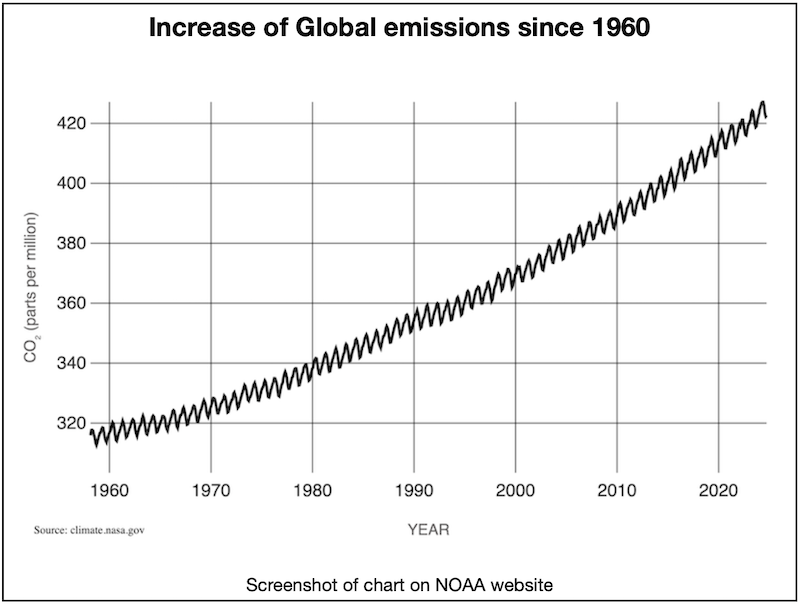

This is only half the amount of the global increase, but during this same time period the EU reduced its emissions 37% BELOW 1990 levels while dramatically growing its Gross Domestic Product (GDP). The European Commission states this reduction was ‘driven by the growth in renewable energy generation and fall in coal and gas use.’
Denise Mullen: “We should be focusing on global emissions and not domestic emissions. Our hard targets on emissions are damaging to the economy, especially given that the rest of the world is responsible for 99.81% of global emissions. There’s not a lot we can do to create an inflection point in the direction of either energy use or GHG emissions, but we can hurt ourselves economically.”
“We’re not trying to say sacrifice the environment for the economy, but right now there’s an imbalance in the regulatory environment and the approach to our economy and economic plan for the well being of British Columbians.”
As BC has not published an emissions report for 2022, Mullen cited Federal government statistics showing that the province’s emission rose another 4%. (See chart above for visual confirmation.)
“If we have absolute hard targets to achieve by 2030, 2050 and 2080, I think the 2030 target would mean that we would have to reduce 5.2 megatons per year to meet the (40 percent below 2007) absolute target. This is an impossible target. It effectively means shutting down the economy. That’s the only way to do it for a variety of reasons. One, 2030 is five years away now and if our emissions are going up, I don’t think I need to tell you how difficult that would be, especially in an economy that’s already struggling.”
The Business Council of BC believes the province will lose hundreds of billions of dollars keeping to CleanBC’s agenda. The only sector that shows improvements is electricity.
Denise Mullen: “That kind of makes sense, given the focus on the idea of electrification, no matter how difficult that actually is. Importantly, electrification and what we’d like to call cleantech, is only 3.3% of the economy.”
“People talk about ‘Oh, clean tech can fill the gap’ and ‘oh, we can do this through electricity.’ No, electricity is only 17% of our energy demand.”

She said the big projects that have buoyed the economy in recent years are Site C, LNG Canada, Trans Mountain and Coastal Gas Link.
Three of these projects are in the gas and oil sector, which the EU has been phasing out while growing its economy 68%.


However Europe has much more developed services and manufacturing sectors, which provide 64.7% and 23.8% of the EU’s GDP, respectively. BC, and Canada, have traditionally relied upon resource extraction.


Denise Mullen: “Our era of mega project construction is over.”
”They’re all coming to an end. One of the effects will be a further decline in GDP per capita and GDP is just income divided by the number of people.”
“Two thirds of the revenue that we generate from exports comes from the traditional sectors, many of which Vancouver Island knows very well for forestry and some mining, agriculture. Those are the ones that pay the bills.”
Mullen stressed the fact that most of these sectors are threatened.
“We need an economic plan. We need one that focuses on prosperity and one that kickstarts investment in all kinds of projects, especially those that pay the bills. One that enables larger export of BC goods and services, not less.”
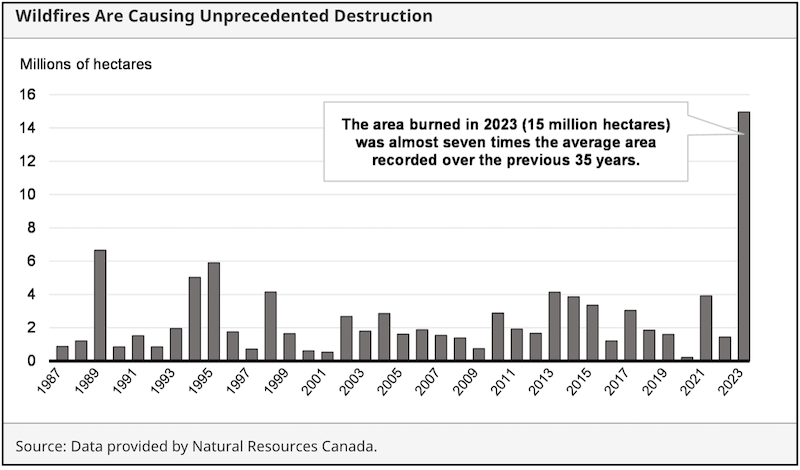
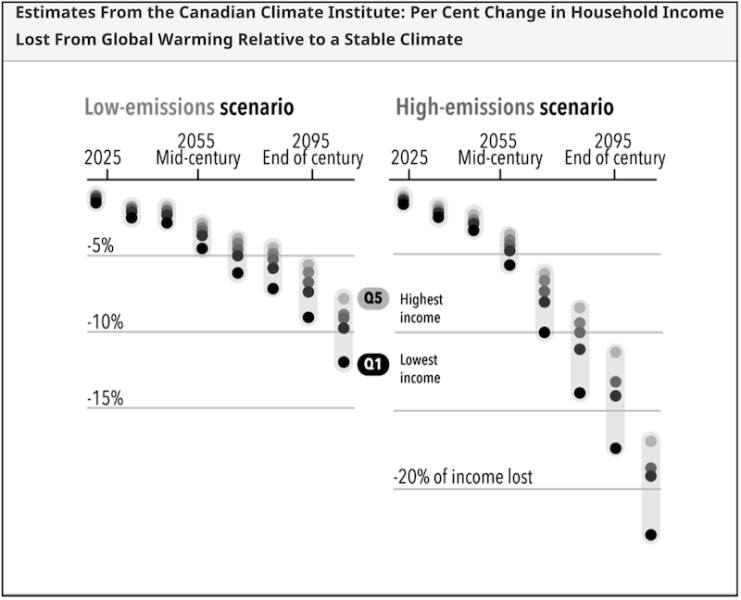
While the Business Council of BC appear to be suggesting that climate adaption needs to be be deferred or left to other nations, Europe has taken the position that the cost of doing nothing is too high. Extreme weather events like heatwaves, megafires, floods and droughts have already cost the EU economy an estimated EUR 738 billion. “As these extreme weather events are expected to intensify, it seems unlikely that associated economic losses will reduce.”
Since 2000, four million people are believed to have lost their lives as a result of extreme weather events around the planet and the average global temperatures have only risen 1.4°C.

Links if Interest
- YouTube of Natural Resources Committee Meeting (source of screenshots above)
- 1.5°C: what it means and why it matters – United Nations
- The Data Commons website
Sign-up for Cortes Currents email-out:
To receive an emailed catalogue of articles on Cortes Currents, send a (blank) email to subscribe to your desired frequency:
- Daily, (articles posted during the last 24 hours) – [email protected]
- Weekly Digest cortescurrents – [email protected]
a disturbing but well done piece. thx Roy.