Tag Archives: Fossil Fuels

Elizabeth May: ‘It is safer to Move Bitumen by Rail’

Green Party leader Elizabeth May claims it is safer to move bitumen by rail than through pipelines. She has mentioned this in the House of Commons, written about it in her blog, and told reporters.

Elizabeth May: “In a marine environment, diluted bitumen is impossible to clean up.”

Michael Lowry (Western Canada Marine Response Corporation): “The biggest spill we’ve ever cleaned up was a diluted bitumen spill.”

Elizabeth May: “It wasn’t dilbit.”

Continue reading Elizabeth May: ‘It is safer to Move Bitumen by Rail’

The Big Oil Playbook: recent Environmental Defence publication

That charitable organisation Environmental Defence has recently published a 23 page report called Big Oil Playbook : Fossil Fuel Industry Exposed. The report is playfully illustrated, but quite serious in concept; its purpose is clearly laid out on the first page:

The goal of this report is to paint a clear picture of how oil and gas companies operate, how they generate support for the industry and leverage it against effective climate solutions. Some of their tactics, like greenwashing and lobbying, have been well-publicized. Yet others have been largely hidden from the public, like funding astroturf groups, supporting anti-renewable energy campaigns, and infiltrating educational institutions.

The report documents ten established tactics used by the fossil industry in its battle against climate activism and decarbonisation policy.  Currents interviewed one of its lead authors, Emilia Belliveau from Environmental Defence Canada, about this project.  The broadcast version of this story is in two episodes. In the first part, Emilia explains the ten standard tactics. In the second part we dig a bit deeper into the details: how these tactics work, and their effects on communities and political life.

Continue reading The Big Oil Playbook: recent Environmental Defence publication

Turning Down the Heat Part 3: It’s Time to Kick Some Ass  (ie – Mobilize People Power)


By Max Thaysen and the Cortes Island Climate Action Network

“Hope is not a lottery ticket you can sit on the sofa and clutch, feeling lucky. It is an axe you break down doors with in an emergency. Hope should shove you out the door, because it will take everything you have to steer the future away from endless war, from the annihilation of the earth’s treasures and the grinding down of the poor and marginal… To hope is to give yourself to the future – and that commitment to the future is what makes the present inhabitable.” ― Rebecca Solnit, Hope in the Dark: The Untold History of People Power

We’ve got the receipts, we just need to break the door down (aka build and wield power). 

Continue reading Turning Down the Heat Part 3: It’s Time to Kick Some Ass  (ie – Mobilize People Power)

TMX in the crosshairs on MPs’ first day back in Ottawa

By Natasha Bulowski, Canada’s National Observer, Local Journalism Initiative Reporter

Canadian MPs are back in the capital and kicked off day one by digging into the climate and financial impacts of the Trans Mountain pipeline expansion (TMX).

Over five committee meetings in coming weeks, federal ministers, experts and interest groups will testify about TMX’s impact on Canada’s climate targets, how the cost to taxpayers soared, and government plans to sell TMX.

Continue reading TMX in the crosshairs on MPs’ first day back in Ottawa

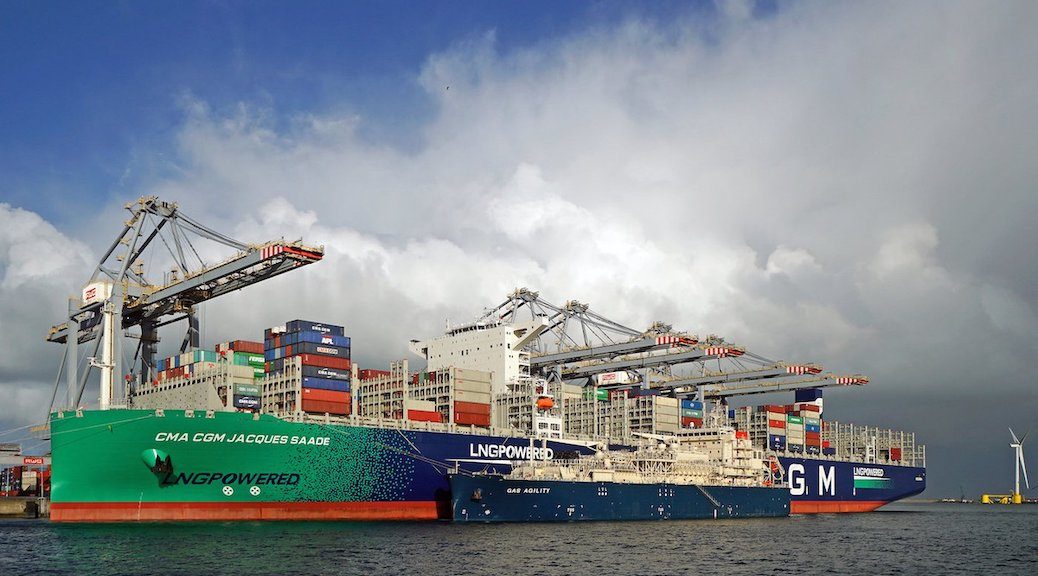
New emissions targets may sink LNG’s pitch as a shipping fuel

Canada’s National Observer, Local Journalism Initiative Reporter

The fossil fuel and shipping industries just got a serious shot across the bow over relying on liquefied natural gas (LNG) as a transition fuel.

On Friday, the International Maritime Organization (IMO) finalized stricter global emissions standards for the maritime industry while closing a significant regulatory loophole driving up the use of LNG as a shipping fuel.

LNG has lower CO2 emissions than other fossil fuels used in shipping but it also emits significant amounts of methane, a short-lived but powerful greenhouse gas responsible for more than 25 per cent of current global warming.

Continue reading New emissions targets may sink LNG’s pitch as a shipping fuel