
Tag Archives: Wildfires

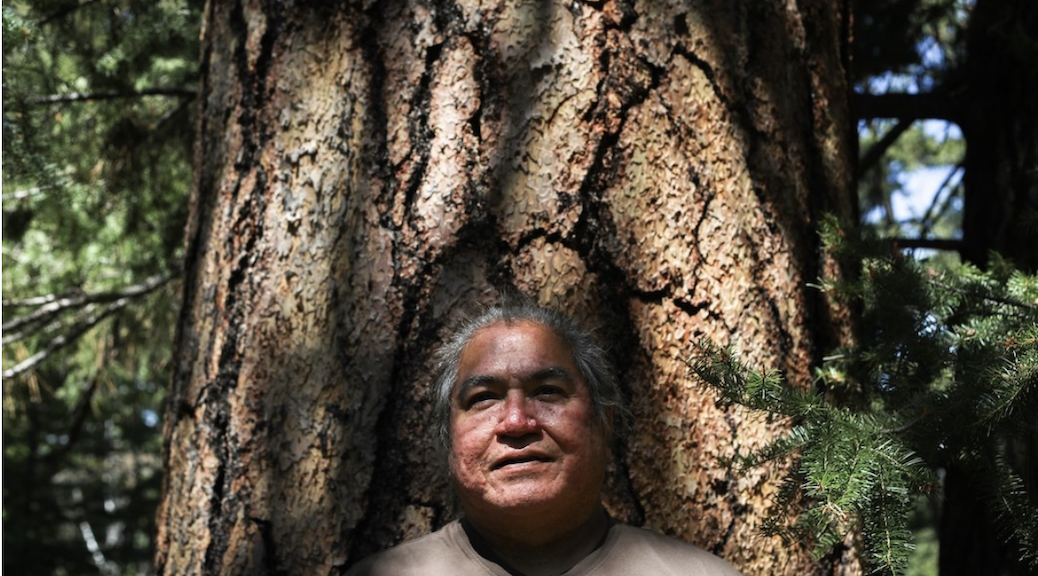
Amid climate impacts, leading Secwépemc firekeeper shares ‘a better way of looking after the land’

By Aaron Hemens, IndigiNews, Local Journalism Initiative Reporter

Growing up in Nlakaʼpamux and syilx territories in the 1970s, Joe Gilchrist can’t remember a single summer when wildfire smoke ever trapped him indoors. 

The Merritt, B.C., region’s semi-arid landscape still saw scorching summer temperatures back then, he recalled, but not the record-breaking fire seasons of recent years. 

“That was thanks to our work that the Indigenous ancestors did on the land,” said Gilchrist, a Secwépemc Nation member who now lives on Skeetchsn Indian Band’s reserve with his daughter.

“Then, everything was still fairly spaced out; the fires were easier to handle.”

Although settlers’ wildfire suppression efforts had become the dominant form of land stewardship when he was young, Indigenous communities in the Nicola Valley were still using fire to “cleanse” the land, Gilchrist said.

Continue reading Amid climate impacts, leading Secwépemc firekeeper shares ‘a better way of looking after the land’

Billions in federal buildings, roads and other assets at risk from climate change

By Natasha Bulowski – with files from Rochelle Baker, Canada’s National Observer, Local Journalism Initiative Reporter 

Canada’s auditor general wants to know whether the federal government is doing a good job protecting its assets — including dams, buildings, vehicles and more — from the increasingly severe impacts of climate change.

The Department of National Defence received a notification letter — obtained by Canada’s National Observer through an access to information request — that the auditor general is launching a performance audit of “Protecting Federal Assets From Climate Change.”

The audit is for the government-wide Greening Government Strategy but pays special attention to three key departments — Fisheries and Oceans Canada, National Defence and Public Services and Procurement Canada — to assess their progress on protecting their assets, services and activities from climate change.

Continue reading Billions in federal buildings, roads and other assets at risk from climate change

Driving through Canadian Wildfires: A Cross-Country Journey Amid the Smoke

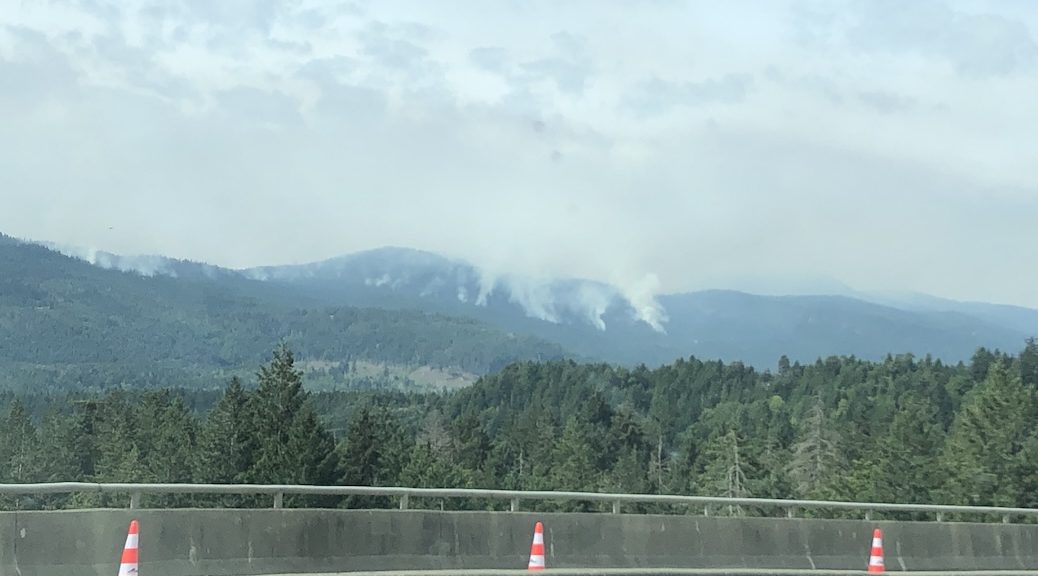
As of August 7, the Canadian Interagency Forest Fire Centre reported that wildfires have consumed more than 7.1 million hectares. There is a broad belt of fires stretching from Northern Alberta to Western Ontario (image below). 

Driving across Canada in mid to late May, we played tag with the smoke and its acrid scent all the way from the Saskatchewan border to Newfoundland. It wasn’t as bad as the news sometimes made it sound. There were days of bright, clear skies, as well as others when a fog-like haze settled across the landscape. The flames may have come within three kilometres of the Trans-Canada Highway west of Kenora, but we didn’t see them. The road remained open, although several side roads were blocked. The smoke, however, spread much farther. We saw a pink sun as far east as Corner Brook, Newfoundland, on May 28.

Continue reading Driving through Canadian Wildfires: A Cross-Country Journey Amid the Smoke

Canada’s northern wildfires projected to slow global warming — at a high cost

Canada’s National Observer, Local Journalism Initiative Reporter

The climate-driven wildfires currently razing Canada’s northern forests and darkening skies across the continent may have an unexpected effect: according to a new study, the fires may reduce global warming and sea ice melt in the Arctic.

The rising impact of blazes in Canada and Siberia’s boreal regions over the next 35 years will slow warming by 12 per cent globally and 38 per cent in the Arctic, according to recent climate modelling research at the University of Washington (UW). But the study’s authors warn that while the study may sound positive, it’s just one part of a trend that overall spells major trouble for northern ecosystems. 

Continue reading Canada’s northern wildfires projected to slow global warming — at a high cost

The Quadra Project – Warming Oceans

The close connection that exists between the atmosphere and the ocean is not surprising considering that 70% of the planet is covered by water—about 360 million km2—and the few dozen km of air is extremely thin compared to the 12,750 km diameter of Earth. This means that about 90% of the atmospheric heating caused by rising concentrations of CO2 is transferred to the oceans.

In approximate terms, about one-third of the carbon dioxide we add to the atmosphere by burning fossil fuels stays there for centuries, about one-third is captured and sequestered in various land forms such as forests, soils and vegetation, although one recent United Nations study suggests the terrestrial sequestration may only be about 25%, possibly because forest and plant cover is being diminished by agriculture and fires, and because a higher global temperature is reducing the photosynthesis process by which plants process carbon dioxide into carbon, sugars and oxygen. Much of the remaining one-third of our CO2 emissions that is not absorbed by marine algae dissolves in the oceans to form carbonic acid.

Continue reading The Quadra Project – Warming Oceans