

Interview by Manda Aufochs Gillespie; written version by Roy L Hales

This is the second half of a highly abridged text version of Manda Aufochs Gillespie’s interview with Chief Kevin Peacey of the Klahoose First Nation.
In Part 2 Kevin talks about QXMC businesses, the new restaurant in Gorge Harbour, the Squirrel Cove project, Treaty Negotiations, Land & Rights, Klahoose History, his own life and Future Challenges
Manda: “I want to talk a little bit about your development arm, Qathen Xwegus Management Corporation (QXMC). What is its relationship to Klahoose?”
Kevin: “The corporation is Klahoose. We just keep it hands-off so that we’re not bugging them with, ‘We need this, we need that.’ We let the corporation do what they need to do.”
Klahoose Forestry
Kevin: “The biggest thing is forestry. That brings in money, and if it wasn’t for our forestry, we probably wouldn’t have as many businesses. Over the last six or seven years, we’ve doubled our businesses. The corporation looks after aquaculture, forestry, the Gorge, the coastal resort, and the Airbnbs. It creates a lot of jobs, and Klahoose members get first priority for those jobs.”
“Our forestry has expanded, and we’ve bought a lot of tenures from A&A and Interfor. Klahoose pretty much has some of the biggest forestry tenures in BC now, so we’ve come a long way.”
Manda: “Is the QXMC-run forestry tenure different from the Cortes Forestry General Partnership?”
Kevin: “In the Forestry General Partnership, the band is a partner with settlers through the community forest.”
Manda: “Is that just for the Crown land on Cortes?”
Kevin: “Correct.”
Manda: “And then your forestry tenure extends throughout your traditional territory, or beyond?”
Kevin: “It’s all through our territory, right from Klahoose up to Toba and we’ve bought tenures in other places too, besides our territory.”
Manda: “Do you know what the vision is for that? Is it to just expand as much as possible?”
Kevin: “My thought is that you don’t want to over-harvest in one spot. So it’s nice to see that you have all these different tenures, and you can make that decision: okay, we did this little part or that part, let’s move miles away to another area so it doesn’t look like we’re clear-cutting everything—because we don’t clear-cut.”
“It’s always for the future of our people. We’re not going to be here forever, but we’re going to leave something behind for our people. Right now, with the tenures we’ve bought, it’s probably 30 or 40 years of logging that we could do, if we really wanted to go that far. We’re leaving that in the younger generation’s hands after we’re all gone.”

The Resorts
Manda: “Then there’s the resorts.”
Kevin: “We bought a new resort, I believe in 2019, and that’s the Klahoose Wilderness Resort. We changed it into a cultural resort. We’re almost sold out every season. People from all over the world come to see our culture. Our resort has now won three awards in the last four years. We’re probably going to have two poles carved up there.”
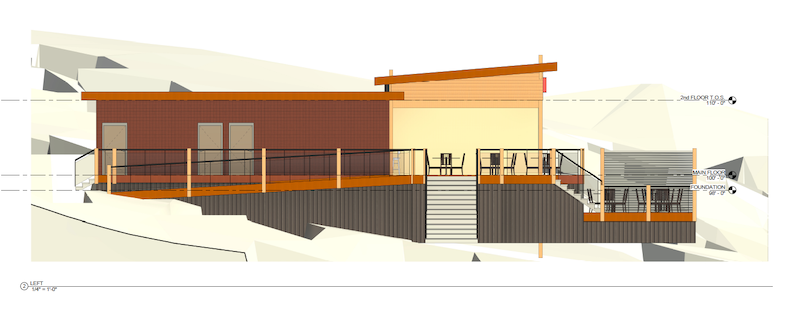
Manda: “What about Gorge Harbour Marina? When do we get a restaurant?”
Kevin: “We just won an award for the Gorge this year. We’re doing a new restaurant. I think it’s going to be open by June 2027. I saw the blueprint, and it’s beautiful. It’s going to hold more seats than the old one.”
“We had to get rid of the old one, unfortunately, because once you opened things up, we found out, wow, this all needs to come down. This new one is going to be nice. Most of it is going to be local wood, and our mill at Klahoose is starting to mill all the beams and everything right now.”
Manda: “This is a loaded question, will it be open year-round?”
Kevin: “I’m hoping it will be.”
Manda: “Let’s just say yes. Say it on air.”
Kevin: “Okay, I believe we’re going to be at that point in the next five to eight years. With the new and bigger ferry coming in, you’re going to have more tourists. Then you have the global weather changing—hotter weather and longer summer months.”
Manda: “It would be great to have it open year-round. Or even if we had to shut it down through parts of the winter, maybe just breakfast. How about one brunch and two dinners at least? I’m just bargaining. We’ll bargain out loud, and then someone else will have to make it happen.”
Kevin: “That’s Marco Bedetti, our manager.”
Manda: “Okay, Marco—Manda from Folk U and Chief Kevin need it to be open year-round. I think the thing that maybe it also needs, just putting it out there, is a shuttle.”
Kevin: “Actually, that’s something I was mentioning to Marco. I’m not supposed to have my nose in the business too much, but I always have ideas.”
“We want to start doing cultural programming now at the Gorge and have our drummers there, with a spot in the gazebo for an hour. We’re thinking about having a bus tour around the island and telling our history, then ending up at the cultural centre.”

“I hear a lot of people asking, ‘What’s there to do at Klahoose? Can we learn anything about Klahoose? Do they have anything going on?’ In reality, we don’t—except for our coastal resort. I think it’s time we start doing that on the island. We’d also like to have a canoe in the Gorge where people can get on and paddle with one of our skippers. The skipper would share the history of the Nation, and tourists would get to learn that all through the Gorge.”
“I actually went to Tofino as a tourist, and there was a two-week wait to get onto the canoe. It was a two-hour paddle. The woman who was the skipper was singing lots of songs and showing us the history—the good and the bad.”
“I thought, ‘Wow, that’s something we should be doing,’ especially if they’re sold out and this island is getting more tourists on it. I think that would work for us too.”
Manda: “I like your enterprising brain. Marco, we want a bus, we want a year-round restaurant, and we want affordable tourist activities for locals and visitors to learn about Klahoose culture. So I’ve just listed it all out—make sure he listens.”
Kevin: “I know he is.”

Klahoose Aquaculture
Manda: “Can we talk a little bit about what’s going on with aquaculture? I don’t know if you’re still doing geoduck. I have had it before at Klahoose and loved it. Is that still happening?”
Kevin: “We do still have geoduck. I believe they’re almost ready to be harvested within the next year or two. We were also doing oysters and clams. We’re starting to market overseas now, over in Italy. That’s something Marco has been working on, and he has sales there already. It’s just a matter of having diggers be consistent and having that poundage every week.”
“We’ve gotten out of the seaweed business for now because it’s just not that marketable. It’s basically break-even. You hear a lot, like, ‘Oh yeah, so-and-so is buying seaweed,’ this and that, but you have to have a special place to dry it, and it costs quite a bit of money to do that. So we’re just not at the point of investing in a big building. It’s going to smell, and you don’t want it in the village.”
“Of course, we also have the mussels—the shared partnership in the Gorge with that.”

Manda: “I’m trying to think of those round things that hang off the strings that are not mussels. They’re like a hockey puck and thin.”
Kevin: “Scallops?”
Manda: “Yes. I love scallops!”
Kevin: “We’re doing scallops now, and apparently they’re doing really well this year.”
Manda: “Can we talk a tiny bit of politics too? What would it take to get them processed on-island, so you could be selling the seafood you grow at the restaurant you run?”
Kevin: “You can do that—it’s an investment. There’s one on Quadra that they’re actually trying to sell. It’s been talked about over the last few months, maybe investing in one of those, but right now we take our product to another place and then transfer it back.”
Manda: “We used to have shellfish processing on the island. It feels to me like one of those things that quietly closed down and is now so hard and expensive to get going again. But it makes it really hard for us to get the full value on-island. Anyway, I love that you’re looking at that.”
Kevin: “It’s funny—I’ve gone to New York, to Los Angeles, gone into a restaurant, and there you go: Max Oysters, Max Clams. I’m like, ‘Wow, it’s all through the States. So why can’t we have our product here?'”
Manda: “I go to Vancouver all the time, and you can get a $5 oyster from my beach, but I can’t buy it at a restaurant on Cortes. I mean, that’s okay, because I can also just get it for free, but I’m really curious with my enterprising mind. If there are any grants to be written or fundraising to be done, just let me know.”
Kevin: “Absolutely.”

The Squirrel Cove Project
Manda: “What is going on with the Squirrel Cove project?”
Kevin: “The project got a bit out of hand, and when I got back in, I told the corporation just to put it on hold for now and find out where we are with the band and our finances.”
“In the last few weeks, council and I decided to go ahead with a new RV park that’s going to go by the store. It will probably start with 20 RV pads—nothing huge right away. The power is already there. We already have a huge septic tank there. We’re thinking about maybe having a small little store in the centre of the RV park, and that’s where you’d do your bacon and bread in the morning.”
“That will be at the newly cleared oceanside, and we’ll build it as we go.”
“Like, (RV parking at) the Gorge is sold out for three years, so we’re like, ‘Why wouldn’t we do an RV park on the Squirrel Cove side?’ It’s like paradise over in Squirrel Cove.”
“On the other side, we’re still debating what we want to do—whether we’re going to do housing or something else.”
Manda: “You’re not selling it?”
Kevin: “No.”
Manda: “Does that mean the gas station project is off the table?”
Kevin: “Yeah.”
Manda: “But there is a possibility for housing there?”
Kevin:
“There are a lot of possibilities that have come up. What we want to do there is: what makes sense, and what’s going to be profitable.”
Manda: “Is buying Squirrel Cove General Store on the table?”
Kevin: “No.”

Klahoose Treaty Negotiations
Manda: “I know this is a huge topic, but can you get us up to speed on the treaty negotiations?”
Kevin: “I can say a little bit. The treaty is in stage four now, out of six, and we’re not really pushing treaty right now. You see what’s going on in B.C. now with all the treaties, the overlaps, and the fighting, and it’s something we don’t want to be involved with. We’re going to build the team bigger. I can say that there’s a possibility we could have treaty done in six years.”
Manda: “Do you know roughly how long the negotiations have been going on? How long did it take to get to stage four in your case?”
Kevin: “Probably 20 years. It’s always like the Province says, ‘Yeah, it’s a no-brainer. We support that.’ Then you go to the federal government, and they’re not ready to come to the table. It seems like the federal government is always lacking. Or with fisheries, we can’t get Fisheries to come to the table. It’s like pulling teeth, so that holds us back.”
Manda: “And then government changes?”
Kevin: “Then you just start over, and we’re on hold until they figure it out for three or four months.”
Manda: “Does the treaty team on your side stay more or less consistent?”
Kevin: “Kathy Francis is our negotiator. She works full-time, and she’s always doing treaty. I sit on treaty myself, but I don’t go to a lot of the meetings unless we’re going to get something out of it.”
“We’re doing treaty right now, but we’re just sort of slowed down because the government is slowed down, and the federal government is not willing to work with people right now because they’d rather spend their money somewhere overseas than help us out here in Canada. They are making major cutbacks.”
Manda: “If they drag their feet long enough, then you get the courts involved, etc. That doesn’t sound like much fun, so what’s at stake? What does it even mean to be a nation with a treaty versus a nation that is negotiating a treaty?”
Kevin: “In the end, it’s up to the membership to vote on whether we want self-government. If it’s a yes vote, then we become self-governing and do our own things, with our own rules. We won’t be told what to do by the government on our reserve lands.”
Manda: “And that’s part of treaty?”
Kevin: “That’s part of treaty. Right now, we’re still controlled by the government in a lot of ways.”
Manda: “People are talking about this on the rest of Cortes too. How long do we want to be a place where someone else is making all the decisions for us versus making decisions in the community and knowing the people who are making those decisions—the pros and cons.”
Kevin: “I’m for self-government and looking after ourselves, myself.”
Private Property, Crown Land, and Treaty Rights
Kevin: “There’s a lot of talk out there about how a treaty will affect people who have private land here on Cortes. People worry, ‘Oh, now Klahoose is going to come in.'”
“That’s not true at all. I’ve had phone calls asking, ‘Are you going to be taking our land?’ No, we’re not going to be taking your land. Anything nobody owns—I forget the word for it—we can apply for…”
Manda: “Does that include Crown land?”
Kevin: “Crown land—that’s what I’m talking about.”
Manda: “Although the Crown land on Cortes, right, is already managed through the Cortes Forestry General Partnership. So would that still be true, theoretically?”
Kevin: “There’s parts of Crown land on the island that we’re interested in that would benefit Klahoose, but a lot of it is also up into Toba Inlet. That area used to be our reserves, and we want it back. It doesn’t affect anybody. Nobody’s up there.”
Manda: “Could you imagine setting up homesteads and communities?”
Kevin: “I would. I’ve always thought about it. We have 11 reserves between here and Toba with no people on them.”
“I had the opportunity before, but didn’t take that chance. So this year we’re going to look at all of the reserves that we own, and that’s when I can start to form a vision.”

Evidence of Klahoose Antiquity
Manda: “Through time, your people lived in these places, and settlers also used to be in these places. There’s definitely a romantic side of it.”
Kevin: “Absolutely. I can see the appeal.”
“A couple of years ago, we had a team working down by our lift station (wastewater lift station). We’re supposed to stop if they run into anything while they’re digging and sure enough, there was a bone. So they stopped, we sent it in, and it was First Nation. The bone was 5,000 years old.”
“In the last few years, a lot of stuff keeps popping up now that the ocean is washing away the side of the bank. These bones are falling out, skulls are falling out, and it’s all First Nations.”
Manda: “Does that kind of thing help the treaty process?”
Kevin: “It can help the treaty, but they know anyway. I’m always enthused by that because you have doubters.”
“What was the other thing—the missing children. You have a lot of people saying, ‘Oh, that’s not true. They’re making it up,’ and all that stuff. It is true. I’ve seen it. I witnessed it. I can’t go on about that—it’s pretty touchy for me.”
Kevin’s Personal Life
Manda: “As we’re wrapping up our time together, I want to come back to what you’re doing this time around to find more of that balance with your family: your beautiful and aging mother, your lovely and never-aging wife, your child.”
Kevin: “Most of my life I worked seven days a week. When I was younger, if I could do it, I did it. In the last few years, it’s come to me that it’s time to slow down. I’m not as young as I used to be.”
“This term, I tell people that when my eight hours are over, it’s Kevin time. I have to have that time to spend with my wife when she’s around, and with Anna, our daughter.”
“I love taking Anna to soccer in Campbell River every Saturday and getting to watch her play. That’s stuff that I never had when I was young. Instead of thinking, ‘I hope they’re not going to be mad that I’m taking this time off,’ I’m just like, ‘I am taking this time off. I deserve this time off for my holidays.'”
“Before, it was like, ‘I couldn’t care less about holidays. I don’t really want to go anywhere.’ But now I do.”
Things Chief Kevin Peacey Is Excited About
Manda: “Are there any other things on the horizon that you are excited about with your Nation, your people, or with Cortes as a community?”
Kevin: “I’m really excited that we finally got our water fixed. That was a $15 million project. So now we’re capable of having another subdivision.”
“Then, with the septic going in, it’s a $20 million project, which is going to be an outflow system. We can have as many houses as we want, and we have a big, big parcel of reserve land to keep building on. To me, that’s exciting.”
“My goal when I first came in was to create work and bring people home, but it was hard at that time because there weren’t many jobs. How are you going to come here and pay rent when there’s no work? Now it’s like: lots of work, no housing.”
“I know people. I go down to the States once in a while, whether it’s at Christmas or some other time, and a lot of members want to move home. A lot of them have trades—plumbing, electrical. It would be amazing if all that worked out.”
Manda: “And we need them.”
Challenges Going Forward
Manda: “Is it problematic if you’re Klahoose but you’re living in the States? Does the government recognize you? Can you come home?”
Kevin: “They should have dual citizenship, but that’s changed with Trump. He doesn’t care who you are—you’re not going to get through if he doesn’t like you. Until something happens, that’s just where it is right now.”
Manda: “Well, that was a down note, but we have work, soon there’s going to be housing, and soon there’s going to be a year-round restaurant.”
Kevin: “With this new ferry, a lot of island people are like, ‘Good.’ A lot of other people are like, ‘I don’t want to see more people here.'”
“Tourism—that’s jobs for everybody. It helps us with our restaurants. What happens in the summertime is the ferries are overloaded, and it’s all tourism.”
“I think Cortes is probably going to get a little bit bigger. I’ve seen properties selling quickly in the last couple of months. I just hope that we can solve the housing issues on the island.”
“I’ve talked about it before. It’s very hard to keep workers here because there’s no housing for them. Who’s going to work for $25 an hour if their rent is $1,400 or $1,800 a month? It doesn’t make sense for them.”

Next Time
Manda: “Well, this has been really fun. I really appreciate you being here.”
Kevin: “It’s a pleasure.”
Manda: “I feel like it was three or four years ago that you were last here with me. We should all go back and listen to that one too, because a lot has happened since then. I feel like things are really happening now with this new team. I was just over at Klahoose, and everything’s buzzing. There’s a lot of energy. It feels like a great time.”
Kevin: “I’d like to come back in three years and see how it’s progressed from now to then.”
Manda: “We’ll have you back sooner than that, okay?”
Kevin: “That sounds good.”
Links of Interest:
- Klahoose First Nation
- Qathen Xwegus Management Corporation
- Folk U: Chief Kevin Peacey of the Klahoose Nation (Oct 2021)
- Articles about, or mentioning, the Squirrel Cove Project
- A new Restaurant at the Gorge and other updates from QXMC – Cortes Currents (Mar 2026)
- Articles about, or mentioning, QXMC projects
Top image credit: Klahoose Guests and Lodge – Credit Chase Teron