
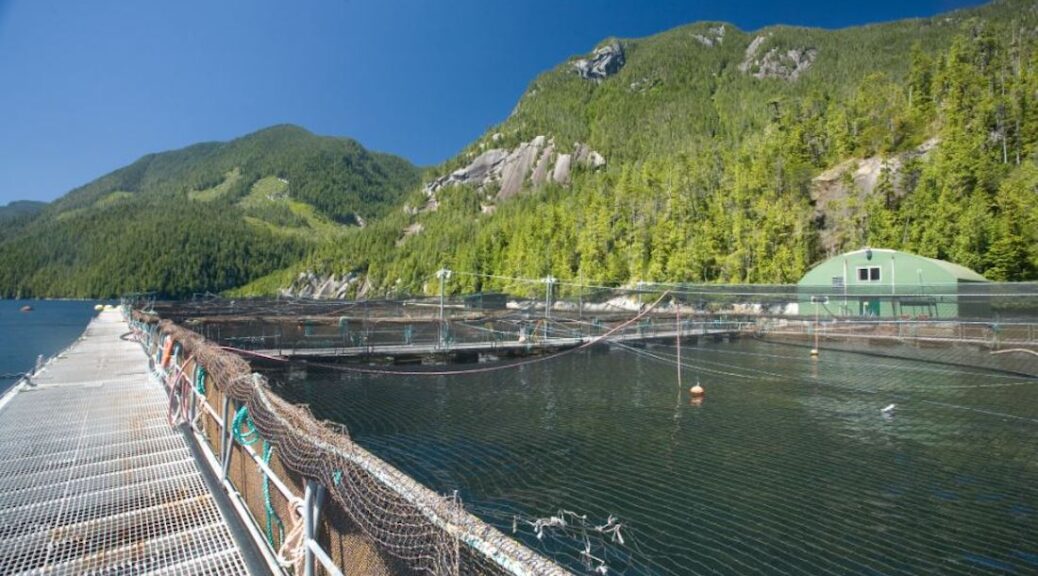
There has been a lot of talk about sea lice infestation of fish farms lately. According to a recent article from the North Island Gazette, there were more than the ‘acceptable’ number of parasites on fourteen sites this Spring. The President of Cermaq Canada just sent an industry perspective of this issue to the Strathcona Regional District Board. I decided to take a closer look at the sea lice on 15 salmon farms.
Continue reading A closer look at Sea Lice on 15 Salmon FarmsTag Archives: sea lice

Sea Lice Exceeds Threshold On 14 Salmon Farms
North Island Gazette, Local Journalism Initiative Reporter
Data from fish farms around Vancouver Island show sea lice numbers exceeding Fisheries and Oceans Canada’s requirements of three per salmon at the start of this year’s juvenile salmon migration.
Continue reading Sea Lice Exceeds Threshold On 14 Salmon Farms
Cermaq Canada’s semi-closed containment system For Salmon Farms
By Quinn Bender, Prince Rupert Northern View, Local Journalism Initiative Reporter
A major B.C. salmon-farm operator will soon be testing a new containment system designed to prevent sea lice and algae from entering pens and hopefully reduce the chances of fish escapement. Cermaq Canada is assembling the structure, known as a semi-closed containment system (SCCS), in Port Alberni and plans to stock it with Atlantic salmon later this fall for trials at its Millar Channel farm in Clayoquot Sound.
Continue reading Cermaq Canada’s semi-closed containment system For Salmon Farms
Sea Lice Outbreak Prompts First Nations Call For salmon Farm Closures
North Island Gazette, Local Journalism Initiative Reporter
The results of a new wild salmon study are skin crawling: 94 per cent of wild salmon fry in the Discovery Islands — to the east of Campbell River — had sea lice attached. The infected fry hosted an average of seven of the parasitic lice.
Continue reading Sea Lice Outbreak Prompts First Nations Call For salmon Farm Closures
First Nations Call For Closure Of Shaw Point Salmon Farm
National Observer, Local Journalism Initiative Reporter
Two First Nations are calling for the closure of a fish farm off the east coast of Vancouver Island following the escape of 1,000 Atlantic salmon into their territorial waters in May. The We Wai Kai and Wei Wai Kum nations want the immediate cancellation of Mowi Inc. tenure for its Shaw Point aquaculture operation, according to a statement issued by the Laich-Kwil-Tach Treaty Society on Thursday.
Continue reading First Nations Call For Closure Of Shaw Point Salmon Farm