

Three weeks ago the Toronto Star reported that “three Liberals privately suggested to the Star that Prime Minister Mark Carney may put federal money behind a new pipeline to the west coast … Sources, who spoke on condition of anonymity, say Carney wants to see the pipeline built, and is realizing it may not happen without more public money behind it.”
Aaron Gunn, the Conservative MP for North Island-Powell River, emailed that he is not interested in discussing rumours. While he recently acknowledged the climate is changing, Gunn also stated Canadians have more important issues to deal with. The pipeline was one of them:
“I will say this pipeline should have been built ten years ago. Instead, the world remains beholden to oil from brutal, dictatorial regimes like Russia and Iran, while Canadian oil sells at a discount to the United States.”
Jennifer Lash’s response to the Toronto Star article was, “Ottawa is nothing if not a fish bowl of rumours.”
(Image of Mark Carney taken from YouTube of Prime Minister Carney’s message on International Women’s Day via Wikimedia (CC BY 4.0)
She did not know who the author was talking to, or how credible they were as sources. There were a lot of Liberal MPs in Ottawa and there was a lot of talk about the pipeline. Speaking as the Liberal candidate for North Island-Powell River in the 2025 election and possibly for the next, Lash said you need to go back to the MOU with Alberta and that clearly states the pipeline is to be privately financed.
“I would be very disappointed if he [Mark Carney] put financial dollars into a pipeline. There’s other priorities that the Prime Minister should have and investing more in clean energy right now would be more beneficial for Canada.”

Expanding Canada’s Oil Sector
Elizabeth May, leader of the Green Party pointed out that Carney did not say all the funding would all come from the private sector, or that there would be no public contribution. More importantly, there are no private sector proponents for any new pipelines in Canada.
“This particular government and this particular Prime Minister keep talking about how Canada will be an energy superpower. Expanding and increasing our exports of fossil fuels is very much part of what they boast they will do. Show us the business case, show us that this isn’t going to lose money. Show us that those same dollars invested in solar and wind and protecting an old growth forest don’t have a higher return in investment and are better for the Canadian economy than continuing down the road of ‘drill baby drill.'”
Lash reiterated, “The MOU says privately financed and if the government put in money, that would be publicly financed. So can he change his mind? Of course, we’ve seen that happen many times, but right now what he supports is a privately financed pipeline.”
One point the two women agreed upon was that Alberta is named as the proponent and will undoubtedly put in money as well.
The Energy World is Changing
The disturbing thing about Elizabeth May’s statement that there are currently no private sector proponents for any new pipelines in Canada, is that most of the companies operating in the oil sands are investing in renewables. Looking to Europe, which is much further ahead in the energy transition, there are a number of former fossil fuel companies like E.ON have made the transition to renewables. Have Canadian fossil fuel companies come to the point that they no longer regard pipelines as viable investments?
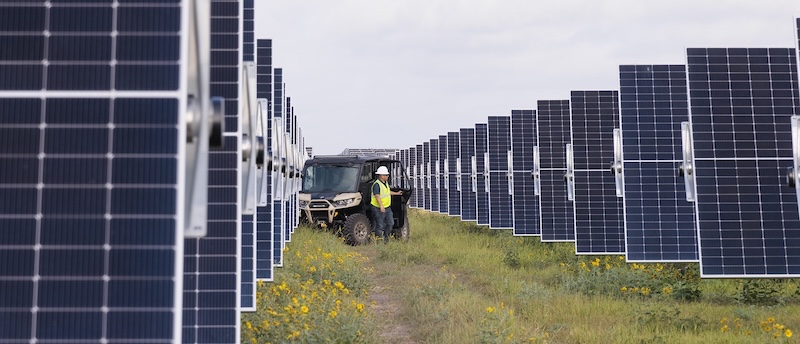
There have been reports that under the right conditions, Enbridge may be willing to build the new pipeline. A quick search revealed that while Enbridge is not investing in new pipelines, it has spent billions on renewables. Last year, alone, they commissioned Orange Grove Solar, invested in the Clear Fork and Sequoia Solar Projects, as well as a wind farm near Weyburn, Saskatchewan.
Jennifer Lash exclaimed, “Great news if they’re investing in renewables, that is exactly the transition we want to see.”
She mentioned the federal government’s investment in Nova Scotia’s offshore Wind West Project, which could already provide twice the province’s electricity needs and, potentially, be expanded to produce 27% of Canada’s supply. There is also the Wei Wai Kum Nation wind farm near Campbell River.
Lash asked a colleague, why do we get the feeling that we’re advancing all these fossil fuel projects and no clean energy projects?
“His response was, clean energy projects are small. They’re $900 million or $500 million instead of $5 billion. So they just don’t get the headlines and they produce less. So you have to have a whole bunch of smaller clean energy projects to make that the production of energy and have that economic impact and energy impact that like an LNG terminal or an oil sands project or a pipeline would have, but they are happening.”
Lash expects to learn more when Canada unveils its new electricity strategy.
“So far it’s been all about oil and we haven’t really talked about clean [energy] as much. I’m hoping with that strategy we’ll start to see a heavier emphasis on the clean. When that comes to meeting Canada’s emissions targets, that clean is really critical. We need to always be producing more clean energy than the increase in demand, and that will transition the country off of fossil fuels domestically.”
There is a demand for oil because of America’s war in Iran, but she questions whether the demand will be there in 5 or 10 years.
“Look at what’s happened as a result of just the war between the United States and Iran. More and more countries are shifting straight to clean because they don’t want to be vulnerable to this fickle oil market.”
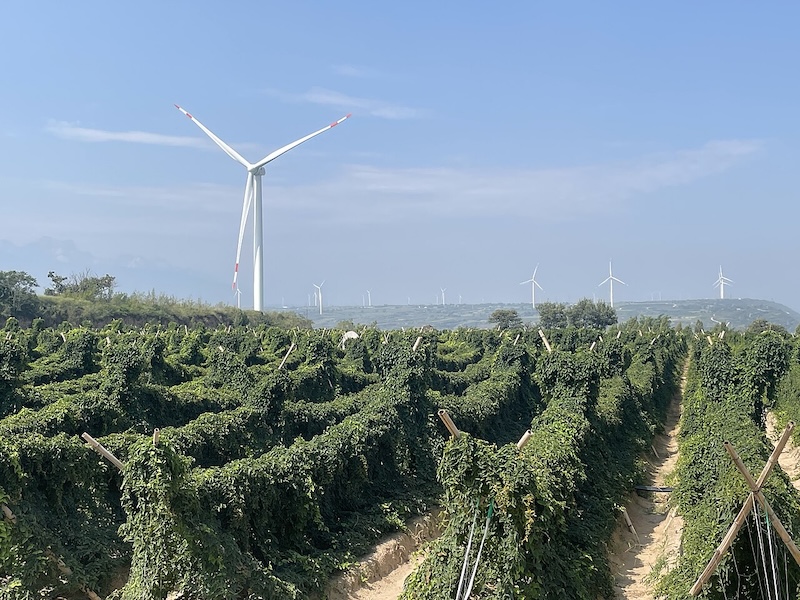
It wasn’t so many years ago that China was a laggard on climate issues, but it has become a leader in advancing renewables.
“I think pipeline companies are looking at that, and they’re going if we invest all this millions or billions of dollars right now – in 10 years when it’s built, is it going to be needed?”
“They are the richest companies in the world, probably aside from the tech companies. If they can’t do it with their bottom line, then it’s probably not economical. That’s where the federal government has to say, this is not a worthwhile investment for Canadian dollars.”
The Market isn’t There Now
Elizabeth May doesn’t believe there is much of a market for Canadian oil products now. She pointed out that a third of the diluted bitumen shipped to China ‘is used to pave roads because it is tar and it is a solid.’
“Wars are good for oil prices: Putin invading Ukraine increased the profits for the oil and gas companies; Netanyahu and Trump attacked Iran. The hundred biggest oil companies in the world saw their profits increase by $30 million a minute. We know what’s good for oil and gas prices, and oil is tied up in being one of the fundamental sources of conflict.”
“Getting off fossil fuels will be good for world peace. Getting off fossil fuels will be good for our health. Getting off fossil fuels will be good for the survival of our children and grandchildren. Fortunately, there are lots of other sources of energy out there that also create jobs and are good for Canada.”
She doesn’t believe Carney gets it. When he visited the White House last October, the Prime Minister suggested Trump revive the Keystone Pipeline. On March 3, the Canadian government announced that it was covering the fees for a proposed deepwater oil project off the coast of Newfoundland.
May exclaimed, “A billion dollars is announced as if it’s peanuts or cornflakes!”
Wednesday, April 22nd is Earth Day. Almost two weeks prior to this, there was a 843,000 litre spill of bitumen emulsion near Cold Lake, Alberta.
“The First Nations are very concerned, but our Minister of energy says, ‘oh, don’t worry, we have the best pipeline safety regime in the world.'”
May declared that saying she is disappointed in Carney is a vast understatement.
“I had thought, based on his book values and a speech when he was governor of the Bank of England, that Mr. Carney understood climate science. It’s now clear to me that he doesn’t. He’s much more interested in building new pipelines, expanding oil and gas, and there’s no commitment to, for instance, reducing our greenhouse gas emissions. They only started going down by a little bit under Trudeau and not nearly enough to meet our Paris Agreement targets.”

Emissions Climbed under Past Governments
She has been working on climate issues since 1986, and seen many promises come and go. Jean Chrétien’s Liberal Red Book, which called for bringing emissions down 20% below 1990 levels by 2005, was cancelled in an effort to woo more Albertan voters. Paul Martin had a viable Kyoto plan that ‘would’ve gotten us very close to our Kyoto targets,’ but his government was defeated in 2005
Canada’s emissions climbed under Jean Chrétien, Stephen Harper and most of the years that Trudeau was Prime Minister.
“I used to say, it’s one thing for people to say Canada has missed our target; It’s not as if we aimed at a target.”
“It was only near the end of the Trudeau era that our emissions started really going down. They were at 7% below 2006 levels, but our goals under Kyoto were to bring emissions down substantially, below 1990 levels, not 2006/ 2005 levels. 1990 is the base year that was in play when we negotiated the UN Framework Convention on Climate Change and the Kyoto Protocol.”
“All of the European Union has gone well below 1990 levels. Russia has gone below 1990 levels. We are the worst performer in the G7, and we are still 18% above 1990 levels. We were beginning to bring emissions down a bit, that’s reversed since Mark Carney became Prime Minister. They’re going up again.”
May has been a harsh critic of the government’s purchase of the Trans Mountain Pipeline project.
“I’ve heard Liberals in Parliament stand up and boast that the pipeline is already making money. Of course, that would suggest to most people that it had made enough money that the $35 billion of public money has been paid back and now it’s able to be profitable. They don’t mean that. They just ignore the cost of building it and say, for this year as an operating business, it made more money than it lost.”
Progress under Trudeau and Carney
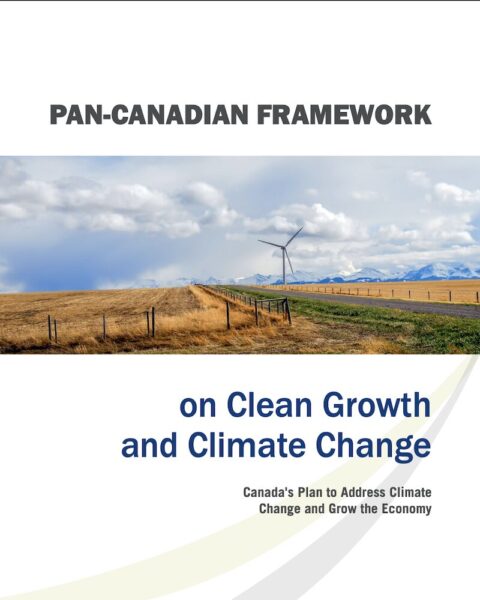
Lash responded that Trudeau obtained more than a pipeline. It made the Pan-Canadian Framework on Clean Growth and Climate Change possible. Every province except for Saskatchewan signed on. Canada got national carbon pricing, methane regulations, coal phase out and made progress on adopting electric vehicles.
Some of the politics have soured. Notley’s NDP government lost the 2019 election in Alberta. The Conservative Party has managed to stir up anger against carbon pricing.
She says the bare bones of that climate plan are still in place. We still have industrial carbon pricing, have improved the methane regulations and have gone from an EV mandate to the tailpipe emission strategy with the EV subsidies on electric vehicles. Carney is continuing to work on these programs, but uses words like climate change less frequently because of public concerns. He focuses on how the economics are good, how it’s good for the country and the people.
“When Prime Minister Carney got elected, he inherited a fight with Alberta that was so toxic it was stopping anything further from being advanced. We ground to a halt. We were gonna end up in court over every single piece of regulation. We were putting forward the emissions cap, clean energy regulations. We were already in court over plastics. We’d already been through court on carbon pricing. We’d won that one and we won the plastic ones as well, but everything was just getting stuck and so the Prime Minister stepped forward with an MOU that was designed to unstick that.”
“The problem child in that whole MOU is a pipeline. I’ll be the first one to admit it, and I do not want to see a pipeline to this coast, but I understand the politics around that.”
Lash disagrees with May’s criticism of the government’s lack of progress.
“What we saw under Trudeau initially was some good politics. When that started to get sidelined, Prime Minister Carney came in and he’s trying to get it back on track.”
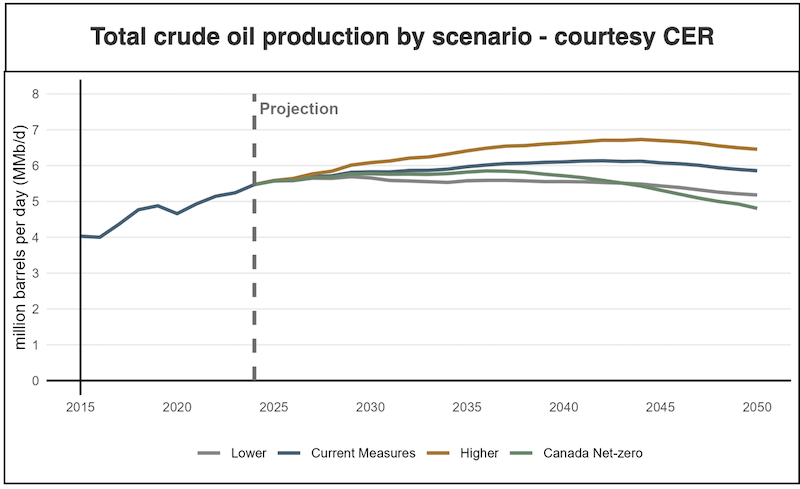
Oil Sands Production at all time high
Elizabeth May pointed out the oil sands production is at an all time high thanks to Liberal Prime Ministers Trudeau, and now Carney.
“How’s that working out for you? Because history repeats itself with alarming frequency whenever federal Liberals think they’re going to win over Albertans.”
“It’s very clear that the Prime Minister tells his ministers and backbenchers, we have to get this pipeline built. So he told nervous Liberal MPs from BC, “you’re going to have to get used to the idea that this offshore tanker van might have to be adjusted.”
In addition to the pipeline, the MOU also states the federal government will subsidize nuclear reactors in Alberta, to provide power for AI data centres.
“Again, without any conversation in advance with Alberta First Nations about how they feel about nuclear reactors on their territory, or AI data centres, or for that matter, building pipelines, fracking for LNG. All of these are part of a moment where Canadians, who normally would raise concerns about expanding oil and gas or expanding nuclear power, are legitimately concerned by Donald Trump. Mark Carney in the public mind at this moment, appears to be someone who can do no wrong. He’s not Trump, and apparently that’s all he has to be is not Trump, but who is he?”
“The Liberal campaign promises all over the place are being smashed and the Prime Minister is implementing a platform that looks more like Pierre Poilievre platform in the last election than it looks anything like the Liberal platform.”
May recently went to a poorly attended seminar on Planetary health in Parliament.
“Scientists are deeply concerned that we’re certainly going to overshoot 1.5°C. Anything over 1.5°C is very dangerous. We’re hitting an extinction crisis tipping point. We’re also hitting a tipping point in terms of atmospheric chemistry. Things that are difficult to track. We don’t know exactly where the tipping points are in the atmosphere, but 1.5°C degrees is not a safe zone. So when we say we could hold to 1.5°C, that wouldn’t mean we were safe. It would just mean it was less dangerous than 2.0°C or 3.0°C or 4.0°C or 5.0°C. We are not at the point where we’re past the point of no return, but we don’t have time for any more foolishness.”

Why Carbon Capture and Carbon Pricing are Needed
Another element of the MOU that people are concerned about is the Pathways carbon capture project. It has been put forward by industry and a lot of people suspect it will not work.
Lash pointed out that the government cannot stop gas and oil production, those resources actually belong to the provinces. One thing they can do is work on industrial carbon pricing.
“It’s the backbone of our climate plan and a key part that’s being rescued as a result of the MOU.”
The federal government has to figure out how they can incentivize and push industry towards reducing their emissions, while staying in their lane legally.
“Things like the MOU, which gets the province to also support carbon capture and storage, can start to move that forward. Now, will that technology meet everything that the industry’s saying? I’m a skeptic, but I think it will reduce emissions to some degree. We know for a fact that unless you put technology out there and start testing it, it doesn’t improve. This is one way of getting the companies to be more responsible for their emissions.”
It also advances research into capturing carbon in the atmosphere. Lash believes that temperatures would continue to rise even if Canadians immediately turned off all their coal-fired electricity, stopped using gas powered cars and every bit of oil stayed in the ground.
“If we are on track to meet net zero emissions by 2050, there’s still carbon that we need to take out of the air to try and stabilize our climate. So no matter what angle you’re coming from, that technology is needed and we need to support that technology and see that being developed.”
I think it’s an industry that Canada can succeed in. We have some great minds here trying to think about this.”
She pointed out that the pipeline, industrial carbon price, methane regulations and carbon capture are all parts of the same package.
“I look at it as politically complicated but also quite sophisticated in trying to link these pieces together so that we end up at a place where we have carbon removal, we have pricing, we have methane regulations, and we are trying to reduce our emissions as much as we can.”
Phasing out Gas and Oil
“At some point, provinces that are major emitters like Alberta need to wrestle with the fact that whether it’s by trying to get away from a disastrous climate or in reaction to a disastrous climate, which is coming, the oil and gas industry will be phased out, hopefully sooner rather than later.
“We need provinces to take the leadership, to help their workers and their economy get to a better place so they’re less reliant on an industry that eventually will go away and they’re looking after the people in their province.”
“We’re not seeing that leadership right now from Alberta and I would say BC is to some degree in the same position with our investment in LNG.
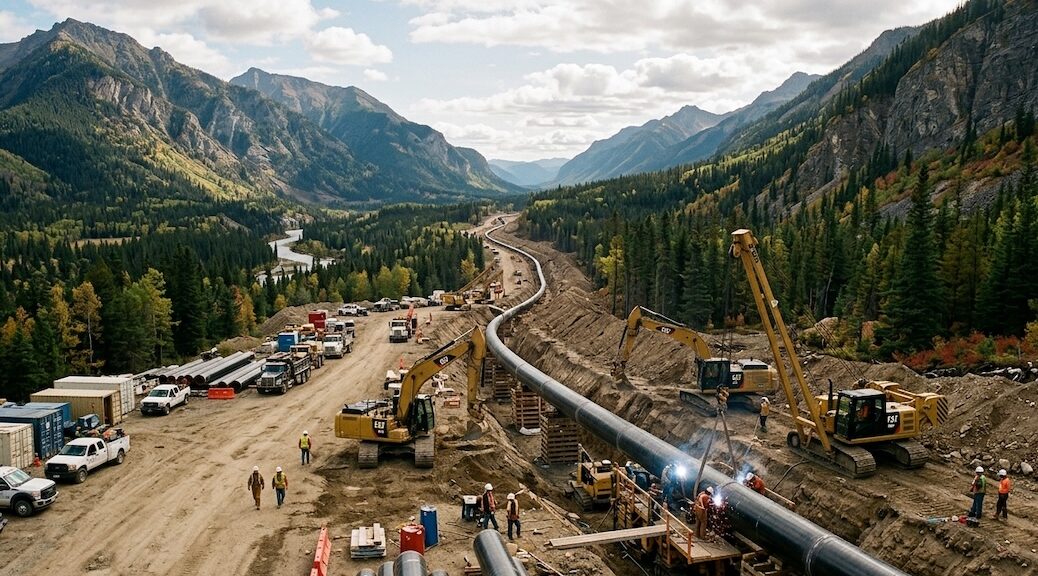
Top image credit: AI image of pipeline under construction in a mountain pass
Links of Interest:
- Opinion | Can Mark Carney’s pipeline plan become reality without public money? – Toronto Star
- The Pipeline Paradox – Jennifer Lash
- Articles about, or mentioning, the MOU with Alberta
Sign-up for Cortes Currents email-out:
To receive an emailed catalogue of articles on Cortes Currents, send a (blank) email to subscribe to your desired frequency:
- Daily, (articles posted during the last 24 hours) – [email protected]
- Weekly Digest cortescurrents – [email protected]