Tag Archives: Methane emissions

BC Greens call out Alberta fossil fuel war room’s attack on Nanaimo

Canada’s National Observer, Local Journalism Initiative Reporter

B.C.’s Green Party Leader is dismayed Alberta’s fossil fuel “war room” is targeting Nanaimo, B.C., for its leadership in phasing out natural gas hookups to reduce the community’s emissions.

After a summer of record-breaking wildfires and sustained heat and drought, every level of government needs to be seeking solutions to the climate crisis, not sabotaging those that do, said Sonia Furstenau, the Greens’ leader and MLA for Cowichan Valley on Vancouver Island.

Continue reading BC Greens call out Alberta fossil fuel war room’s attack on Nanaimo
New emissions targets may sink LNG’s pitch as a shipping fuel

Canada’s National Observer, Local Journalism Initiative Reporter

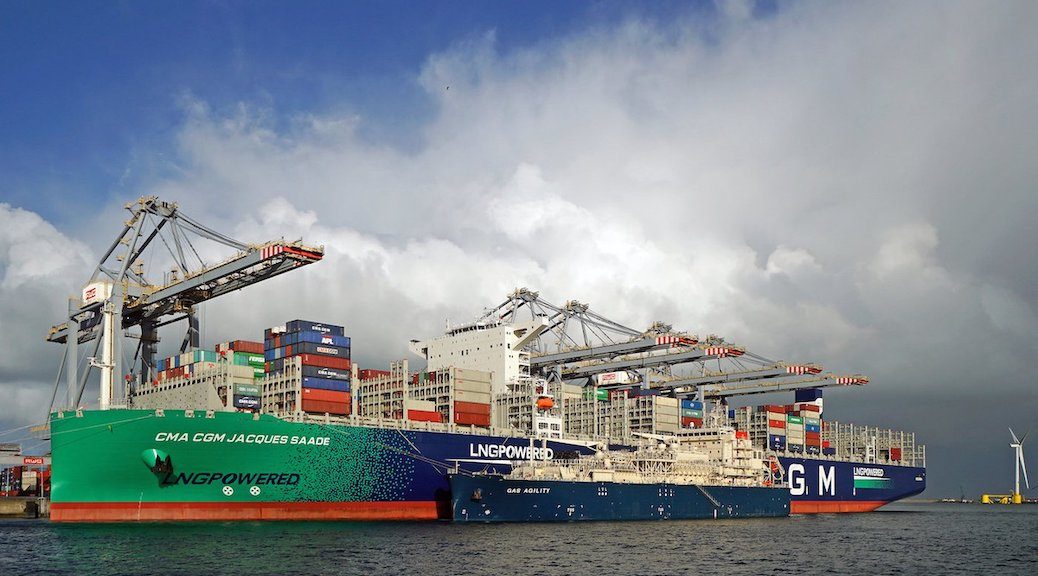
The fossil fuel and shipping industries just got a serious shot across the bow over relying on liquefied natural gas (LNG) as a transition fuel.

On Friday, the International Maritime Organization (IMO) finalized stricter global emissions standards for the maritime industry while closing a significant regulatory loophole driving up the use of LNG as a shipping fuel.

LNG has lower CO2 emissions than other fossil fuels used in shipping but it also emits significant amounts of methane, a short-lived but powerful greenhouse gas responsible for more than 25 per cent of current global warming.

Continue reading New emissions targets may sink LNG’s pitch as a shipping fuel

Highway wildfire closure drives home B.C.’s need to think big about climate measures

Canada’s National Observer, Local Journalism Initiative Reporter

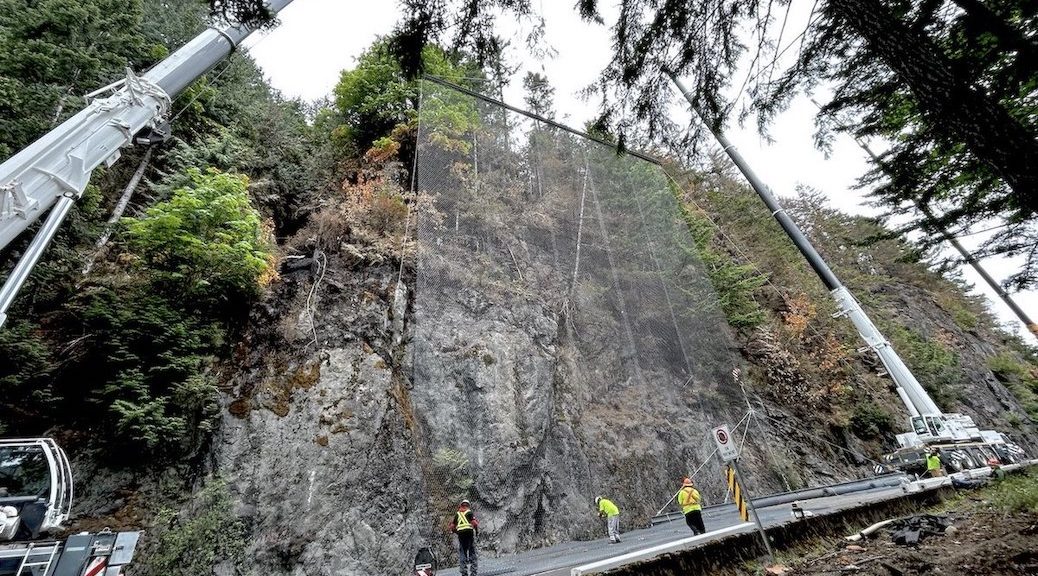
British Columbia’s enormous effort to speed the partial reopening of Highway 4 on Vancouver Island — closed for upwards of two weeks due to a wildfire — is another illustration of the dramatic costs tied to climate impacts, says an economist.

“It’s a huge hit to the restaurants, hotels, and all the services that would normally be making money at this time of year and potentially jeopardizes their whole summer,” said Marc Lee, senior economist with the Canadian Centre for Policy Alternatives (CCPA).

“The economic disruption and costs associated with already existing climate change is something that we don’t often think about enough.”

The province’s Transportation Ministry has been pulling out the stops to get the key transportation corridor — the only paved road serving Port Alberni, numerous First Nations and the West Coast tourist hot spots of Ucluelet and Tofino — open to single-lane alternating traffic by the weekend.

Continue reading Highway wildfire closure drives home B.C.’s need to think big about climate measures

The Quadra Project: Climate Karma

Karma, from the Sanskrit word “karman” is an amalgamation of “action, effect, and fate”. In the popular sense of the word, it has come to mean that actions have consequences, and that our individual human behaviour exists in a cause-effect relationship with a vague sense of a moral cosmos. Often described as the Principle of Karma, it means that personal acts motivated by “good” intentions are eventually rewarded in kind, and that “bad” acts are also rewarded in kind.

Although karma usually applies to the cause-effect relationship of our individual actions, it might also apply to our collective actions, a more expansive understanding that is worth considering, given the consequence of the unfolding havoc we are causing on our planet.

Continue reading The Quadra Project: Climate Karma

Canada’s eastern Rockies risk becoming a carbon bomb

By Natasha Bulowski, Canada’s National Observer, Local Journalism Initiative Reporter

Oil, gas and coal extraction projects located in Canadian protected areas could unleash a potential 2.7 billion tonnes of carbon dioxide into the atmosphere, a global analysis found.

Alberta’s iconic coal-bearing Rocky Mountains are among the nearly 800 protected areas under threat of fossil fuel development worldwide, according to the analysis by LINGO, a.k.a. the Leave It In the Ground Initiative. The Germany-based non-profit’s stated mission is to “leave fossil fuels in the ground and learn to live without them,” and accelerate the world’s transformation to 100 per cent renewable energy. The research was done in collaboration with Oil Change International.

Continue reading Canada’s eastern Rockies risk becoming a carbon bomb