
Tag Archives: COSEWIC

At-risk fin whales are in hot water with protection downgrade, LNG, and climate change

Canada’s National Observer, Local Journalism Initiative Reporter

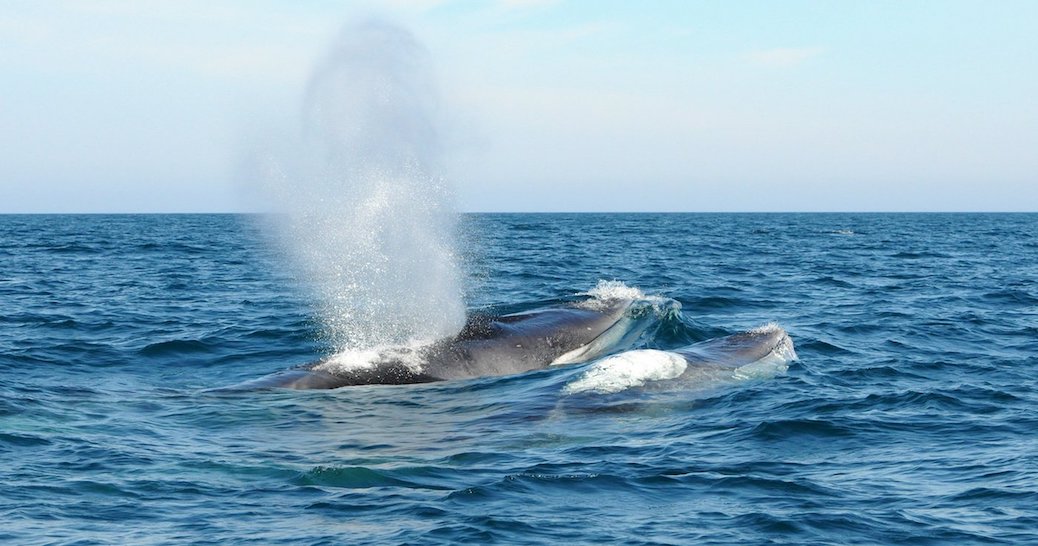
Conservation groups are alarmed that the status of fin whales as a threatened species on Canada’s West Coast is about to be downgraded just as the dangers of LNG shipping and climate change are on the rise. 

The global population of the sleek, fast moving whale — dubbed the greyhound of the sea and named for the dorsal fin near its tail — was decimated by industrial whaling, which lasted until the1980s. Canada’s Pacific fin whale population was listed as threatened in May 2005 and was legally protected under the Species at Risk Act (SARA) the following year. 

That protection may now be weakened after the Committee on the Status of Endangered Wildlife in Canada (COSEWIC) concluded fin whales numbers are increasing and  reclassified it as a species of special concern in 2019.

Continue reading At-risk fin whales are in hot water with protection downgrade, LNG, and climate change

Before the Standing Committee on Fisheries and Oceans: Was DFO’s ‘minimal risk’ assessment a cover-up?

(Click here to access other presentations taken from the Committee.)

At the May 12 session of the Standing Committee on Fisheries and Oceans, Stan Proboszcz, senior scientist at the Watershed Watch Salmon Society suggested that DFO covered-up some of its own research when it concluded fish farms pose ‘minimal risk’ to wild salmon. He said they appear to have reduced the number of science risk assessments from 10 to 9 because the evidence indicated sea lice harm wild sockeye.

Continue reading Before the Standing Committee on Fisheries and Oceans: Was DFO’s ‘minimal risk’ assessment a cover-up?

Pitfalls of DFO’s current approach and what could replace it

(Click here to access other presentations taken from the Committee.)

Some of Canada’s top scientists are being asked to testify before the House of Commons Standing Committee on Fisheries and Oceans, While it is not clear exactly why this is happening, the common theme running through their presentations is the need for DFO to be more based in scientific evidences and less focused on the needs of industry.   

In the third of a series of broadcasts gleaned from these reports, Dr Andrew Bateman from the Pacific Salmon Foundation talks about pitfalls in DFO’s current approach and an existing model that could replace it.

Continue reading Pitfalls of DFO’s current approach and what could replace it

DFO needs to adopt a science based management model, scientist says 

(Click here to access other presentations taken from the Committee.)

In the second of a series of posts gleaned from the Standing Committee on Fisheries and Oceans, Dr John Reynolds proposes that DFO adopt a prime directive “where management objectives are expressly prohibited from influencing science.”

Continue reading DFO needs to adopt a science based management model, scientist says 

Number of marine species at risk in Salish Sea more than doubled, report says

A recent report from the U.S. Environmental Protection Agency states “the total number of marine species at risk in the Salish Sea has doubled from 2002 to 2015.” 

The accompanying map shows they are referring to an area that stretches from the Puget Sound to the Strait of Juan de Fuca and north beyond  Cortes and Quadra Islands. Christianne Wilhelmsen executive director of the Georgia Strait Alliance, explained this is because the EPA thinks of the Salish Sea as whole entity, rather than dividing it between two nations. While a few of the entries are American, most of the species listed are accompanied by terms like ‘COSEWIC‘, ‘B.C.’ and ‘Canada,’ which shows they come from Canadian sources.

Continue reading Number of marine species at risk in Salish Sea more than doubled, report says