
Tag Archives: Josie Osborne

Heightened need for clean energy prompts BC Hydro to put call out for new sources

By Mina Kerr-Lazenby, North Shore News, Local Journalism Initiative Reporter

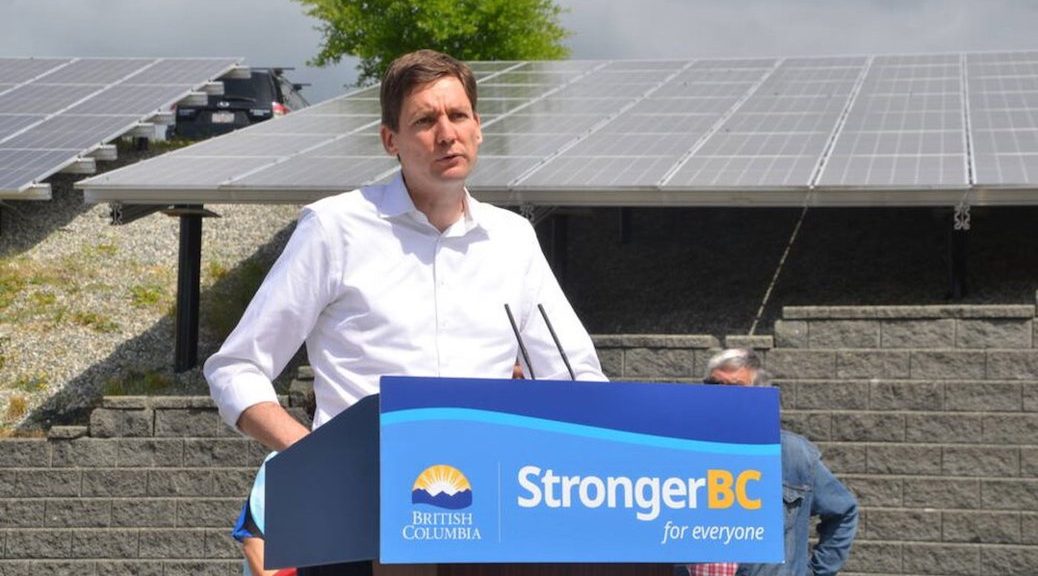
BC Hydro will be issuing a call for new sources of renewable, emission-free electricity, with applications to open in the spring of next year.

The call out, the first to come from BC Hydro in 15 years, has been prompted by an accelerated need for clean energy, said Premier David Eby on Thursday, at a media event at the Tsleil-Waututh Nation administration building in North Vancouver.

Eby said an additional 3,000 gigawatt hours per year of renewable energy, enough electricity to power 270,000 homes in B.C, is needed by 2028 – three years earlier than previously estimated.

Continue reading Heightened need for clean energy prompts BC Hydro to put call out for new sources

The last 33 caribou: fighting for the survival of a Wet’suwet’en herd

By Matt Simmons, The Narwhal, Local Journalism Initiative reporter

There’s a serene pocket of mountainous habitat in northwest B.C. where 33 caribou live, drinking from glacial-fed creeks and grazing on alpine lichens. Though it’s peaceful, they have nowhere to go. They’re surrounded.

They’ve been cut off from where they gave birth to their young and the tracts of land that supported them through the long northern winters by highways, hydroelectric dams, rail lines, clearcuts and farmland. The herd’s range has been fragmented for more than a century and faces imminent threats.

Continue reading The last 33 caribou: fighting for the survival of a Wet’suwet’en herd

A dozen First Nations in B.C. funded to pursue clean energy projects

National Observer, Local Journalism Initiative Reporter

Editor’s note: Two of the dozen First Nations alluded to this story, the Uchucklesaht tribe and Kwikwasut’inuxw Haxwa’mis First Nation, are on Vancouver Island. The remainder are to the north. None of the reciupeints are in our immediate vicinity.

A dozen First Nations in B.C. are taking strides to reduce their dependence on dirty diesel fuel and secure a clean energy future for their communities for generations to come. 

The First Nations have received a total of $7.1 million to develop alternative-energy projects and improve energy efficiency through a wide range of initiatives in the first round of funding via the provincial Community Energy Diesel Reduction (CEDR) program, developed and operated in co-operation with the First Nations organizations New Relationship Trust and Coast Funds

Continue reading A dozen First Nations in B.C. funded to pursue clean energy projects

Proposed B.C. coal mine gets axed over ‘significant’ environmental effects

By Natasha Bulowski, Canada’s National Observer, Local Journalism Initiative Reporter

The federal and British Columbia governments have rejected a proposed open-pit coal mine over its environmental impacts.

The Sukunka open-pit coal mine near Tumbler Ridge, B.C., would have produced three million tons of coal per year to sell to steel manufacturers overseas, according to Glencore, the company behind the project. The federal government announced the rejection — based on B.C.’s environmental assessment process — on Dec. 21. 

Continue reading Proposed B.C. coal mine gets axed over ‘significant’ environmental effects

B.C. will soon decide the fate of four projects with big climate and biodiversity impacts

By Matt Simmons, The Narwhal, Local Journalism Initiative reporter

B.C. Premier David Eby’s newly appointed cabinet is about to decide the fate of a handful of proposed projects,  each of which comes with a slew of implications to biodiversity and  climate. 

While provincial ministers wrestle with the decisions, delegates from across the country and around the world are gathered at COP15,  the United Nations biodiversity conference in Montreal. The aim of the  conference is to secure government commitments to slow the global  biodiversity crisis underway — the crisis is sometimes referred to as  the sixth mass extinction and is the first to be human-caused.

Continue reading B.C. will soon decide the fate of four projects with big climate and biodiversity impacts