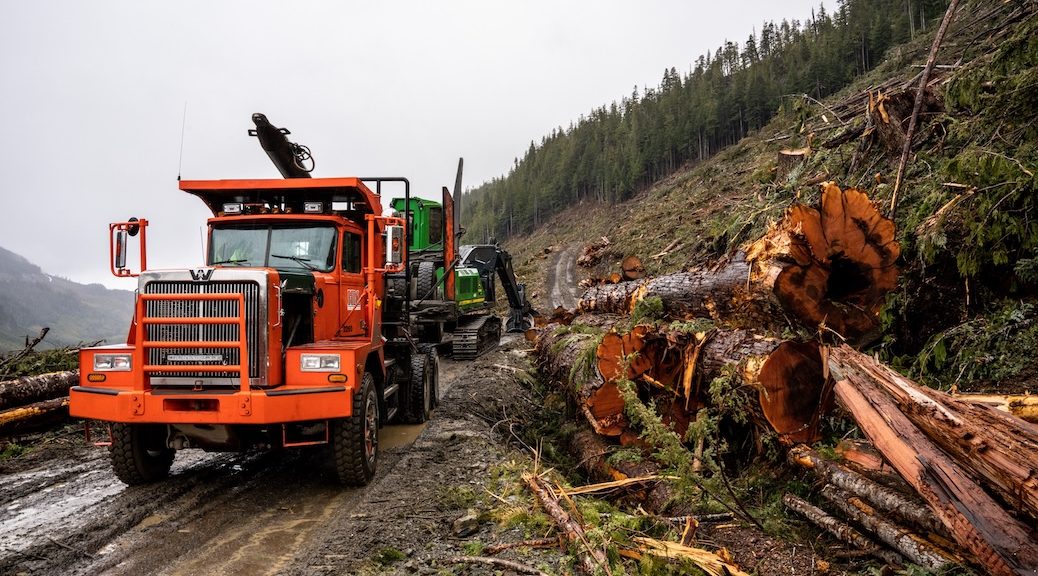
Five years have passed since the provincial government’s Old Growth Review panel published its report on BC’s old growth forest management. Sierra Club BC recently commissioned two of the panel’s three scientists to do a study on how their recommendations were carried out. In today’s interview, Karen Price talks about their report ‘Closer to the Brink.’
“We need to shift the paradigm because we all depend on the Earth and we need to start putting ecosystems and human communities ahead of industrial profits. To do that, we need to protect big tree forests. That’s my bottom line. That means supporting nations in their planning and it means working towards protecting 30% of each ecosystem by 2030 and 50% by 2050,” she explained.
Matt Simmons – The Narwhal, Local Journalism Initiative reporter
The British Columbia government gave a green light to an 800-kilometre natural gas pipeline on Thursday, paving the way for construction to start this summer — and setting the stage for what one First Nations leader warns could be a “long, hot summer” of conflict.
Leaders of Coastal First Nations are on the ground in Azerbaijan to line up Asian buyers for their Indigenous-led gas exports from LNG facilities under development in British Columbia.
It’s crunch time for the First Nation Climate Initiative (FNCI), the pro-LNG (liquefied natural gas) First Nation coalition that pitches the fossil fuel’s role in the world’s decarbonization efforts. For the long-term viability of Indigenous-led LNG, the organization needs to find export partners in Asia or the projects are at risk. The delegation has arrived in Azerbaijan at a time when the world is on the cusp of 1.5 C, and yet fossil fuel combustion continues to rise.
The B.C. election race officially got underway this week with affordability, housing costs and healthcare already entrenched as top concerns for voters.
Yet the climate crisis still ranks high as an election issue, right after health and pocketbook concerns — ahead of other problems like crime and the toxic drug crisis — and may be the deciding factor for undecided voters at the ballot box.
Calls from climate advocates to follow the lead of the United States and pause Canadian liquified natural gas projects face a serious challenge: a promise of economic reconciliation tied to capital and liquified natural gas (LNG) development.
Biden’s move to pause LNG approvals until after the November elections was celebrated by the climate movement in the U.S. and at home. But coastal First Nations leading LNG projects say the facilities will boost their communities’ prosperity. With industry partners, Haisla Nation is developing Cedar LNG and Ksi Lisims is proposed by the Nisga’a.