Category Archives: History

Photographer captures grain elevator images as they fade away on the prairies

By Nicole Goldsworthy, Humbolt Journal, Local Journalism Initiative Reporter

NORTHEAST – Tim Lockhart has made it his passion to photograph as many prairie grain elevators as he can find. 

Lockhart was born and raised in Alberta and his dad was a manager at an Old Dutch potato chip plant. When he travelled with his father he gained a passion for grain elevators as each small town they pulled into had one.

About two and half years ago, he saw how many were rapidly being torn down. What every small town in Saskatchewan had was slowly vanishing. Lockhart decided to start documenting as many as he could find throughout the prairie provinces. To date, he has taken pictures of 465 elevators in the three prairie provinces — 275 of them in Saskatchewan alone — with 25 still to document.

Continue reading Photographer captures grain elevator images as they fade away on the prairies

The origins of Cortes Island’s Shellfish Industry

In the most recent of her interviews about Cortes History, Lynne Jordan, former President of the Cortes Island Museum, traces one of the Island’s foremost industries from its pre-contact beginnings up until recent times.  

Lynne Jordan: “ The First Nations cultivated clam gardens on this coast for 3,000 to 5,000 years, maybe even longer. One on Quadra Island was recently dated at being around 3,500 years old.”

Continue reading The origins of Cortes Island’s Shellfish Industry

When fishing was an industry in Whaletown

A great many fisherfolk once worked out of Whaletown. The Cortes Island Museum’s list goes back to the 1930s, at which point there were 7 men and a woman. Three of them used rowboats. 

“There used to be a huge fleet rafted out, both six and seven abreast all along  both sides of the dock, in Whaletown.  In the last 10 years or so, there’s only been three or four boats in there, fishing. The main one  that I know of in the last little while is the ‘C-Fin,’ but he goes outside of the Vancouver Island area and fishes tuna. When he comes back he doesn’t sell it to a fisheries, he sells it from the dock, and the same with his prawns.  So he’s not using a middle man to sell his products, which I suppose is one of the few ways you could make a little bit of money now,“ said Lynne Jordan, former President of the Cortes Island Museum, in the latest instalment of her history of Whaletown.

Continue reading When fishing was an industry in Whaletown

How telephones came to Cortes Island 

According to Lynne Jordan,  former president of the Cortes Island Museum, there have been telephones on Cortes Island for more than 110 years. They arrived in 1910, along with telegraphs, but only in the stores.

“Telegrams were really cheap. They were so much for 10 words and so much for 100 words.  People got really good at confining their messages to 10 words. Telegraphs that came in for people were just put in an envelope and then pinned on the bulletin board at the store.  Then they either had to check themselves or a friend would tell them that there was a message there for them,” she said.

Continue reading How telephones came to Cortes Island 

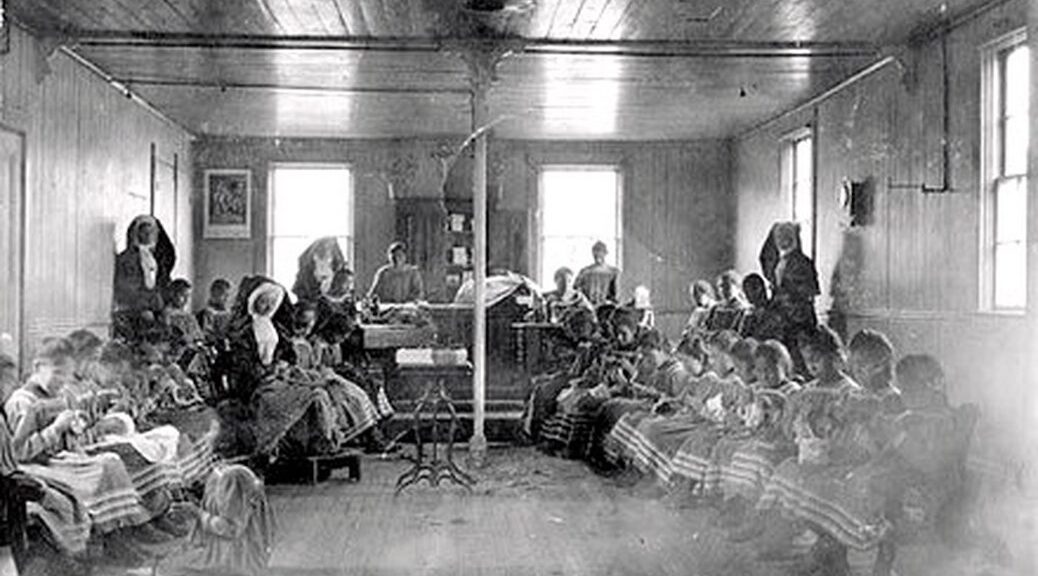
The History of Residential and Day Schools

By Chadd Cawson, The Columbia Valley Pioneer, Local Journalism Initiative Reporter

Many people have heard about residential schools but are uneducated about them. And too many have known about the horrors and injustices that happened within the walls of them, but for too long their voices were never heard. First Nations, Inuit, and Métis children were taken from their families, communities, and culture for over 150 years. During this period, over 150,000 children attended what were then called Indian Residential Schools. Many never returned home to their families.

Continue reading The History of Residential and Day Schools